Top 10 AI Tools for Businesses in 2026: What Each One Is Actually For

Hem Kant
·
10 Sep, 2026
A ranked list of ten specific AI products is out of date by the time it publishes. New tools launch weekly, existing ones get renamed or absorbed, and the winner in any given category six months from now is genuinely unclear. What does not change nearly as fast is the shape of the problems AI is actually good at solving. This is a breakdown of the ten categories worth knowing, what each one is genuinely for, a few current examples in each, and the one governance question that applies no matter which specific tool you pick.
| The average company now uses 4.4 AI tools, spread across several categories, not one platform trying to do everything. |
Most AI tooling falls into a handful of distinct categories, and knowing which one you are actually looking at tells you what it can and cannot do before you sit through a demo. A general assistant drafts and answers questions. An automation platform moves data between apps you already use. A vertical AI feature is built into a tool you already pay for. An agent takes multi-step action on its own. Comparing tools across these categories head to head is usually the wrong exercise, since they are solving different shapes of problem, not competing for the same job.
None of the ten require you to build a model from scratch, that’s a separate, much larger commitment, and we cover what it actually takes in how to create your first AI model
1. General-Purpose AssistantsE.G., Claude, ChatGPT, Gemini, Microsoft 365 Copilot Drafting, research, summarizing, and analysis across nearly any team. The lowest-friction starting point for most organizations, and still the category most people mean when they say we use AI, even though it is only one of ten. Some teams skip the hosted versions altogether and self-host instead we walked through installing DeepSeek locally for that exact scenario. Teams evaluating options specifically for building or running a website should start narrower, see the best AI tools for website development rather than picking from this general list. |
2 . AI Coding Assistants and AgentsE.G., GitHub Copilot, Cursor, Claude Code Real productivity gains for engineering teams, and real, documented security gaps when the output ships without proper review. The same time-saving logic applies below the surface too – AI-assisted debugging and error resolution is one of the quieter ways teams are already automating tedious digital work, well before “agentic” tools enter the picture.We covered exactly where this goes wrong, and what governance actually looks like, in is vibe coding safe for production software. |
3. Workflow Automation and OrchestrationMoves data between apps on a trigger, no custom development required. The right starting point when the actual bottleneck is manual copy-paste work between systems that already exist, rather than a gap that needs new software built. Not every recurring task needs a paid no-code platform either – routine jobs like automating daily database backups to Google Drive can be scripted and scheduled just as reliably with a cron job and a few lines of code. |
4. AI Agents for Multi-Step WorkE.G., agent frameworks and enterprise agent platforms A genuinely different commitment from an assistant: an agent decides what steps are needed and acts on its own, across systems, without a human approving each step. We broke down what that actually costs to build responsibly in how much it costs to build an AI agent. |
5. Conversational Support and ChatbotsE.G., Zendesk AI, Intercom, custom support agents Handles common questions and drafts replies for a human to send. The distinction between this category and true agents matters more than it sounds, and we walked through exactly where that line sits in AI agent versus chatbot. |
6. Vertical AI Built Into Tools You Already OwnE.G., AI features inside your CRM, ERP, or platform Often the highest-leverage category, since it already has access to your real data and workflow context without a separate integration project. The build-versus-buy logic behind whether to extend one of these or go custom is the same logic we covered in custom CRM versus off-the-shelf SaaS CRM. |
7. Analytics and Business IntelligenceE.G., ThoughtSpot, conversational analytics layered on existing BI platforms Lets non-technical staff ask plain-language questions of live data instead of waiting on a report or an analyst’s queue. Genuinely useful for surfacing anomalies early, catching a revenue dip or a spike in returns before it becomes a quarterly surprise, though the answers are only ever as trustworthy as the underlying data model feeding them. A conversational layer on top of messy source data just makes the wrong answer easier to ask for. |
8. Content and Search Visibility ToolsE.G., GEO and AI-answer-visibility platforms, schema and structured-data checkers A newer category built around a real shift: AI answer engines now summarize content directly in a chat response, rather than only sending a click to the source. These tools check whether your content is actually structured to get cited, clear headings, self-contained answers, schema markup, not just whether it ranks on a traditional results page. Useful for diagnosing the gap; the actual fix is still a content and technical SEO problem, not something the tool solves on its own. |
9. Healthcare-Specific AIE.G., clinical documentation and prior authorization support tools Genuinely valuable for reducing administrative burden, but only as reliable as the data pipeline feeding it. If your EHR and billing systems do not reconcile cleanly, the AI layer inherits that gap rather than fixing it, the exact issue we detailed in why your EHR and billing system still cannot talk to each other. |
10. Ecommerce-Specific AIE.G., personalization engines and dynamic pricing tools Works best layered on top of accurate, well-synced inventory and order data, not as a substitute for it. A personalization engine recommending a product that is actually out of stock is a worse experience than no personalization at all, which is why real-time inventory sync is worth solving first. For the fuller picture of where this fits, from personalization, fraud detection, and dynamic pricing to the broader automation trends reshaping ecommerce operations, these two breakdowns cover it category by category |
Underneath all ten categories sits the same question, asked far less often than it should be: does a human review the output before it reaches a customer, a patient, a financial system, or production code? The specific tool matters less than the answer to that question. An assistant that drafts a marketing email needs lighter review than an agent that can modify a customer’s billing record on its own, but every category on this list benefits from someone having deliberately decided where that review happens, rather than assuming the tool is safe by default because it is popular or well-reviewed.
This is not a call to slow down adoption. It is a reminder that adopting the tool and adopting a process for its output are two separate decisions, and skipping the second one is where most of the real risk in this list actually lives. Building that judgment takes real hands-on time with the underlying technology our own team’s journey into machine learning is one example of what that looks like in practice.
If you are trying to figure out which of these categories would actually move the needle for your business, and where you need a review process before you flip the switch, that is worth a direct conversation. Book a Discovery Call and we will help you sort the signal from the noise.

 AI & Enterprise Strategy, AI Models
You have almost certainly used one. ChatGPT is one. Gemini is one. Claude is one. Every time you type a question into an AI chat tool, one of these systems is doing the work behind the scenes. The name sounds technical. The real idea is simple once someone walks you through it, step by step, […]
 AI & Enterprise Strategy
You ask an AI chatbot a question. It gives you a clear, confident answer. It sounds right. But it is not right. The fact is wrong. The source does not exist. The quote was never said. This happens more than most people think. It has a name in the AI world. It is called hallucination. […]
 AI & Automation, AI & Enterprise Strategy, Compliance & Governance, Thought Leadership
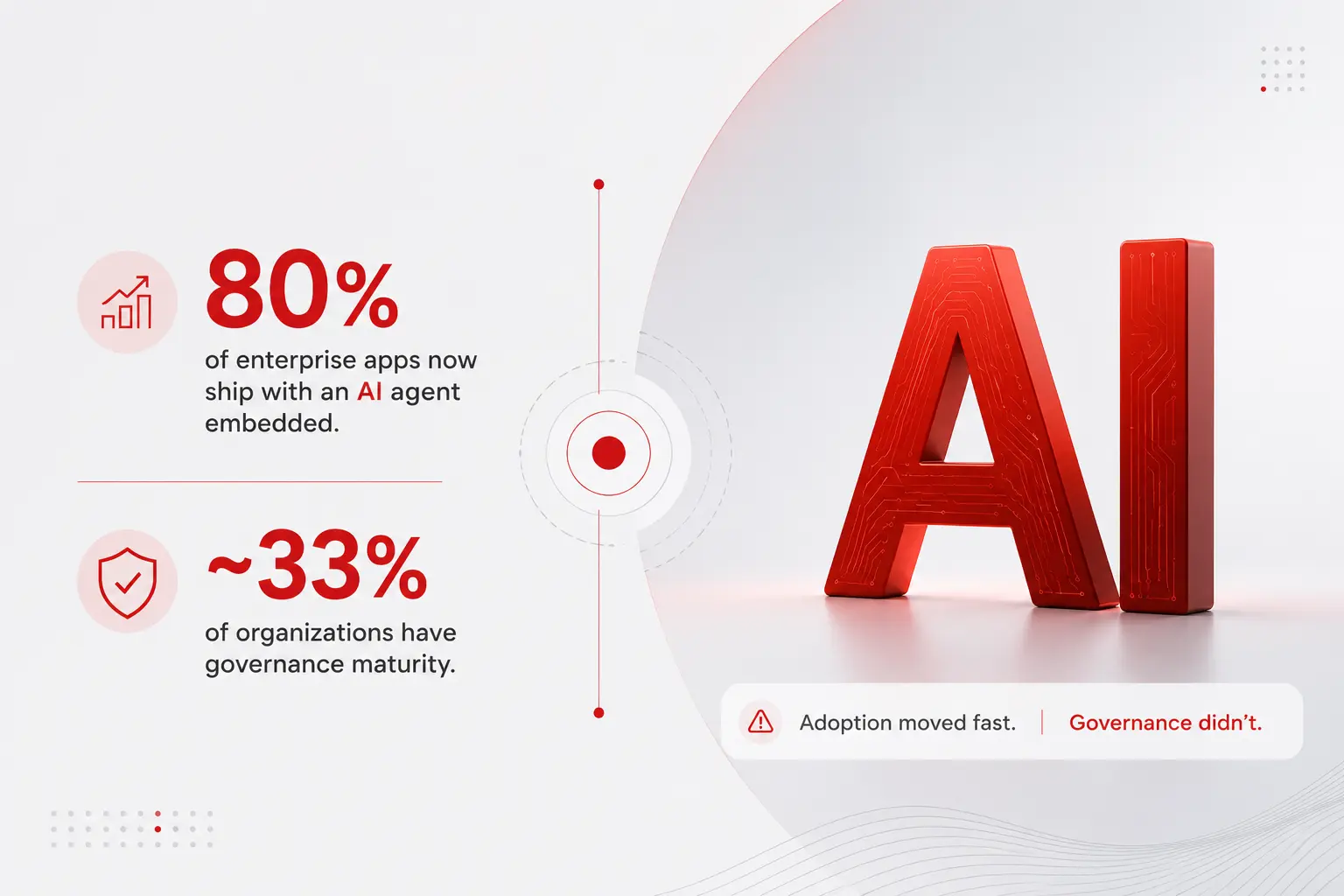
Is agentic AI ready for healthcare and finance is the wrong framing at this point. It is already running in both, at real scale, making decisions that affect real patients and real credit applications. The question worth asking now is narrower and more useful: has the governance around these systems kept pace with how fast […]