
Manual Coordination
Teams rely on manual handoffs, duplicate entries, and spreadsheet workarounds across disconnected systems.
We listen first. We understand where you are stuck, what constraint is slowing progress, and why previous attempts may not have worked.
We recommend a clear, evidence-based first step not a broad transformation. Something you can act on with confidence.
We don't just advise. We build, integrate, and deliver. We stay with you through implementation and beyond.
You may be in multiple stages at once. The framework helps you identify which constraint is slowing progress most right now.
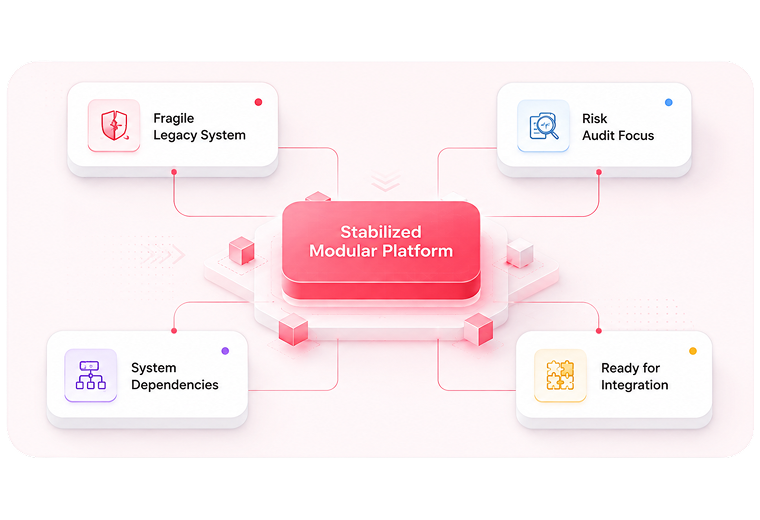
The platform feels fragile or risky to extend. Technical debt slows delivery. Performance concerns keep repeating.
Teams rely on manual coordination across tools. Product and business systems do not connect cleanly. Workflows feel fragmented.
Governance and ownership are unclear. Permissions create friction. Growth increases operational complexity.
Lifecycle follow-through is still manual. Signals exist, but action is delayed. Coordination effort increases with scale.
This stage applies when the platform itself is becoming the constraint. Technical debt slows delivery. Architecture decisions feel riskier than they should. Performance, reliability, or governance concerns keep resurfacing.
The goal: Clarity before commitment.
This is the most common starting point once the product is working, but the surrounding business systems are not coordinated well enough. Product usage data, CRM activity, support signals, and billing workflows often live in separate places.
The goal: Optimize the operational flow.
This stage begins when connected systems are not enough on their own. The business needs a stronger operating environment: clearer governance, more structured execution, better permissions, and a platform that supports how the company actually runs.
The goal: Stronger control and more dependable execution.
This stage applies when the business is ready to reduce manual follow-through and improve responsiveness across lifecycle workflows. The goal is not automation for its own sake. The goal is to reduce repetitive coordination and improve decision speed.
The goal: Faster, more responsive action without manual follow-through.
Tell us what symptoms you are experiencing and we will help you orient. You do not need to diagnose everything at once. Identify the main constraint affecting execution right now, and we will help you choose the first step that fits your condition.