Real-Time Inventory Sync Between Ecommerce and ERP: What Actually Works
LN Webworks
·
10 Sep, 2026
Every scoping conversation about ecommerce-ERP integration starts the same way: sync inventory in real time so the storefront never sells something that is not actually there. It is the right goal, stated slightly wrong.
The number that actually needs to move between the two systems is not total inventory, it is available inventory, and the gap between those two numbers is where most naive integrations quietly go wrong, long after launch, usually the first time a warehouse has a busy morning.
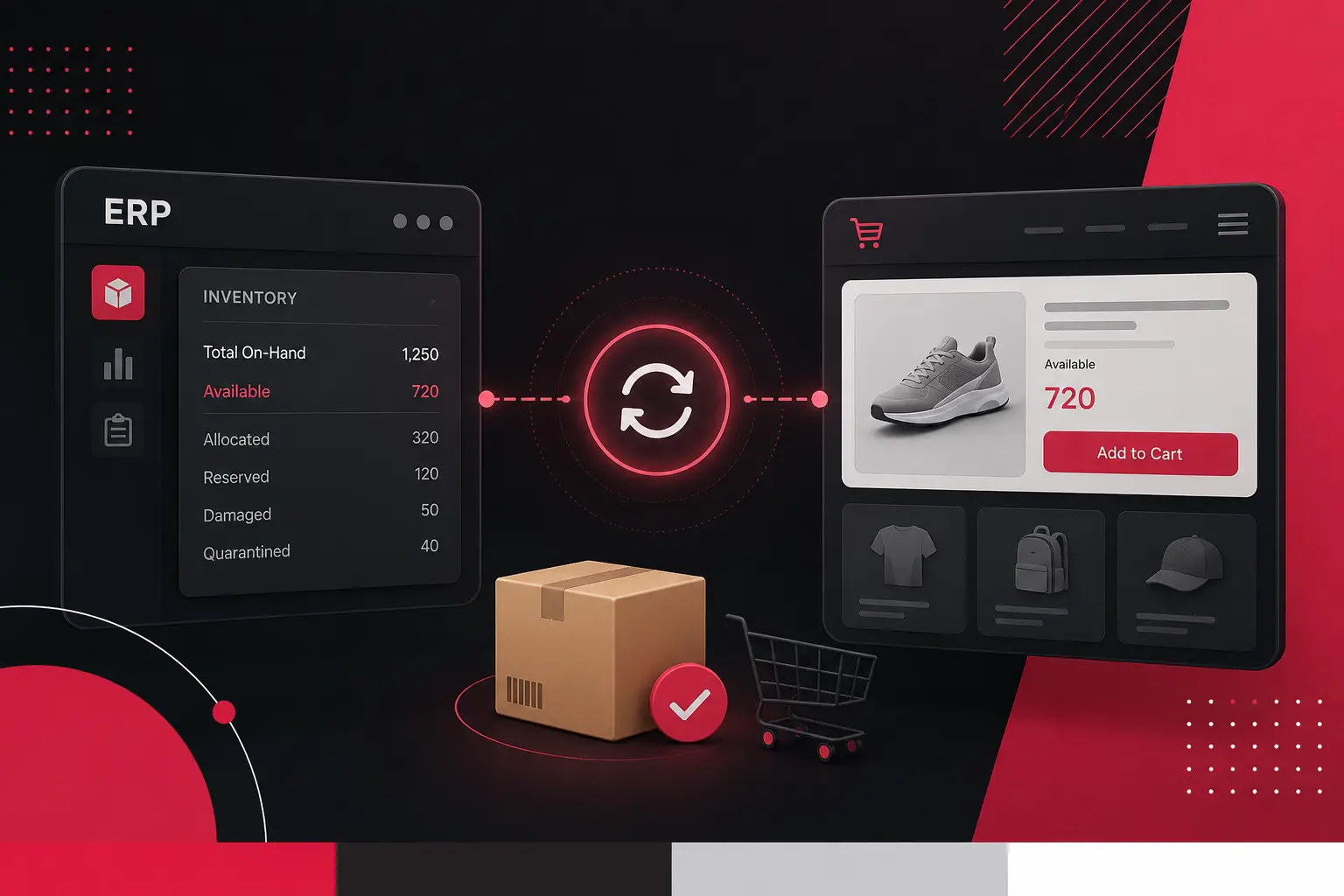
Total on-hand stock is what the ERP counts. Available stock, the number the storefront should actually show, is smaller, once every legitimate claim against that inventory gets subtracted out.
Available = Total On-Hand − Allocated − Reserved − Damaged − Quarantined
Allocated covers stock already committed to open orders working their way through fulfillment.
Reserved covers B2B holds or other commitments outside the normal order flow.
Damaged and quarantined cover stock physically present but not sellable for a reason the ERP knows about and the storefront needs to respect.
An integration that syncs the ERP’s total count directly to the storefront, skipping this calculation, will oversell reliably, not occasionally, the moment enough of these categories exist at once.
True real-time sync, every unit change pushed the instant it happens, sounds like the obvious target and creates real API load for benefit that rarely justifies it.
Most working implementations settle on near-real-time: updates every one to five minutes for standard inventory, event-driven where possible rather than constant polling.
A small number of genuinely high-velocity SKUs, the handful of products actually at risk of selling out in a given hour, can justify a tighter, dedicated sync cadence, sometimes as fast as sixty seconds, without extending that same overhead to the entire catalog.
| Sync Method | How It Works | Best Fit |
|---|---|---|
| Event-driven (webhook) | Pushes an update the instant a change occurs | Orders, high-velocity SKUs |
| Scheduled delta sync | Moves only changed records on a set interval | Standard catalog, most inventory |
| Polling | Repeatedly checks for changes at intervals | Fallback only; least efficient at scale |
Most reliable setups combine the first two: orders sync in near real time so the ERP always reflects what was just sold, while general inventory runs on a short, scheduled cadence with a faster lane carved out for the SKUs where a few minutes of delay genuinely matters.
A single-warehouse business can pass one number and move on. A multi-warehouse business has to decide whether the storefront shows aggregated availability across every location or per-warehouse availability tied to fulfillment logic, and the integration has to calculate whichever one applies rather than forwarding raw per-warehouse counts and hoping the storefront sorts it out.
Multi-vendor marketplaces run into the same problem from a different angle – availability has to be calculated per seller rather than per warehouse, which is exactly why this logic needs to be designed into a multi-vendor marketplace from day one rather than retrofitted once the platform is already live
This decision usually follows how fulfillment actually works: a business shipping from whichever warehouse is closest to the customer needs different logic than one that always ships from a single primary location and treats the others as backup capacity.
Some ERPs allow it, tracking a backorder or timing mismatch as a negative count. Most ecommerce platforms do not expect one. The integration layer has to catch this explicitly, either blocking negative values from syncing or converting them to zero, or a listing can start behaving unpredictably, sometimes showing as unlimited stock precisely when it should show as unavailable.
A bundle that exists as one SKU on the storefront is frequently several individual components in the ERP, each with its own stock level. Availability for the bundle has to be calculated from whichever component runs out first, not tracked as its own independent number that can drift out of sync with what is actually buildable.
Both of these are the kind of gap that looks like a rare bug during testing and turns into a support queue full of canceled orders once real volume hits the integration. This is the same underlying lesson we covered in why every new integration costs more than the last one: the individual pieces look manageable in isolation, and the combination is where the real cost hides.
No sync frequency, however tight, fully closes the gap between two customers adding the last unit to their cart at nearly the same moment.
That gap gets closed at checkout, not in the sync job: a small stock buffer on high-velocity items absorbs minor timing drift, and a short-lived inventory reservation the instant an item enters checkout prevents a second buyer from completing a purchase against stock the first buyer already has a hold on.
Both mechanisms read from the same available-inventory calculation the sync job maintains, rather than trusting whatever number happened to sync last.
None of this works well as a direct, one-off connection between the ERP and the storefront.
It works as a defined integration layer, sitting between the two, that owns the available-inventory calculation, the sync cadence tiering, and the edge-case handling in one place rather than scattered across whatever connector happened to ship with either platform.
This is the same pattern behind a properly built ERP integration generally, and it holds whether the storefront in question runs on Shopify, a headless build, or something fully custom: the platform choice matters less than whether anyone deliberately owns the logic connecting it to the systems of record behind it.
Whether you’re comparing dedicated ecommerce platforms broadly, narrowing it down to WooCommerce, BigCommerce, or Shopify specifically, or evaluating platforms built for a multi-vendor marketplace, the same rule applies: none of them make this integration layer optional
If your storefront and ERP are technically connected but still oversell, drift out of sync, or need someone checking numbers by hand, that gap is usually narrower to close than people assume.
This kind of integration layer is typically part of a larger custom ecommerce build rather than a bolt-on, and it’s worth budgeting for alongside the rest of the project — budget is consistently the top worry founders report before launching – see our breakdowns of what ecommerce website development actually costs and what a 100-product store specifically runs.
Book a Discovery Call and we will help you find where it actually is.

 Ecommerce
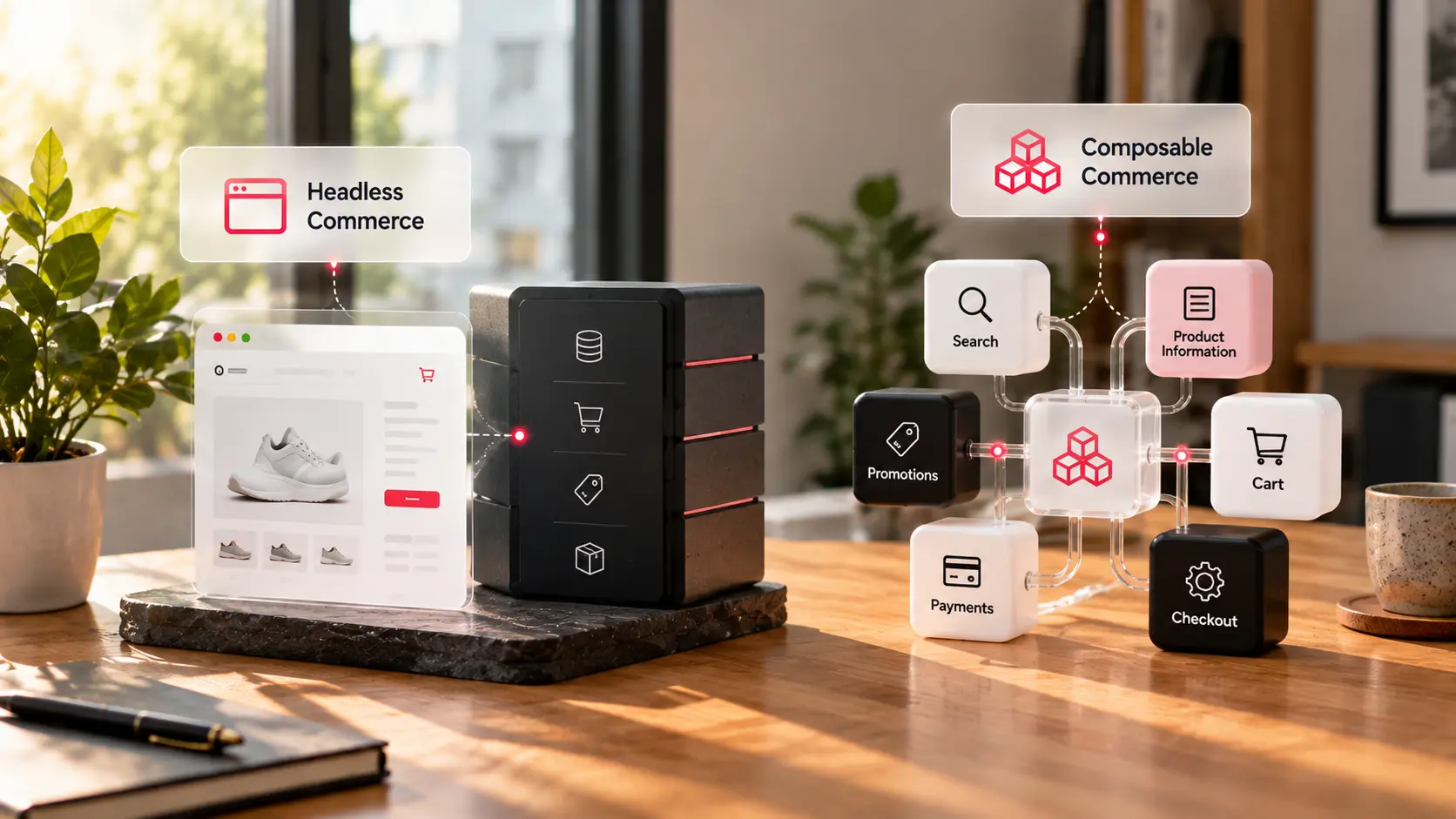
Here is the difference between the two sentences. Headless commerce separates what shoppers see from the system that runs your store. Composable commerce goes further and breaks that system into separate parts that you pick, connect, and replace one at a time. If you searched for composable commerce vs headless commerce, you have probably noticed […]
 AI & Automation, Ecommerce
Search “AI personalization ROI” and you’ll find the same handful of numbers everywhere. And trust us, those numbers are interesting at best, and misleading at worst. 40% more revenue. 400% ROI. 5–8x returns. They all sound impressive. They also contradict each other, sometimes within the same article. The problem isn’t that personalization doesn’t work. It’s […]
 Build vs. Buy, Ecommerce, Platform Strategy
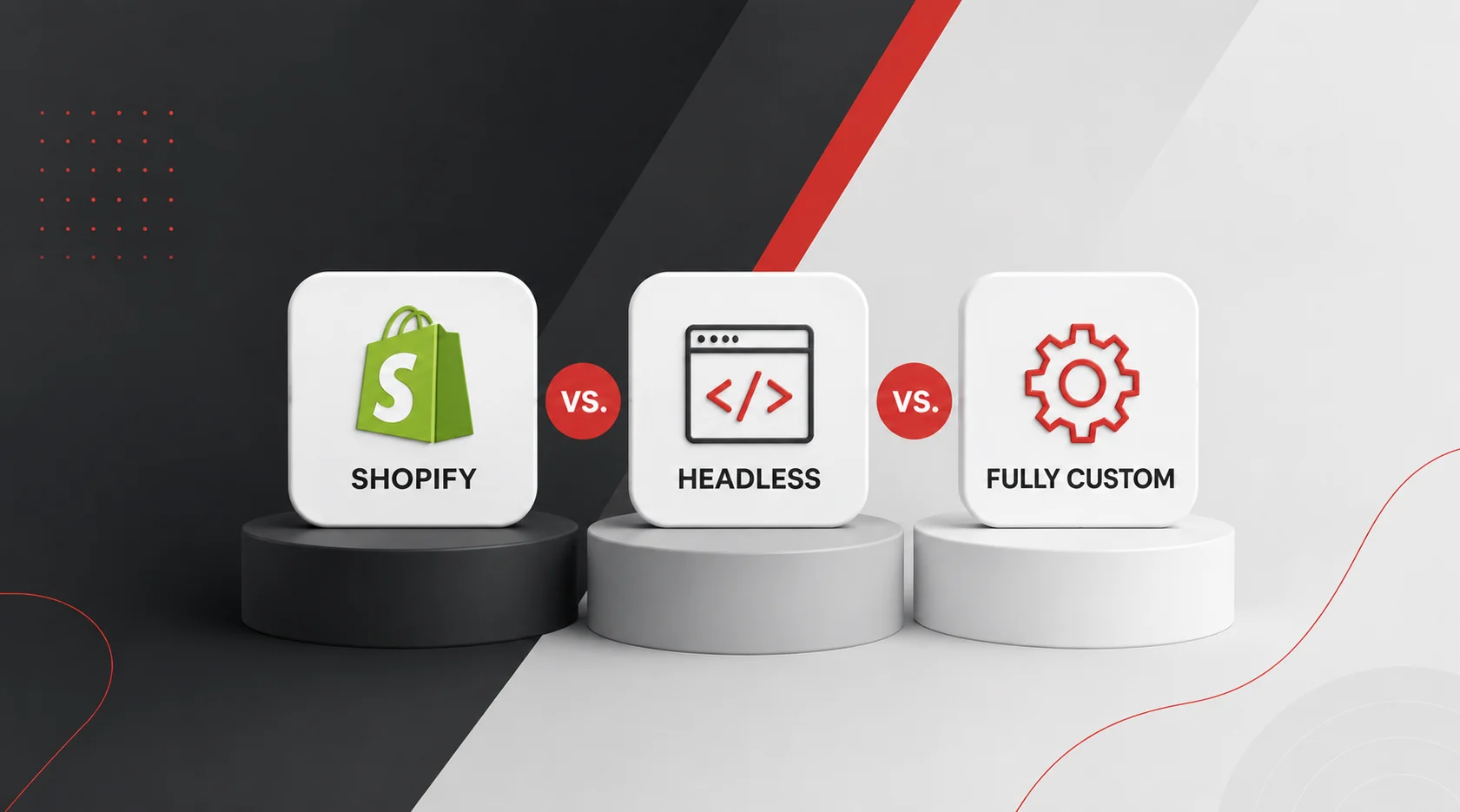
Three answers exist to “what should we build our store on,” and all three are correct, for different businesses. Shopify. Headless. Fully custom. The mistake is not picking the wrong one in one direction. The mistake is picking based on which option sounds most sophisticated in a board meeting instead of which one matches the […]