Composable Commerce vs Headless Commerce: What’s The Difference?
LN Webworks
·
09 Oct, 2026
Here is the difference between the two sentences. Headless commerce separates what shoppers see from the system that runs your store. Composable commerce goes further and breaks that system into separate parts that you pick, connect, and replace one at a time.
If you searched for composable commerce vs headless commerce, you have probably noticed a pattern. Vendors use the two terms as if they meant the same thing, or as if one were plainly better. Neither is true. They describe different amounts of change, with different costs, and most stores need less of both than the sales pages suggest.
This guide explains each term in simple language and shows where they overlap. It also gives you a way to decide how far to go. We offer ecommerce engineering, so we gain from bigger projects. We will try to tell you honestly when you do not need one.
A traditional store is one bundle. The storefront, the cart, the product data, and the order system live together on one platform. If you want to change how a page looks, you work inside that platform’s templates.
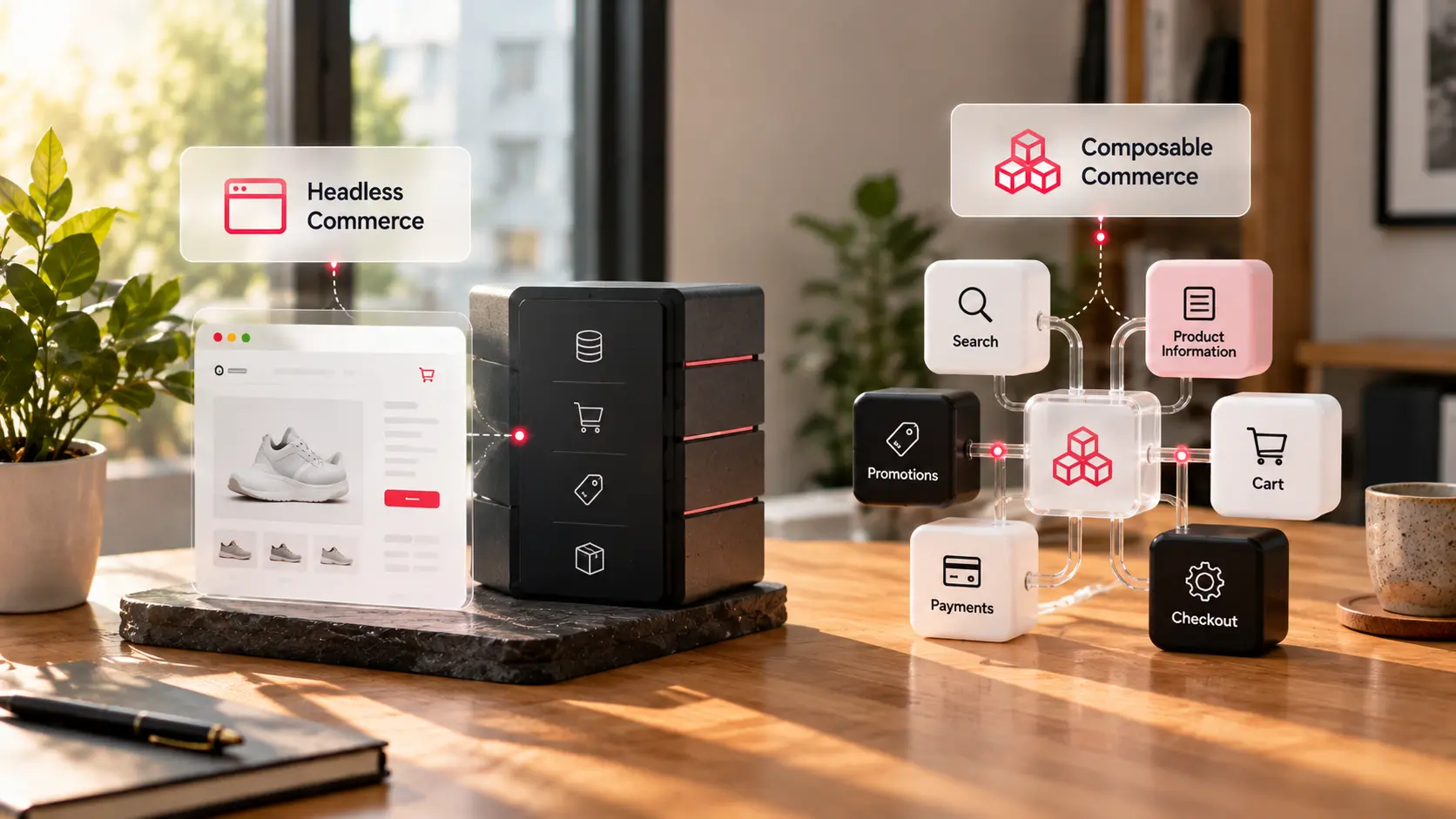
Headless cuts the bundle in two. The “head” is the storefront that shoppers see. The “body” is everything behind it: products, prices, carts, and orders. The two talk to each other through APIs, so the storefront can be built with any technology you like.
That freedom is useful. A team can redesign the storefront without touching the back office. The same product data can feed a website, a mobile app, and an in-store screen.
There is one catch. The back end is still a single platform. As Brink Commerce puts it, a decoupled storefront is still limited by the system underneath it. You can change a lot, but not everything.
A fair test for headless is simple. If storefront changes keep waiting in a queue behind platform limits, you may be seeing one of the signs your ecommerce platform has become the bottleneck. Headless is one way to remove that limit.
Composable commerce splits the back end as well. Instead of one platform that does everything, you assemble separate services. One handles search. Another holds product information. Others manage promotions, the cart, checkout, and payments. They connect through APIs.
The industry calls these parts packaged business capabilities. The idea is that each capability stands alone, so you can replace it without breaking the rest.
Here is a practical test. Can you swap your search tool next quarter without touching the checkout? If yes, that part is composable. If search, cart, and checkout all depend on one platform, it is not.
The vocabulary shifts from one vendor to the next. Shopify calls composable “a further evolution” of headless, and points out that a headless setup typically still relies on a single back end. Most definitions agree on that core, so ask any vendor to define the terms before you compare quotes.
You can be headless without being composable. Most stores that go headless keep one back-end platform and build a custom storefront on top. You cannot really be composable without a decoupled storefront, because the whole point is that every part can change independently.
That makes headless the usual first move, and composable the further one. Table 1 sets them side by side.
Table: Headless and composable commerce compared
|
Question |
Headless |
Composable |
| What gets separated | The storefront from the back end | Every major capability from every other |
| The back end | Usually one platform | Many services, often from many vendors |
| Who must own it | A front-end team | A front-end team plus people for integration and vendor management |
| Biggest gain | Freedom to design the shopper experience | Freedom to replace any part without a rebuild |
| Biggest cost | Building and running the storefront yourself | Connecting, monitoring, and paying for many pieces |
| Typical first project | Rebuild the storefront on your current platform | Replace one capability, such as search, then another |
| Risk when done too early | Slower launches than a packaged theme | Services that disagree about the same data |
Think of the choice as a ladder, not a switch. Each step adds freedom and adds work.
Move up one step only when a specific, named problem justifies it. Skipping steps is where projects run over budget.
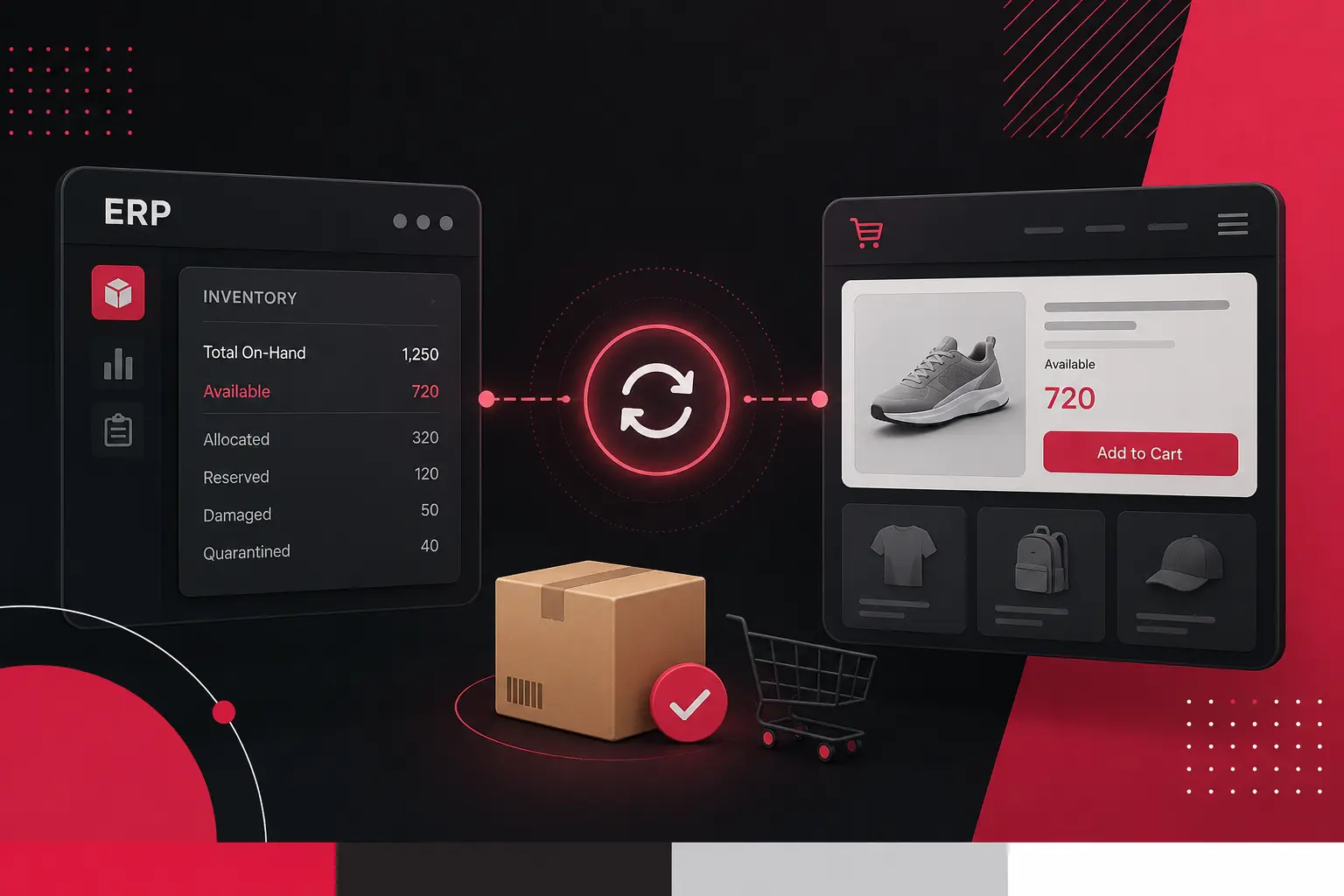
Whatever you choose, the first thing to break is usually agreement on data. When several services each hold a version of price or stock, they drift apart. Inventory is the classic case, and we cover it in real-time inventory sync between ecommerce and ERP.
Vendors talk about speed and flexibility. They talk less about upkeep. More parts mean more contracts, more connections to maintain, and more places for something to fail at 2 AM.
You also need people who understand the whole picture. Shopify’s own guidance says composable suits digitally mature companies with experienced engineering teams, and that it is a slower route to launch than a packaged platform. That is vendor content, but the point holds up.
So price the full year, not the build. Our breakdown of what an ecommerce platform really costs shows where the quiet costs sit.
If you want a second opinion on those answers, our digital commerce team reviews exactly this kind of proposal.
Headless and composable are not rivals. Headless is a smaller change that often comes first. Composable is a larger one that makes sense only when a specific part of your platform holds you back.
The best architecture is the one your team can run well. A simple store that works beats an elegant one that nobody can maintain, and a ladder you climb slowly beats a leap you cannot undo.
Before your next vendor call, write down one question and make them answer it: which single problem does this change solve for us, and how will we know it worked?
Tell us your platform and the tools around it. We will say which step you are on, whether the next one is justified, and how much integration work it would add.
If the honest answer is “stay where you are,” we will say that. Talk to our e-commerce engineers or Book a Discovery Call →

 AI & Automation, Ecommerce
Search “AI personalization ROI” and you’ll find the same handful of numbers everywhere. And trust us, those numbers are interesting at best, and misleading at worst. 40% more revenue. 400% ROI. 5–8x returns. They all sound impressive. They also contradict each other, sometimes within the same article. The problem isn’t that personalization doesn’t work. It’s […]
 Ecommerce, ERP Integration, Inventory Sync
Every scoping conversation about ecommerce-ERP integration starts the same way: sync inventory in real time so the storefront never sells something that is not actually there. It is the right goal, stated slightly wrong. The number that actually needs to move between the two systems is not total inventory, it is available inventory, and the […]
 Build vs. Buy, Ecommerce, Platform Strategy
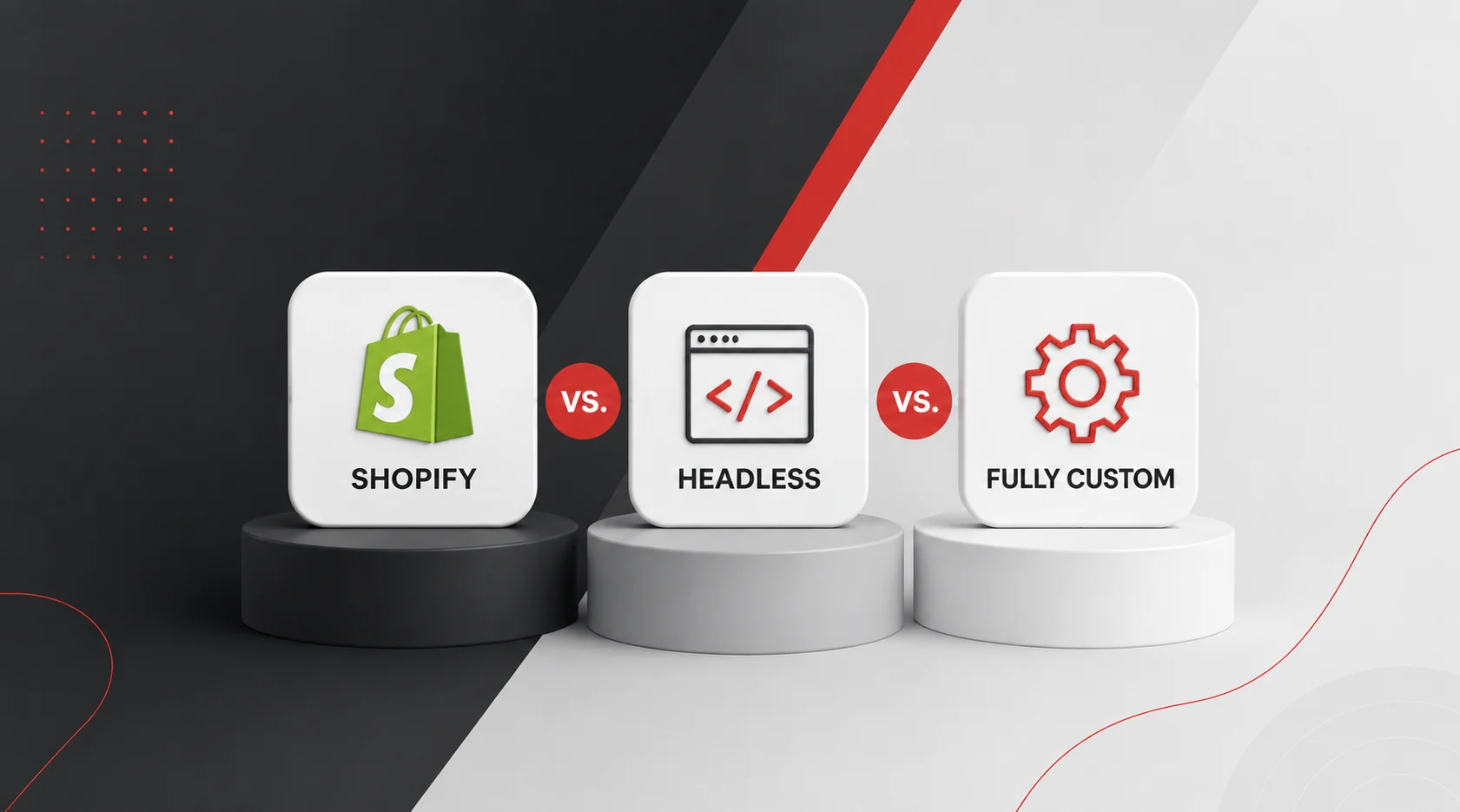
Three answers exist to “what should we build our store on,” and all three are correct, for different businesses. Shopify. Headless. Fully custom. The mistake is not picking the wrong one in one direction. The mistake is picking based on which option sounds most sophisticated in a board meeting instead of which one matches the […]