11 Best Ecommerce Platforms for Your Business in 2026
Deepak
·
14 Jul, 2026
Top Ecommerce Platforms For Business , Best Ecommerce Platform For Small Business , Ecommerce Website Builder plays a crucial role in achieving your goals.
Thinking about running an ecommerce business? Well, it can be a pretty exciting idea. You can create a brand, build a website, and share your products.
But before you start your journey, make sure to know and understand the requirements of your business and what kind of tools you need in the future including how each platform is adapting to AI-driven shopping, since that’s fast becoming a real sales channel in its own right.
You will learn about the top 11 best ecommerce platforms in this read. Examine the features and pricing structures of these well-known software programs, keeping in mind your whole business model strategy as you do so.
Ecommerce platform software is used for creating and building an online store and managing other retail tasks, including inventory management, marketing, and payment processing.
Merchants can create distinctive websites and oversee their operations as they expand and change with the help of the top ecommerce systems.
To assist you in selecting the best option for your clients, here is a summary of the top 11 ecommerce platforms for 2026.
Given below is the list of top ecommerce platforms that will help you boost your online business:
Learn more about the best AI tools for ecommerce to grow your business.
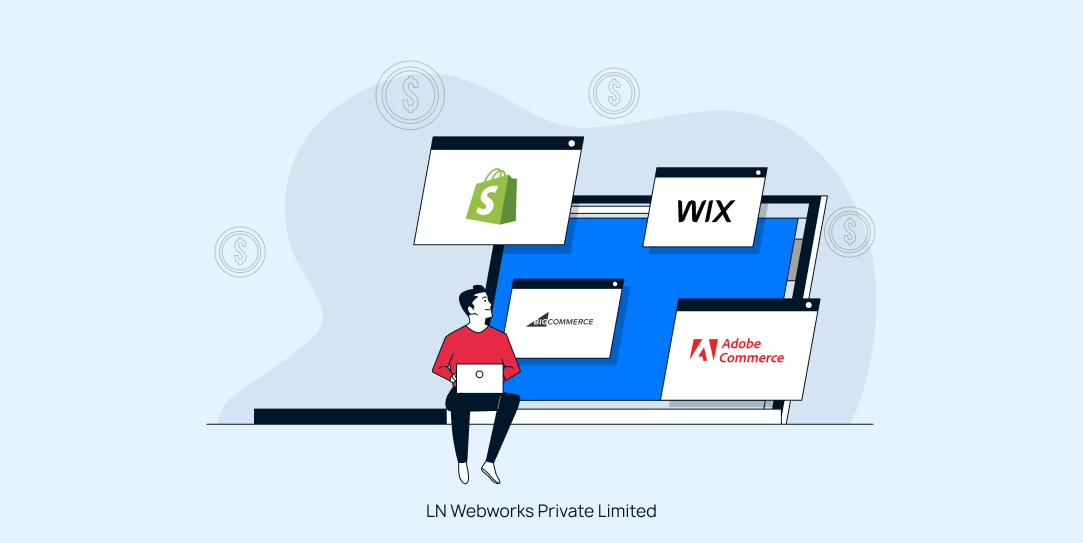
Shopify is one of the leading ecommerce platforms. With functionality to manage every facet of retail, from product management and website design to shipping and banking, this self hosted software enables you to sell wherever your customers are.
Learn How To Scale Your Business With Shopify
Benefits Of Choosing Shopify
Starting a business from home and growing it into an international brand is easy with Shopify. It supports individual business journeys track your entire business from one admin, improve your store, sell through social media, and tap into well liked models like dropshipping and other retail formats.
What Is The Cost Of Shopify?
Shopify offers a free trial with no credit card required. Paid plans now start at $39/month for Basic, $105/month for Grow, and $399/month for Advanced, with Shopify Plus starting at roughly $2,300–$2,500/month for enterprise merchants. Pricing is lower when billed annually.
Key Features
Shopify allows you to sell in person using Shopify POS, wholesale to other stores, directly on social media and marketplaces, and through your own website. As of 2026, every paid plan also includes access to Agentic Storefronts built in infrastructure that lets your store surface in AI shopping assistants like ChatGPT and Gemini, without needing Shopify Plus. Standard features like targeted email campaigns and abandoned cart recovery help increase purchases too.
Why Choose LN Webworks For Your Shopify Ecommerce Website
Wix is a versatile drag and drop website builder that delivers tailored templates, domain name registration, and web hosting. You can create a basic website for free; however, to access the platform’s ecommerce features, you need a paid plan.
Benefits Of Choosing Wix
It’s built to simplify online selling by letting you accept payments, track orders, and control inventory across different channels.
What Is The Cost?
The entry level plan with ecommerce features, Core, starts at $29/month (billed annually). The Business plan, with more automation and higher storage, runs $39/month.
Key Features
Wix integrates with social platforms like Facebook and Instagram, and lets you administer your site via mobile app, with a native point of sale system for in person sales.
However, many product based businesses require more native ecommerce depth than Wix offers out of the box inventory management and low stock notifications, for instance, still lean on third party apps.
Advantages And Disadvantages
Like Shopify and Wix, BigCommerce provides site hosting, ecommerce store design options, and capabilities for international sales, search engine optimization, and marketplace listings.
Benefits Of Choosing BigCommerce
Because of its features that facilitate large scale retail, BigCommerce is preferred by enterprise level businesses. It’s worth noting that some users find the platform less flexible and intuitive than others.
Plans and Costs
BigCommerce’s Standard plan starts around $29/month billed annually ($39/month month-to-month), scaling up to $105/month (Plus) and $399/month (Pro) as your sales volume grows plans are tied to trailing 12 month revenue thresholds, so high growth stores may be moved up a tier automatically.
Features Of Ecommerce
BigCommerce interfaces with price comparison sites, Amazon, Etsy, Facebook, Google Shopping, and other sales channels. The mobile app lets you manage inventory and check analytics on the go, though some capabilities are Android-only, and there’s no native POS system.
Advantages and Disadvantages
A powerful, non hosted ecommerce platform built for developers and large businesses that want a highly tailored online store.
Benefits Of Choosing Adobe Commerce
Adobe Commerce suits businesses looking for a high level of personalization. It delivers extensive flexibility but typically needs in-house developer support to set up and maintain.
Plans And Cost
Pricing is quote-based, scaled to the needs and size of your business.
Features of Ecommerce
Amazon sales data integrates with the platform, though it lacks some of the plug-and-play multichannel and social commerce tools available elsewhere, and doesn’t include a native point-of-sale system or mobile app.
Advantages And Disadvantages
WooCommerce is an open-source, free plugin that transforms a WordPress website into a fully functional online store.
Benefits Of Choosing WooCommerce
WooCommerce suits anyone already familiar with WordPress, letting you add product descriptions, a shopping cart, and checkout to a blog-focused website while integrating ecommerce features.
Choose the best: WooCommerce Vs BigCommerce
Plans And Costs
The core plugin is free, but hosting, premium extensions, and add-ons can bring real monthly costs often in the $100–$400/month range once managed hosting, security, and premium plugins are factored in.
Features Of Ecommerce
WooCommerce enables integrated payment processors and sales channels, along with a mobile app for checking analytics, handling orders, and adding products, plus a native point-of-sale option.
You can build a sophisticated ecommerce site with extensions covering shipping, security, and theme customization either third-party or native.
Get a Custom Ecommerce Solution at LN Webworks
Many merchants consider WooCommerce’s add-on structure a drawback, even as others value the flexibility. Costs spread across plugins, extensions, and hosting can be harder to track than an all-in-one plan.
Advantages And Disadvantages
A user-friendly drag-and-drop website creator known for sleek, designer-quality templates, with ecommerce unlocked on its Commerce plans.
Benefits Of Choosing Squarespace
Squarespace lets you turn your website into an online store with a secure checkout process supporting several payment channels, including Stripe, PayPal, Apple Pay, and Afterpay.
Plans And Costs
Commerce plans now start around $36/month (billed annually) for Basic Commerce, with Advanced Commerce which adds abandoned cart recovery and subscription selling around $65/month.
Features Of Ecommerce
Squarespace offers inventory tracking, subscription product sales, and shipping label printing. Templates remain a standout genuinely well-designed and fully responsive across all plans.
Advantages and Disadvantages
A fully hosted ecommerce platform built for makers and independent artists, emphasizing ease of use and fundamental features.
Benefits Of Choosing Big Cartel
Big Cartel suits small creators and artists who want a simple platform with basic features. A free plan lets you list and sell up to five products to get started.
Plans and Costs
Free to start (up to five products); paid plans begin around $12/month.
Features of Ecommerce
Big Cartel’s free plan is generous relative to other platforms’ free tiers, though paid plans offer fewer advanced features than competitors fewer payment channels, and a cap on product photos per listing.
Pricing scales with the number of products you list, so costs grow alongside your catalog.
Advantages & Disadvantages
Also known for its deep integration with Square’s in-person payment ecosystem, bridging online and in-store sales for small businesses.
Benefits Of Choosing Square Online
Square Online suits merchants already using Square for physical retail who want to extend online without friction. Sales across channels are easy to manage thanks to the shared payment system.
Plans and Costs
A free option is available; paid plans start around $29/month billed annually.
Features of Ecommerce
You can start building your store for free, though a paid plan is needed for a custom domain and to remove in-app branding. Advanced multichannel features can be harder to integrate compared to dedicated ecommerce platforms.
Advantages And Disadvantages
An accessible tool for building an online store, with a straightforward setup and mobile-friendly design.
Benefits Of Choosing Shift4Shop
Shift4Shop isn’t feature dense but works well for mobile users, and its API lets you connect your store with other applications a solid fit for merchants who need core ecommerce functionality without complexity.
Pro Tip: Avoid common mistakes in app development APIs
Plans And Cost
Plans start around $29/month. The platform fee can be waived if you use Shift4Shop’s own payment gateway and meet a minimum monthly sales threshold; otherwise, standard plan rates apply.
Features Of Ecommerce
For sales channels, Shift4Shop connects with Facebook, Amazon, and eBay. There’s no dedicated mobile app, and POS hardware is a separate purchase.
Advantages & Disadvantages
One of the longer standing ecommerce platforms, built around a straightforward setup for small businesses selling physical products.
Benefits Of Choosing Volusion
Volusion makes it easy to integrate 30+ payment gateways and provides the essential tools to launch an online store without much hassle.
Plans And Costs
Plans start around $35/month billed annually.
Features Of Ecommerce
Volusion’s simple setup suits physical product sales, but it doesn’t support digital product sales so you’d need a separate solution for items like ebooks or music. There’s no native mobile app, integrated sales channels, or POS.
Advantages & Disadvantages
An open-source, free ecommerce platform that’s straightforward to set up.
Benefits Of Choosing OpenCart
A dashboard displaying key indicators like sales and repeat business lets you set up and run multiple stores.
Plans And Costs
Free to use, as an open source platform (hosting costs apply separately).
Features Of Ecommerce
You can design your store using OpenCart’s large library of modules and free templates, with many integrations available for connecting your existing tools.
Advantages And Disadvantages
When comparing ecommerce platforms, remember that your goal isn’t to find the single “best” software it’s to find the platform that fits your business requirements and gives your customers the best possible shopping experience.
It’s also worth factoring in how each platform is adapting to AI-driven shopping. AI-attributed traffic to retail sites has grown sharply over the past year, and platforms that make it easy to plug into AI shopping assistants without requiring an enterprise-tier plan offer a meaningful advantage going into the rest of 2026.
Integrating tools like a payments provider, point-of-sale system, and business lending solutions can extend your company’s operations well beyond simply creating your online store.
At LN Webworks, we offer all of these services and more, ensuring a seamless ecosystem for your business.
Ready to revolutionize your approach to web management? Contact us today to find out how we can offer you the best solutions for your business growth.

 Other, SaaS Development
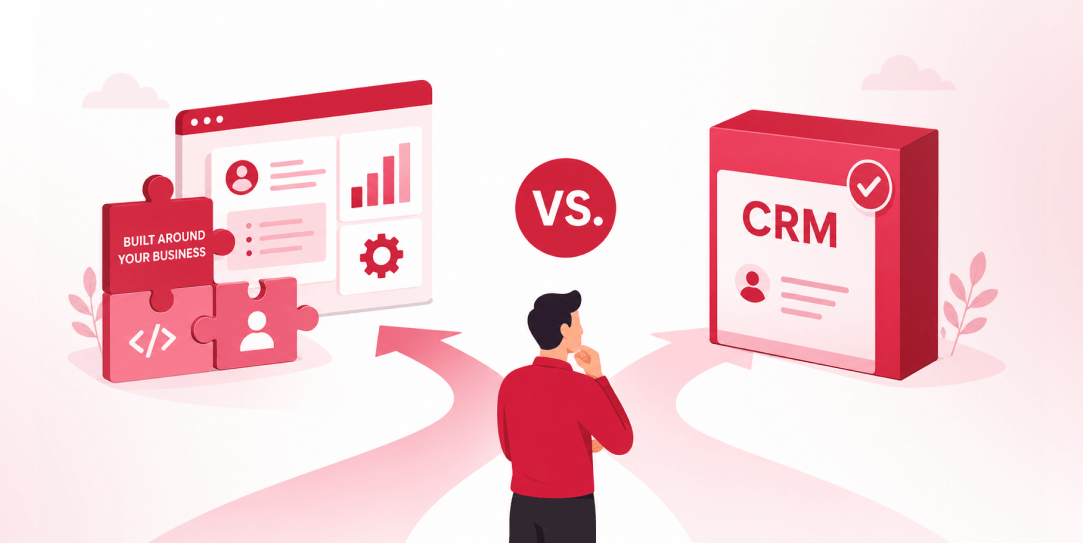
SaaS CRMs win on speed. Custom wins on fit and ownership. This isn’t a pitch for either one. Every early-stage SaaS company hits this decision within the first year, usually right after the founder realizes a spreadsheet isn’t a CRM. The default answer is almost always a SaaS CRM: HubSpot, Salesforce, Zoho, sign up in […]
 Other
Other
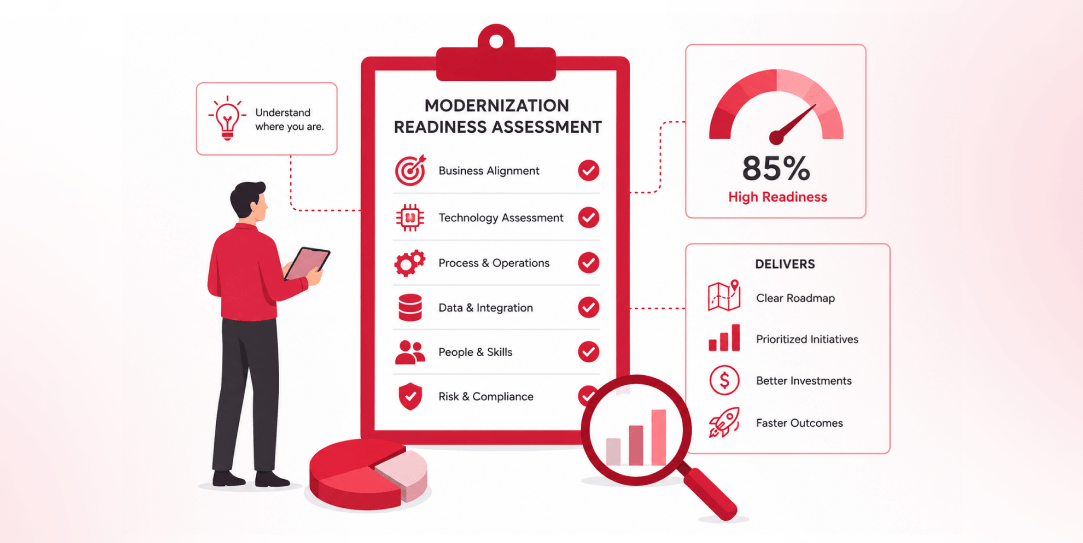
Most “audits” and “assessments” promise clarity but deliver a sales deck with language that lacks clarity. You book the call expecting evidence about your specific platform, and what shows up is a generic pitch for whichever package is easiest for the firm to sell. That’s the actual reason process transparency matters here, not because a […]
 Other
Other
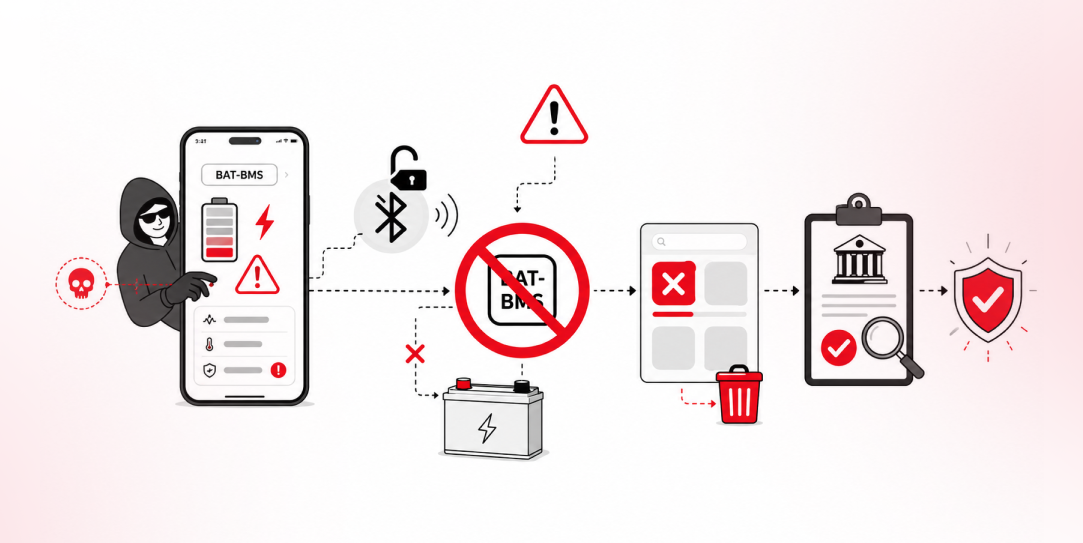
In late June and early July, videos started circulating on Instagram of people walking up to moving e-rickshaws, tapping a phone, and watching the vehicle lose power mid-ride. It spread as a prank trend before anyone fully understood the mechanism. Drivers in Patna (India) reported it first, assuming mechanical failure, until investigators traced it to […]