WordPress vs. Custom CMS: What Does a Growing Newsroom Actually Need?
Hem Kant
·
10 Aug, 2026
Every growing newsroom eventually has this argument internally. Someone wants to move off WordPress because a plugin broke again during a big traffic day. Someone else pushes back because the last custom CMS project at their previous job took eighteen months and still could not do half of what WordPress did out of the box on day one. Both people are right, which is exactly what makes this decision harder than it looks from the outside.
The honest answer is that WordPress and a custom CMS solve different problems, and the platform that fits your newsroom at twenty articles a week is not necessarily the one that fits at two hundred.
Getting this decision right has less to do with which platform is technically better and more to do with an honest read of where your newsroom actually is, and where it is actually headed.
Say what you want about WordPress, it earned its place in publishing for real reasons. A reporter with no technical background can be trained to publish a story in minutes, not hours.
The plugin ecosystem means almost any feature a newsroom might want, from paywalls to newsletter tools to SEO scoring, already exists as a tested, documented option instead of something your team has to build and maintain forever.
Hosting is cheap and plentiful, developers who know WordPress are easy to find, and if your editorial workflow is reasonably standard, the platform gets out of the way and lets people write.
This is exactly why so many well-known publications, from long-running magazines to fast-growing digital newsrooms, still run on WordPress, often on a managed enterprise tier built specifically for publishers. For a newsroom that is not asking the platform to do anything unusual, WordPress genuinely is the fastest, cheapest, lowest-risk way to get a serious publication running.
It is worth noticing that the traffic here runs in both directions. Some large publishers have moved away from proprietary, custom-built systems toward managed WordPress specifically because maintaining an in-house CMS became its own full-time engineering burden.
Others have gone the opposite way, moving off WordPress once their editorial and monetization needs outgrew what the plugin ecosystem could comfortably support. Neither direction proves WordPress nor custom is the universally correct choice. It proves the decision depends entirely on what a specific newsroom actually needs, not on which platform is trending in industry write-ups that year.
The strain rarely shows up as one dramatic failure. It shows up as a slow accumulation of small workarounds. A metering plugin that handles paywall logic fine at ten thousand monthly readers starts timing out at ten times that.
An editorial workflow that was fine for three writers turns into a mess of manual status updates once fifteen people are publishing daily across multiple content types.
Video is often where this becomes obvious first, since WordPress was built article-first and video support gets bolted on rather than designed in from the start, the same underlying gap we walked through in why an article-first CMS breaks under a video-first pivot.
None of this means WordPress broke. It means the newsroom outgrew the assumptions the platform was built on, which is a different problem with a different fix. Sometimes that fix is a better-architected WordPress setup, with a smaller, deliberately chosen plugin stack instead of whatever accumulated over the years.
Sometimes it genuinely is not, particularly once editorial governance itself gets complicated, multiple sections with different approval chains, syndication rules for partner sites, or archive content that needs to stay searchable for years without anyone manually maintaining it.
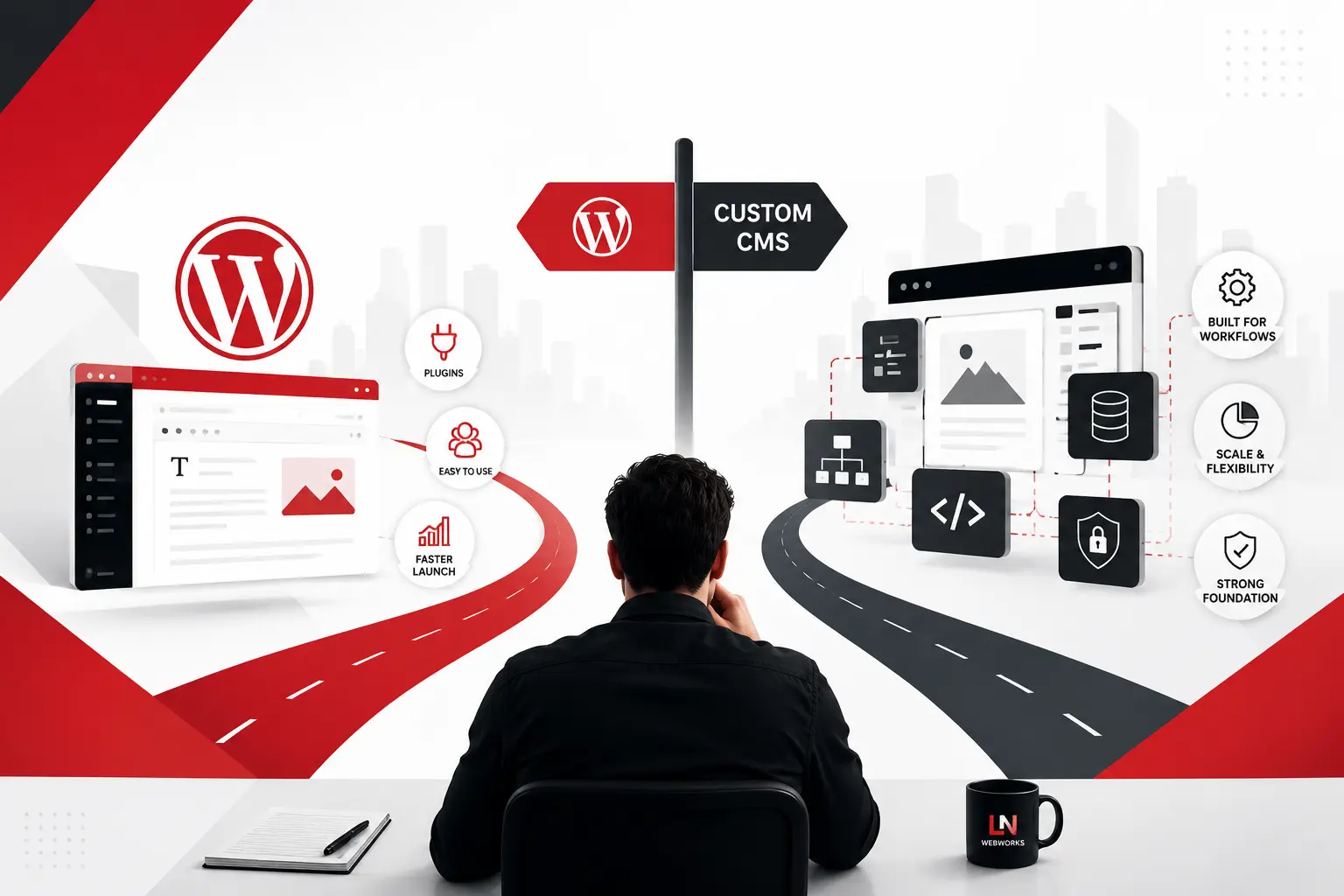
“Custom CMS” gets used as if it means one thing, and it does not. On one end, it means a fully bespoke platform built from the ground up, a real commitment in time and ongoing maintenance that genuinely is not the right call for most newsrooms.
On the other end, it means a headless or API-first setup, sometimes still WordPress underneath, with a content model and editorial workflow actually designed around how your specific newsroom works, rather than adapted from a generic blog structure.
Most newsrooms that outgrow off-the-shelf WordPress land somewhere in that second category, not the first. The real decision is rarely WordPress or building everything from scratch. It is usually kept extending what you have, or invest in a foundation shaped around how you actually publish.
| Dimension | WordPress (managed/enterprise) | Custom / Headless CMS |
| Time to launch | Days to weeks | Months, depending on the scope |
| Editorial learning curve | Minimal, familiar interface | Depends on design, can match existing habits |
| Multi-format content | Bolted on via plugins | Native, if designed for it |
| Paywall & subscription logic | Plugin-dependent, limited at scale | Built to the specific model |
| Ongoing cost | Lower, spread across plugins and hosting | Higher upfront, lower per feature over time |
| Unusual workflows | Constrained by plugin architecture | Built around the actual workflow |
Start by considering how much of your editorial workflow WordPress plugins can actually cover today, honestly, not just in theory. If the answer is mostly, with a few annoyances, those annoyances are probably cheaper to fix than a rebuild. If the answer is that your team has four different tools duct-taped together because none of them quite works, that is a different conversation.
Try pricing both paths honestly before making a decision. Get a real quote for what a better-architected WordPress setup would cost, not just the plugin fees, but the audit and cleanup work most newsrooms skip.
Then get a real quote for what a headless or custom build would cost for the specific gaps you actually have, not a generic rebuild. Comparing two vague guesses is how teams end up choosing based on which salesperson was more convincing rather than which option actually fits.
Look at where your traffic and revenue model is actually headed, not where it is today. A newsroom about to launch a serious subscription product or lean hard into video needs a platform built for that from the start, not one that will need a second rebuild in two years once the first workaround stops holding.
And be honest about maintenance capacity. A custom or headless setup gives you more control, but control comes with more to actually maintain.
This is close to the same tradeoff we described in custom CRM versus off-the-shelf SaaS CRM: if there is no one on the team, internal or partner, who will own that system long-term, the massive community and documentation behind an established platform is worth more than it looks on a feature comparison chart.
Neither platform is the right answer by default; whatever a vendor pitches you happens to sell. The right call comes from being honest about where the friction actually is today and where the newsroom is actually going, not from which option sounds more impressive in a planning meeting.
If you are trying to figure out which side of this decision your newsroom is actually on, we are glad to walk through it with you, no pitch required.

 Platform Strategy, Web Development
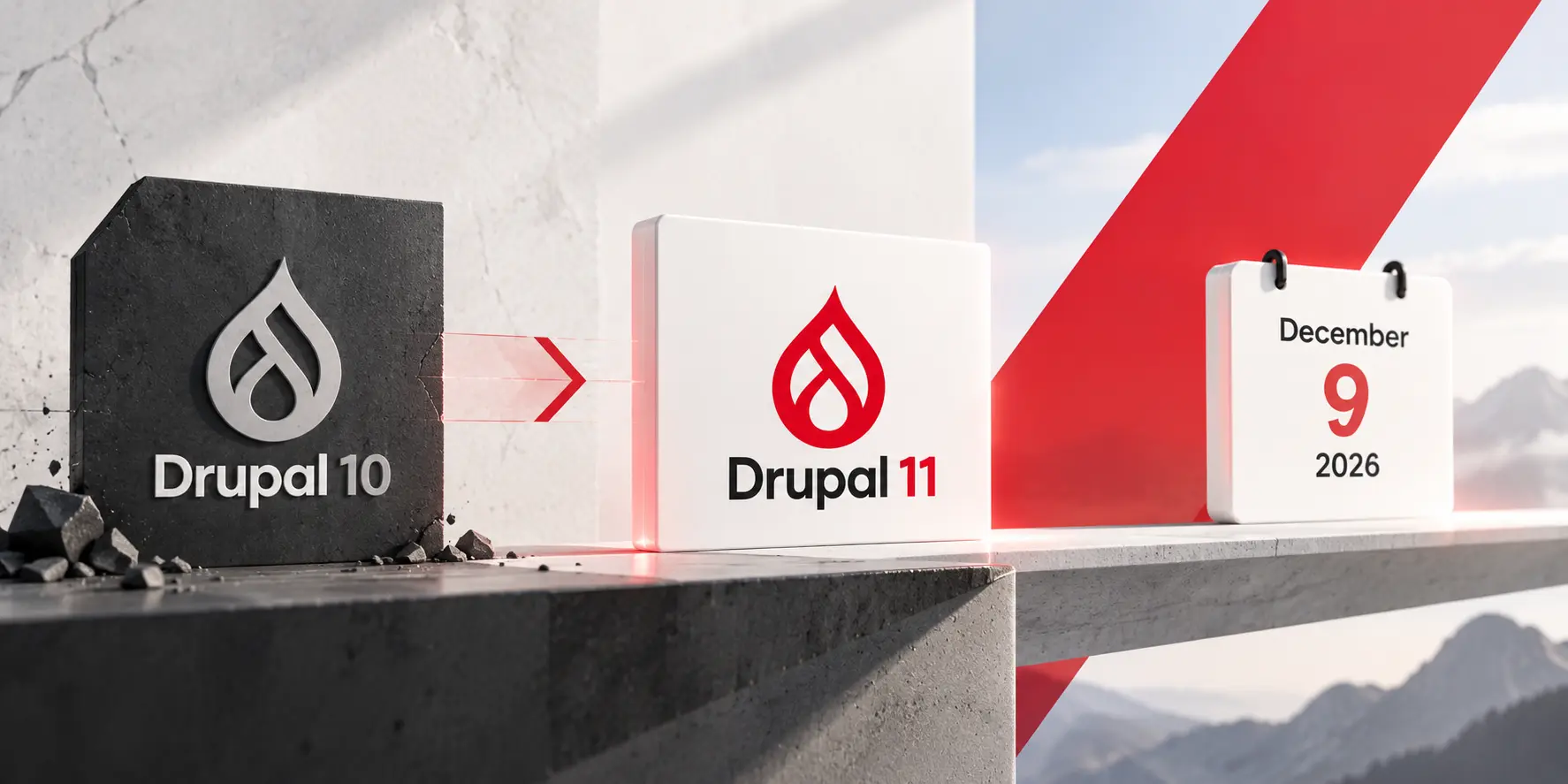
Key Takeaways Drupal 10 reaches end of life on 9 December 2026. After that, core gets no new releases and no security advisories. Check your minor version today. Drupal 10.6 is the last release, and earlier minor versions have already lost security coverage. The move from 10 to 11 is an in-place upgrade, not a […]
 Legacy Modernization, Platform Strategy
Key Takeaways Modernization is a set of decisions, not a rewrite. For each system you choose one of five moves: keep, wrap, move, rebuild in slices, or retire. Start with a business reason you can write in one sentence, then map what you have before you touch any code. Change small slices while old and […]
 Platform Strategy
The firm that writes your software owns it, unless your contract says otherwise. That is the starting point under US copyright law for software built by an outside firm, and the Copyright Office’s own guidance explains why. It is easy to miss, because nothing in a pitch, a proposal, or an invoice ever brings it […]