Legacy System Modernization: A Step-by-Step Guide for Growing Businesses

LN Webworks
·
12 Oct, 2026
Nobody sets out to modernize a legacy system. What people want is smaller and more practical. A release that does not take three weeks. A new developer who can follow the code within a month, not a year. An integration that works without a workaround. A system that the one person who understands it can leave on holiday.
Legacy system modernization is the work of getting those things. It is not a rewrite, and it is not a technology trend. It is a series of choices about what to keep, what to change, and what to switch off, made in an order that keeps the business running.
This guide walks through that work in plain language. You will see what modernization means and what you gain from it. Then comes a step-by-step legacy system modernization process, followed by the best practices that keep it on track. We finish with how to decide between doing it yourself and bringing in a partner. We are a modernization partner, so weigh our views with that in mind. We will say plainly when you can do this yourself.
A legacy system is software your business depends on that has become hard to change. It may be old, but age is not the test. We covered that in when to modernize a legacy system. The real test is risk: how slowly it changes, how few people understand it, and how badly it connects to everything else.
Modernization means making that software easier to change, run, and connect. That can be a small step or a large one. Wrapping an old system with a clean API is modernization. So is moving it to new hosting, rebuilding it piece by piece, or switching it off because a standard product now does the job.
What it does not mean is a rewrite for its own sake. Rewrites are the most dramatic option and the riskiest. Most growing businesses are better served by a mix of smaller moves, each matched to the system in front of them.
The benefits of legacy system modernization are easiest to see in daily work.
Notice that none of these is “a newer technology.” Each is a business result. If you cannot name which one you are after, that is the first thing to fix.
Here is the sequence we use and recommend. It works for a single application and for a whole estate.
For example: “We are modernizing so that we can release weekly.” Or: “so that we pass the next audit.” Or: “so that we can connect to a partner’s API.” Every later decision gets tested against this sentence.
List every system, what it does, who uses it, what it connects to, where its data lives, and who understands it. Include the unglamorous parts, such as spreadsheets, scheduled jobs, and reports. Old code hides business rules that nobody wrote down, and AI assistants can now read it and draft summaries, which speeds up this step considerably. A person who knows the business must still confirm what the summaries say.
Choose something that matters to the business but is not the most critical system you own. A first slice should prove the method and build trust.
Add automated tests around current behavior, monitoring, backups, and a rollback plan. Without these, you cannot tell whether the new version behaves like the old one.
Decide who owns the data at each stage, and test the data move early, because it is where projects most often slip.
Check the result against your one-sentence reason. Then pick the next slice.
The sorting in step three is the part most plans skip. These moves echo the migration strategies AWS describes, such as retain, rehost, replatform, refactor, and retire, but they are written here in plain business terms.
| Move | What It Means | Pick it when |
| Keep | Leave the system as it is and monitor it. | It works, it is stable, and it rarely needs to change. |
| Wrap | Put an API or a layer around it so other systems can use it. | The core is fine, but connecting to it is painful. |
| Move | Shift it to new hosting or a newer version with little code change. | The platform is aging but the logic is sound. |
| Rebuild in slices | Replace it piece by piece, one function at a time. | The logic must change and the system is too important to switch at once. |
| Retire or replace | Switch it off, or swap it for a standard product. | Few people use it, or a packaged product does the same job. |
Step six deserves a closer look, because it is what makes everything else safe. Martin Fowler gave it a memorable name, the strangler fig. The idea is to grow the new system around the edges of the old one, route by route, until the old one has nothing left to do. Nothing is switched off until the new part has proven itself.
A freeze on new features for a year is a promise nobody can keep. Plan modernization work alongside product work.
The overlap period costs money. Leaders who forget this are surprised twice.
Clean it, map it, and test the move before the main cutover. Poor data quality breaks more migrations than poor code.
Write down the business rules you uncover. They are among the most valuable things the project produces.
They know the workarounds that no specification mentions.
Without one, old systems linger and the project never truly ends.
Once a quarter, ask whether the work still serves the original reason.
AI has changed the first half of modernization more than the second. Reading and explaining old code, drafting documentation, finding dependencies, and writing first-pass tests are all faster than they were a few years ago. Vendors such as Thoughtworks now publish on this openly, and many teams use these tools daily.
But AI does not know which old behavior is a bug and which is a business rule that customers rely on. It cannot decide your cutover order, and it cannot take responsibility when a migration goes wrong. Treat its output as a fast first draft that a person reviews. If your goal is to build AI features on top of your cleaned-up systems, that is the work of our AI development team. It goes best once the data underneath is reachable.
Both can work. The right choice depends on four things. Does your team have time? Does anyone still understand the system? Have you done this before? Is a hard deadline looming?
Stay in-house when your engineers have spare capacity, at least one of them knows the system well, and you have run a migration before. You will keep the knowledge, and you will pay only for what you use.
Bring in a modernization partner when the people who built the system have left, or your team is fully booked on product work. The same goes for a deadline fixed by an audit or an end-of-support date, or a wish for an outside view of the options. Many companies choose a middle path. The partner leads the mapping and the first slice, and your team takes over from there.
If you do hire one, ask five questions:
That last question is a good test of honesty. In our Digital Progression Framework, modernization is the first stage, which we call Stabilize. Sometimes the right step is to keep a system and protect it, and a good partner will say so.
Legacy system modernization looks daunting when it is described as one giant project. It looks manageable when it is described as a series of small, well-chosen moves. Know why you are doing it. Map what you have. Match each system to the right move. Change one slice at a time, with a safety net underneath.
And finish what you start. A modernization that never turns anything off has only added a second system to maintain. Pick the date, and keep it.
If you want something to do this week, do three things. Write your one-sentence reason. List every system your business runs on, even roughly. Mark the one that causes you the most pain, and call that your first slice.
Send us your system list. Write down the systems your business runs on, even as a rough list. On a short call we will sort them into the five moves with you and tell you where we would start. If the honest answer is that you can handle it yourselves, we will say so. Book a Discovery Call →
What is legacy system modernization?
Legacy system modernization is the work of updating or replacing older software so it supports what the business needs today. It can mean leaving a system alone, wrapping it with an API, moving it to new hosting, rebuilding it in slices, or retiring it. It is not the same as a full rewrite.
How long does legacy system modernization take?
It depends on how many systems you have and how tangled they are. A first slice can often be delivered in a matter of weeks to a few months. Modernizing a whole estate is usually a multi-quarter or multi-year program, which is why it is done in stages.
How much does legacy system modernization cost?
Cost depends on the number of systems, the quality of documentation, how much data must move, and the approach you choose. Wrapping a system costs far less than rebuilding it. Budget also for the period when old and new run side by side, and for testing and training.
Can you modernize a legacy system without downtime?
Often yes. Running old and new systems side by side and moving traffic over in small slices lets most of the business keep running. A short window may still be needed for the final data cutover, so plan it and keep a rollback path.
Should we modernize our legacy system or replace it?
Replace it when a packaged product already does the job and few people depend on the custom behavior. Modernize it when the system holds rules that give your business an edge. Many companies do both, depending on the system.
When should we hire a modernization partner?
Consider a partner when the people who understand the system have left, your team is fully booked on product work, a hard deadline is coming, or you want an outside view of the options. A common model is a partner who leads the mapping and the first slice, then hands over to your team.

 Platform Strategy
The firm that writes your software owns it, unless your contract says otherwise. That is the starting point under US copyright law for software built by an outside firm, and the Copyright Office’s own guidance explains why. It is easy to miss, because nothing in a pitch, a proposal, or an invoice ever brings it […]
 Digital Transformation, Platform Strategy
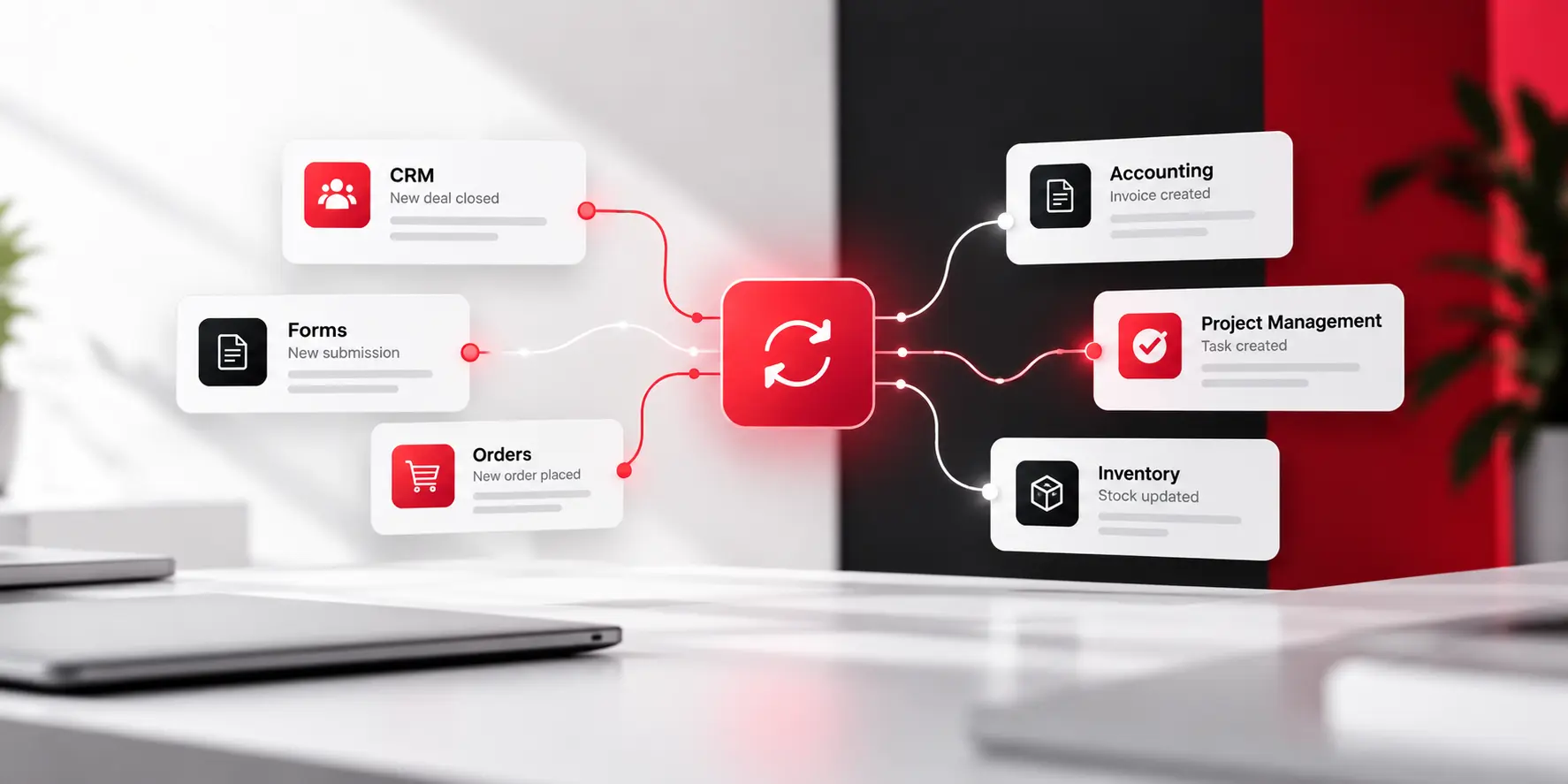
Picture the same Tuesday morning, a few months from now. Someone closes a deal in the CRM. The billing record updates itself in the background. Nobody opens a second tab. Nobody retypes a single detail. That is not a fantasy. It is what actually happens once this problem gets fixed, and it is a smaller […]
 DevOps, Platform Strategy
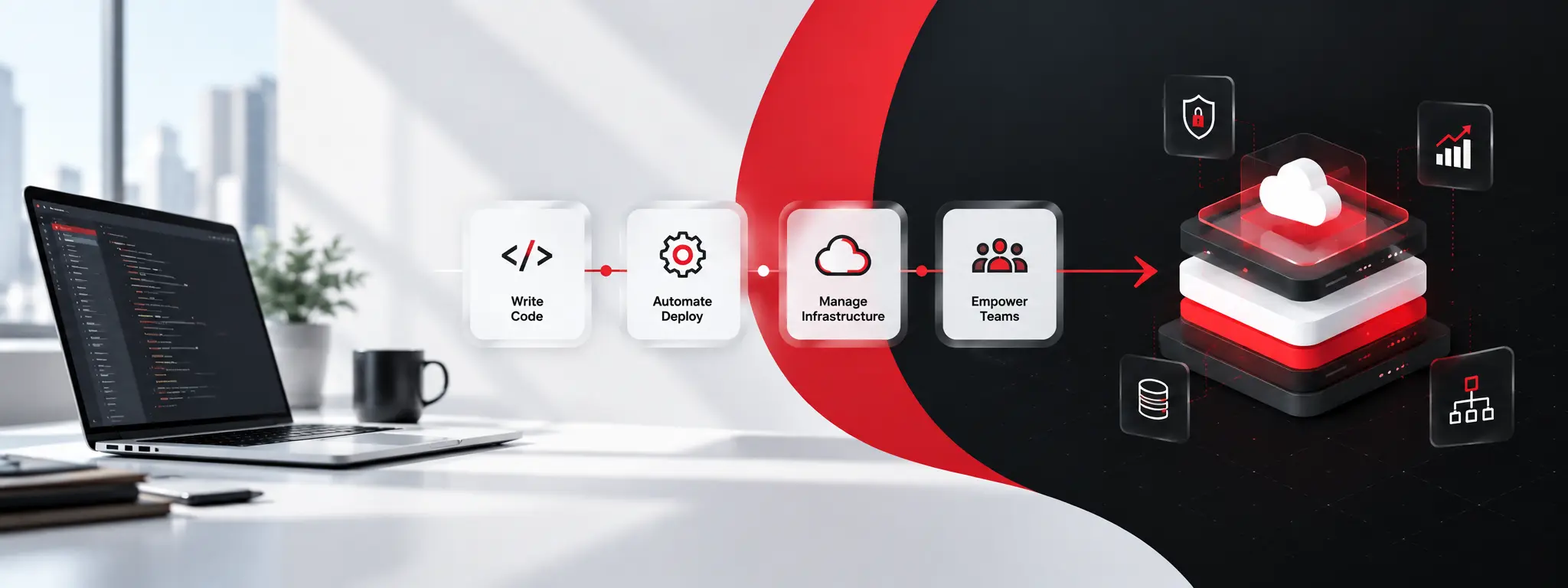
Gartner says 80% of large software engineering organizations will have a dedicated platform team by the end of 2026. That stat is everywhere right now. It’s also convinced a wave of 15-person startups that they need an internal developer platform immediately. Most of them are wrong. Here’s why, and how to tell which side of […]