What Breaks When a University Tries to Unify Its Systems?
Hem Kant
·
28 Sep, 2026
Ask an IT director at a growing university what breaks when they try to unify their systems, and the answer rarely starts with the software.
It starts with a department that will not adopt the new standard, a data-sharing agreement nobody wants to sign, or a budget line that funded the project but not what keeps it running afterward.
The technology usually works close to as advertised, a lesson the rise and fall of the Indian EdTech industry also illustrates. What it runs into is an organization built on decades of departmental autonomy that no vendor roadmap was ever designed to navigate.
“We have SSO for most systems, except the three that actually matter.
“Nobody can explain why financial aid data updates a day late. It just does.
“Every department picked its own tool years ago, and now IT owns the consequences.
“The last integration project took eighteen months and still is not finished.
None of these are unusual complaints. They are the same handful of patterns, showing up in nearly identical form, across institutions that otherwise look nothing alike.
A university is not one organization making one set of technology decisions.
There are dozens of colleges, departments, and administrative units, each with real autonomy over how they operate, publishing their own content (on Drupal sites, display modes, view modes and form modes control how that content appears), choosing their own tools, and building their own workarounds when the central systems do not fit their specific need, exactly the pattern we see across higher education institutions generally. ‘
That autonomy is not dysfunction, it usually reflects a genuine institutional value around academic and departmental independence. But it means an integration project cannot simply mandate a standard the way a corporate IT department often can.
It has to build consensus across units that do not report into the same chain of command, and consensus-building is slow in exactly the way integration deadlines are not.
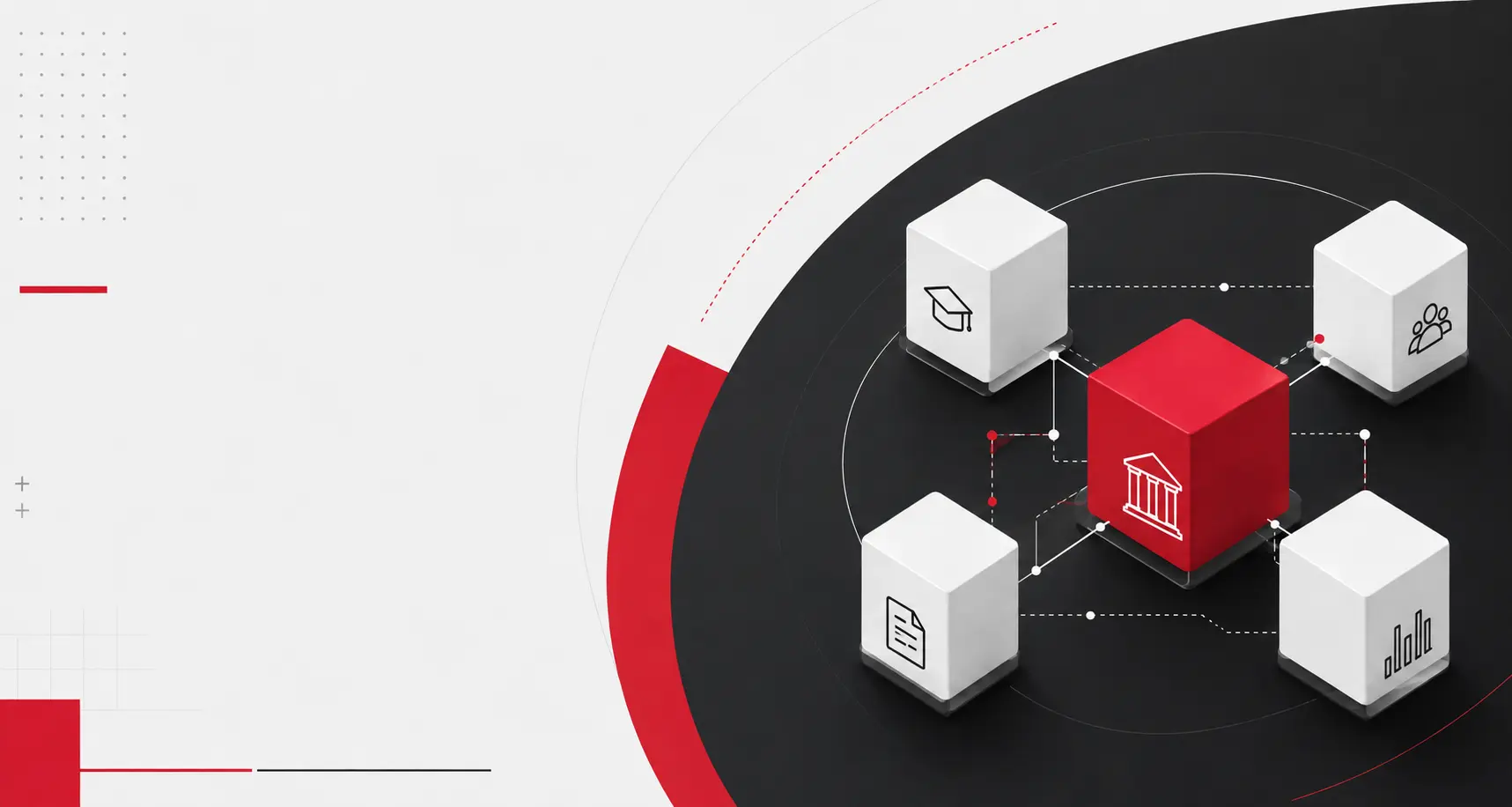
Beneath the governance layer sits years of accumulated, often undocumented connections between core systems, the student information system, the learning management system and any computer-assisted learning tools built around it, the CRM used for admissions and advising, financial aid, built by staff who have frequently since moved on, with no central map of what actually depends on what. ‘
CMS, LMS, CRM, SIS, analytics, and identity systems often overlap in purpose but were never built to share data cleanly, which is exactly the gap we walked through in SIS versus LMS versus custom portal.
Discovering the true scope of these connections, not assuming it, is usually the first real work of any integration effort, well before any new architecture gets designed. A UX audit of how staff and students actually experience each system is a useful part of that discovery.
FERPA requires controlling who can access a student’s record and for what purpose, and that gets considerably harder to enforce consistently once dozens of departmental tools and shadow portals each hold their own partial copy of student data.
Distributed publishing without shared governance creates compliance gaps across department sites and student-facing tools that nobody centrally tracks, and integration efforts have to fold data governance and access scoping into the technical work directly, not treat it as a policy conversation to have once the systems are already connected.
The pattern that shows up most often is not a dramatic breach. It is a spreadsheet, still circulating in a department that has not moved to the central system, holding student data that nobody in central IT knows exists, let alone secure.
Spreadsheets, email threads, and internal messaging become the invisible infrastructure holding daily operations together in exactly the places the official systems do not reach, and that invisible layer is where most real compliance risk actually lives.
Many institutions fund technology through capital budget cycles built around discrete projects with a defined scope and a defined end date.
The actual work of maintaining and evolving an integration layer is ongoing, not a one-time deliverable, and that mismatch is where a lot of otherwise well-executed projects quietly die.
A system gets built, launched, and then loses the funding that would keep someone actually maintaining it, at which point it starts degrading the same way any unmaintained system does, slowly, until the next budget cycle discovers the problem all over again.
The institutions that get past this rarely start by replacing their core systems. Most already have a functional SIS, LMS, and CRM individually; what is missing is the governance and integration layer connecting them, plus a data-sharing agreement that survives a change in departmental leadership.
A phased approach, mapping the real dependencies first, establishing data governance before building new connections, and treating the integration layer as something that needs ongoing ownership rather than a one-time project, tends to succeed where a full platform replacement does not.
Every year this stays unresolved makes the eventual fix more expensive and riskier, since drift compounds quietly in the background whether or not anyone is tracking it.
If your institution has good systems that still do not talk to each other reliably, that gap is usually cheaper to close than it looks from the outside. ‘
Book a Discovery Call and we will help you map where it actually is.

 Legacy Modernization, Platform Strategy
Key Takeaways Modernization is a set of decisions, not a rewrite. For each system you choose one of five moves: keep, wrap, move, rebuild in slices, or retire. Start with a business reason you can write in one sentence, then map what you have before you touch any code. Change small slices while old and […]
 Platform Strategy
The firm that writes your software owns it, unless your contract says otherwise. That is the starting point under US copyright law for software built by an outside firm, and the Copyright Office’s own guidance explains why. It is easy to miss, because nothing in a pitch, a proposal, or an invoice ever brings it […]
 Digital Transformation, Platform Strategy
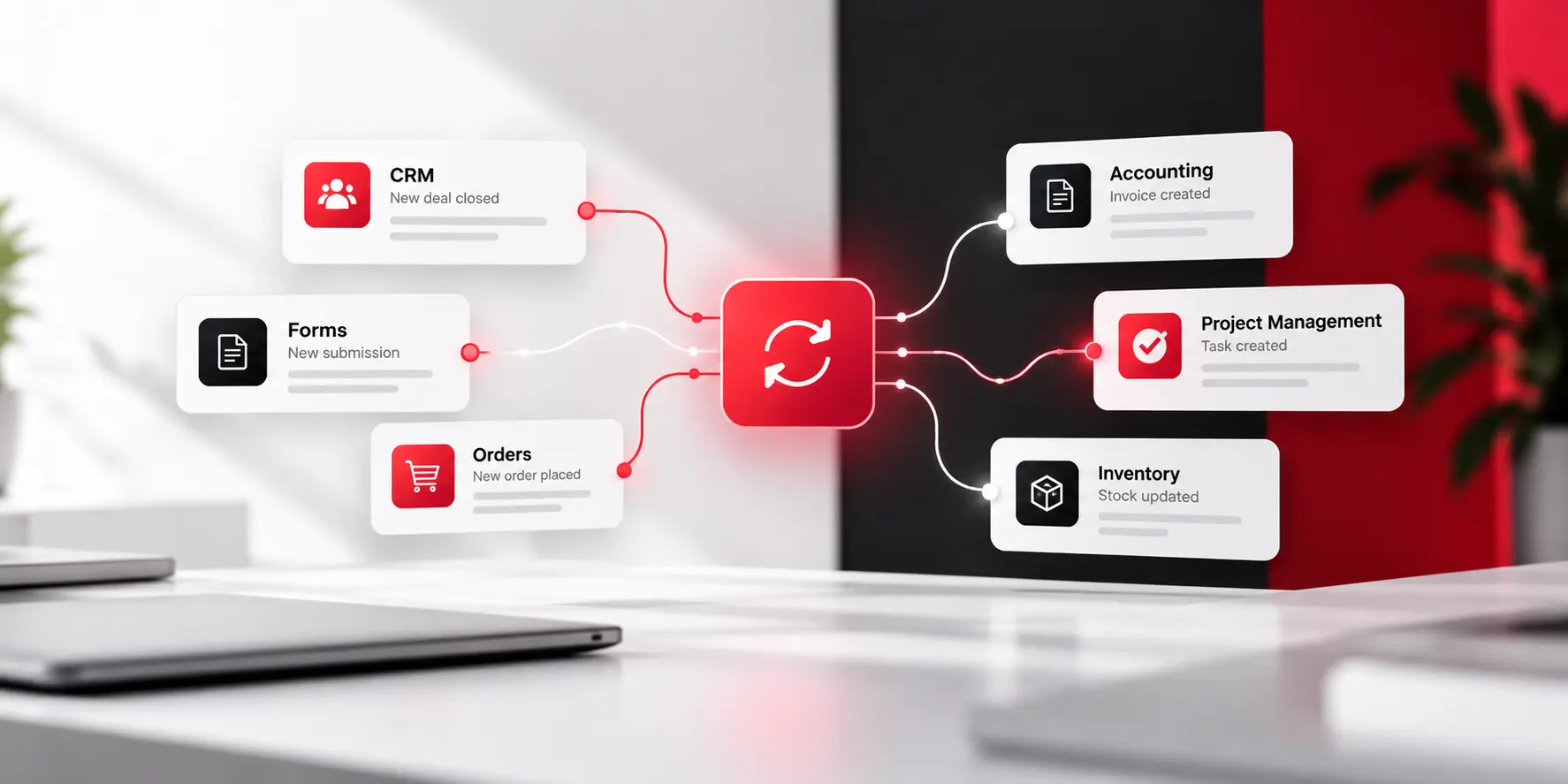
Picture the same Tuesday morning, a few months from now. Someone closes a deal in the CRM. The billing record updates itself in the background. Nobody opens a second tab. Nobody retypes a single detail. That is not a fantasy. It is what actually happens once this problem gets fixed, and it is a smaller […]