SaaS Platform Development: 15 Steps From Idea to Launch
Hem Kant
·
06 Nov, 2026
Most SaaS products are not built too slowly. They are built in the wrong order.
A team writes features first, then finds it cannot tell customers apart, cannot bill them, and cannot see how they use the product. Each of those is cheap to design early and costly to retrofit.
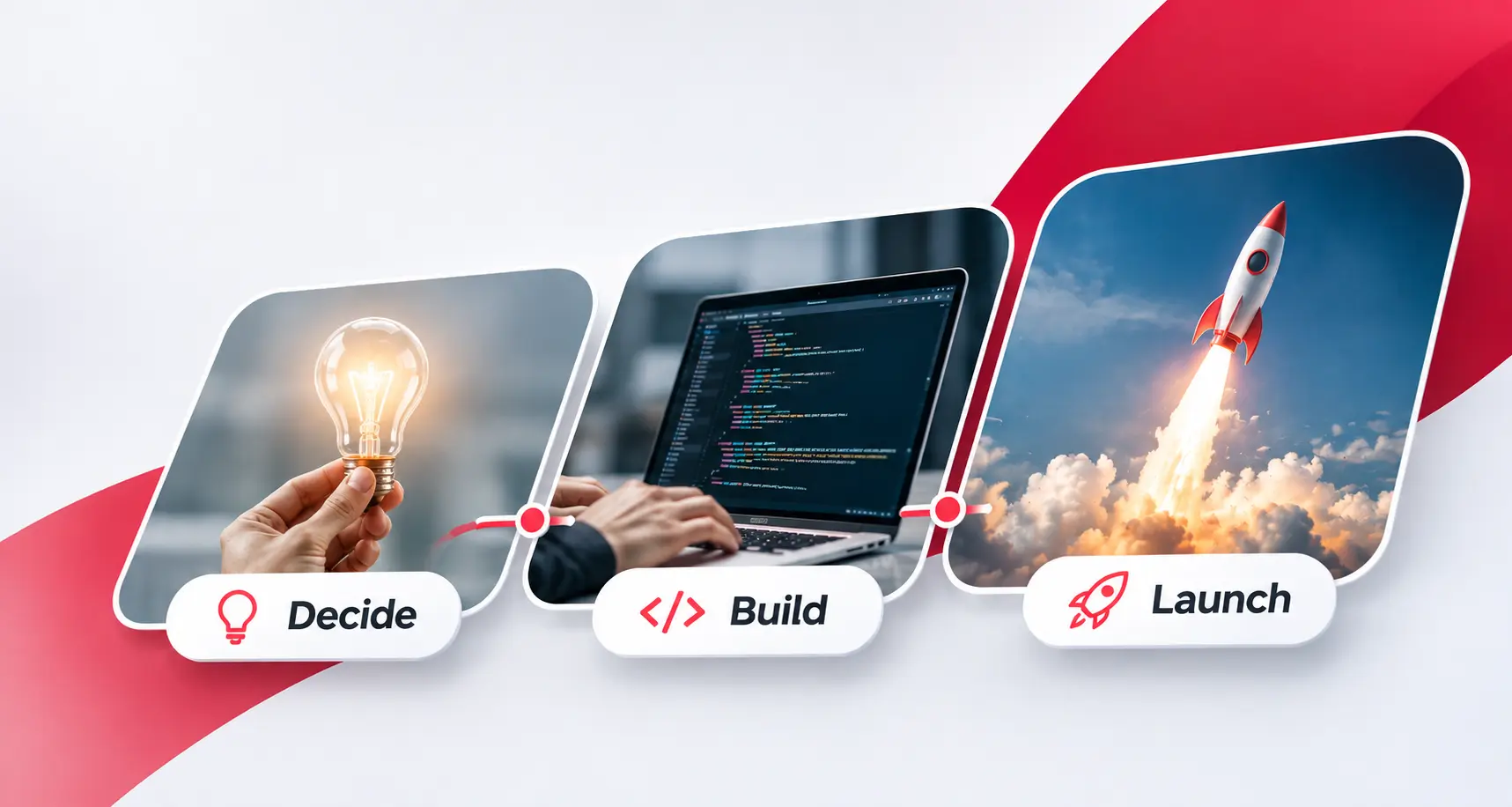
This guide to SaaS platform development gives you 15 steps in three phases: decide, build, and launch.
Some work can be done late. Visual polish, extra integrations, and most reports can wait until customers ask. Four things cannot. Tenancy touches every table. Access control touches every screen. Billing touches every plan. Measurement touches every event.
Add any of them after the product exists and you edit everything that was built without them. That is where the rework comes from, and rework is what actually slows a SaaS team, long before typing speed does. The gates keep the four foundations in front of the features.
These five steps cost almost nothing to do and a great deal to skip.
| Model | How it works | Isolation | Best fit |
| Shared tables | All customers share the same tables, separated by a tenant ID | Logical: every query must filter by tenant | Many small customers, lowest running cost |
| Separate schemas | Each customer gets its own set of tables in one database | Stronger, and one customer is easier to restore | Mid-size customers with some isolation needs |
| Separate database | Each customer gets its own database or deployment | Strongest, at the highest running cost | Large or regulated customers |
Many products start with the first model and offer the third to their largest customers. Plan for that from the start, because moving one customer later is harder when the code assumes a single shared database.
The common mistake here is treating interest as demand. People who say “send me a demo” have committed nothing. If no one will sign a pilot, the problem is the idea or the customer, and no amount of engineering will change that.
Four things are painful to retrofit: tenancy, access control, billing, and measurement. Build each one first, in a thin form, and add features on top.
The common mistake in this phase is leaving internal tools until last. Support staff need to find a tenant, reset access, and see usage. Without those tools, every support request becomes an engineering ticket, and your best developers become your support desk.
A launch date is a milestone for the team. For customers, it is the first day you are responsible for their data and their workday.
The common mistake here is launching to everyone at once. A staged launch limits how many customers meet the first serious bug, and it gives you time to fix onboarding while the numbers are small.
A SaaS platform is not a pile of features. It is a promise that many customers can trust one system. The steps above are ordered to protect that promise.
If you do one thing this week, write down the three gates and name who signs off each one. Teams that skip this step still have gates. They just meet them by accident, after launch, in front of customers.
If you are at step zero or step ten, Book a Discovery Call, tell us which step you are on, and we will tell you which gate looks weakest. Our work in the SaaS sector and our product engineering services are where that conversation starts.
How long does SaaS platform development take?
It depends on scope and team, so any fixed number is a guess. Use the gates instead. The first gate can be reached in weeks, because it needs a committed customer, not code. The build and launch phases then run against gates you can check.
What is multi-tenancy in a SaaS platform?
It means one running system serves many customers, called tenants, while keeping each tenant’s data separate. The main models are a shared database, a shared database with separate schemas, and a separate database for each customer.
Can we change the tenancy model later?
Yes, but it is costly. Moving a customer from shared tables to its own database is a migration project. Route every tenant lookup through one place in the code, which keeps that move possible without rewriting the product.
Should I build an MVP first?
Yes, but make it sellable, not just demonstrable. A sellable first version includes sign-up, the core job, billing, and basic support. Without billing and support, you have a prototype, not a product.
Should we build billing ourselves?
Usually not. Failed payments, proration, tax, and invoices take longer than they look. Buy a billing platform unless your pricing model is the thing that makes your product different.
When do we need SOC 2?
When enterprise buyers ask for it during procurement. Start earlier with the security baseline in step 11, so the evidence already exists when the request arrives.
What tech stack should we choose?
One your team already knows and can hire for. Boring, well supported tools beat clever ones. You are choosing for the next three years, not the next ten.

 Build vs. Buy, Platform Strategy, SaaS Development, Thought Leadership
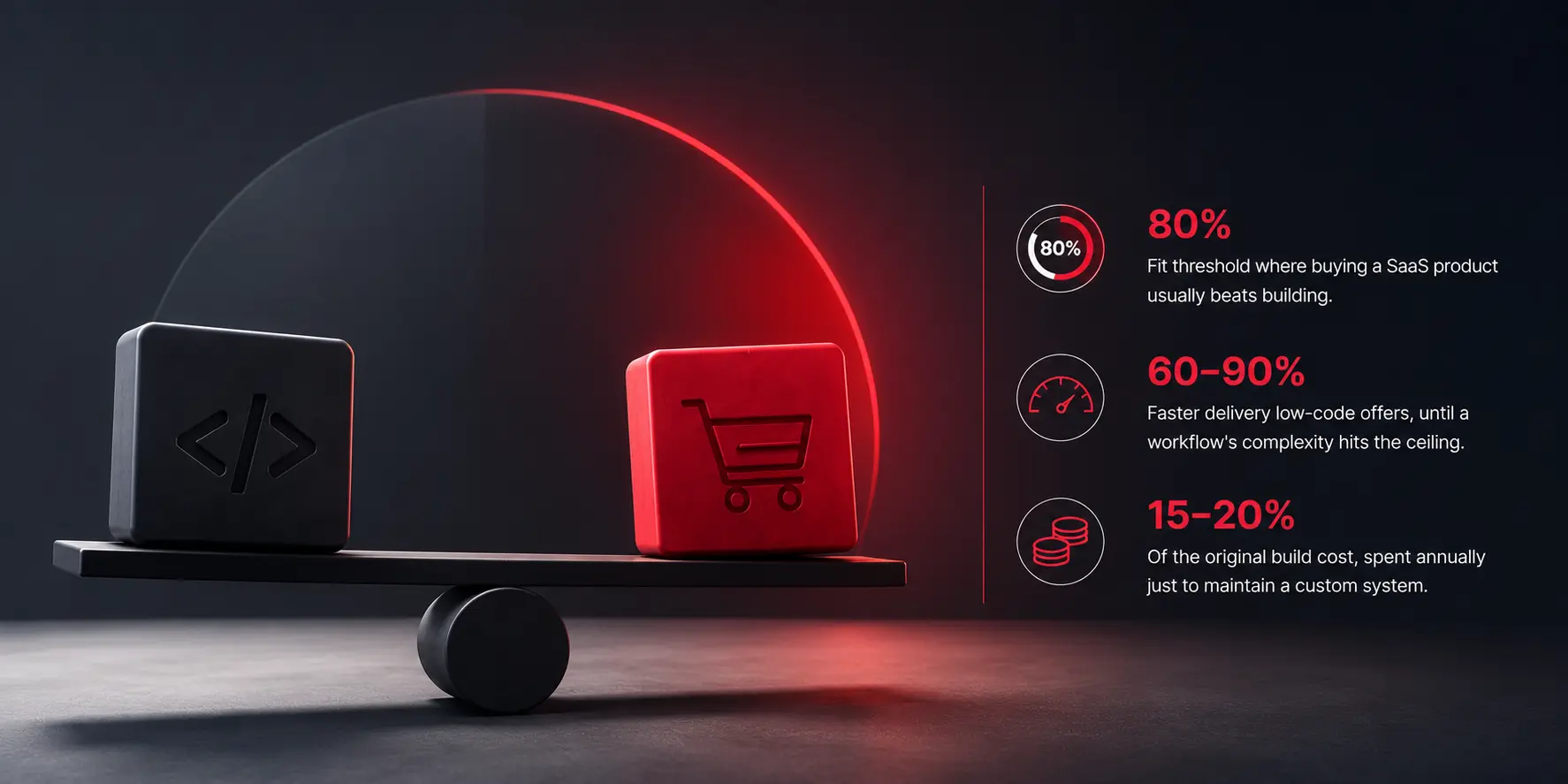
We deal with the clients on a daily basis when they ask us if we should build this or buy it. And trust us this conversation feels like a new decision the first time a business has it. But it rarely is. The same underlying math shows up whether the system in question is a […]
 AI & Enterprise Strategy, Artificial Intelligence, SaaS Development, Web Development
A year ago, “vibe coding” was a term for weekend prototypes. It is not that anymore. Prompt-to-app platforms have made it possible to describe a working application in plain language and have one generated in minutes, and that capability has moved from novelty to default across a huge share of new software, including a meaningful […]
 API Strategy, Platform Strategy, SaaS Development, Systems Integration
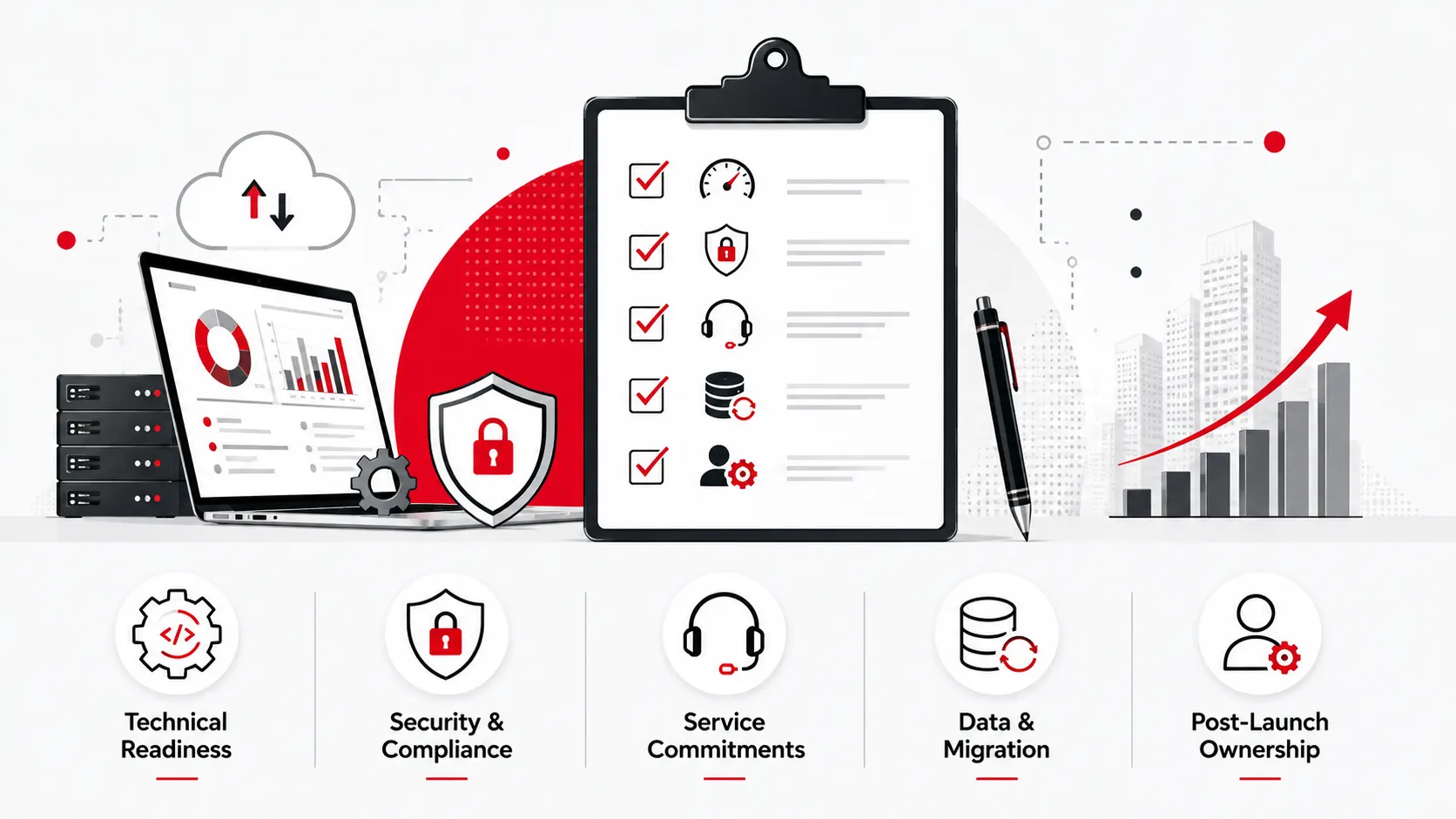
An enterprise deal usually gets signed by the people least equipped to know whether it is technically achievable. That is not a criticism of sales; it is how the roles are supposed to work. But a contract that promises a specific integration timeline, a specific uptime guarantee, or a specific data migration, without engineering confirming […]