How Much Does AI Integration Actually Cost a Business?
Hem Kant
·
09 Sep, 2026
Global AI spending is on track to cross $2.5 trillion this year, up more than 40 percent from last year, and somewhere in the middle of that number is a founder or operations lead trying to get a straight answer to a much smaller question: what is this actually going to cost us?
It’s a fair question, and it deserves a better answer than “it depends,” even though, honestly, it does depend. Let’s get specific about what it depends on.
Most of the confusion isn’t really about pricing. It’s about scope. AI integration covers everything from a $5,000 chatbot bolted onto a website to a $2 million platform a Fortune 500 company depends on for real decisions, and vendors rarely make it obvious upfront which conversation you’re actually having.
Getting a useful number starts with figuring out which of those conversations you’re in, before anyone quotes you anything.
Quick answer: A focused, single-purpose AI feature typically runs $5,000 to $50,000. A mid-complexity integration, an AI agent, a document pipeline, something touching a few systems, runs $50,000 to $250,000. A company-wide or customer-facing AI platform runs $250,000 to $1,000,000 or more. Where you land depends far less on which AI model you use than on how messy your data is, how many systems it has to touch, and how much it costs you if the AI gets something wrong.
Every credible 2026 cost breakdown we’ve cross-checked lands in a similar place, even though they all frame it slightly differently. Here’s the honest version:
$5K–$50K: A focused AI feature
A single, well-scoped capability: a support chatbot, a document classifier, a summarization tool. Weeks to about three months. This is where almost every business should start.
$50K–$250K: A mid-complexity integration
Multiple features, real system integrations, an actual data pipeline, and custom workflow logic. Think an AI agent that touches your CRM and your support desk, not just answers questions.
$250K–$1M+: A company-wide or customer-facing platform
AI is your whole business, or your customers depend on. Uptime guarantees, security review, load testing, ongoing model monitoring. Six months to a year, with a real team.
There’s a fourth category worth naming just so you can rule it out: training a genuinely custom foundation model from scratch, rather than using an existing one, starts around $2 million and has no real ceiling.
Unless you’re one of a small number of companies doing something genuinely novel at massive scale, you almost certainly don’t need this tier, and if a vendor is steering you toward it early in a conversation, that’s worth noticing.
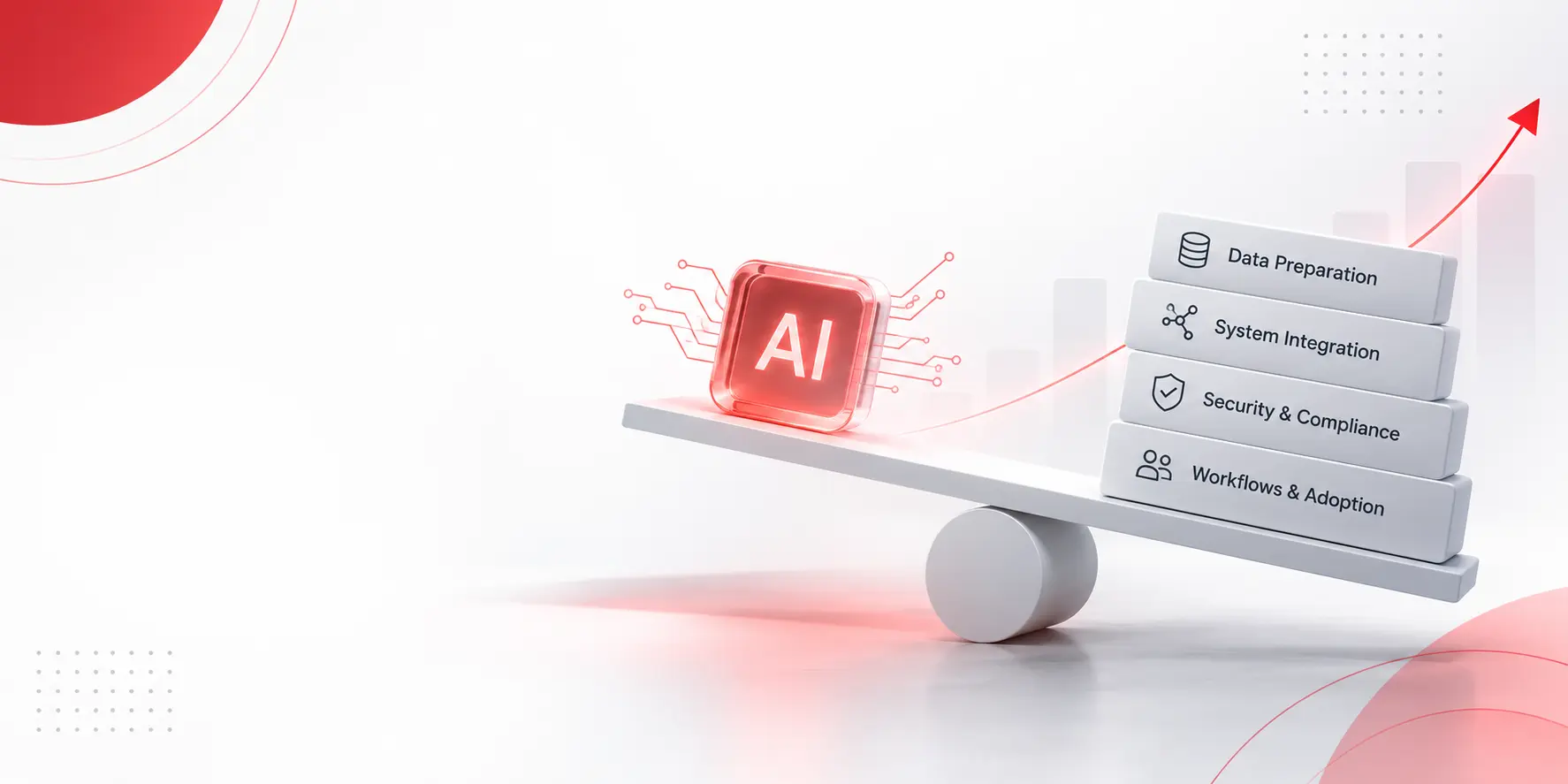
Here’s the thing most first-time AI budgets get wrong, and it’s not a small miscalculation. People assume they’re paying for the AI. They’re actually paying for everything around it: cleaning and structuring the data the AI needs to be useful, building the pipes that get that data to the model and the results back out, and wiring the whole thing into workflows real people actually use. We saw this play out directly when we built Skipper, our own Gen AI marketing platform: the AI generation layer was the easy part; getting clean, structured input into it reliably was eight months of the real work.
Data preparation alone commonly eats 50 to 70 percent of a project’s time. The model itself, especially if you’re using an existing one through an API rather than training your own, is often under 20 percent of the total budget.
|
WHAT TEAM BUDGET FOR The AI model. Picking the smartest one, the newest one, the one with the best benchmark scores. |
WHAT ACTUALLY COSTS MONEY Data cleanup, system integration, workflow design, and the unglamorous engineering that makes the AI’s output trustworthy enough to actually use. |
A build price is not the real number, the same way a subscription’s sticker price is never the number a business actually pays once every add-on and workaround gets counted.
AI has its own version of this. Plan for roughly 15 to 25 percent of the original build cost every year afterward: inference costs that scale with usage, monitoring to catch the model drifting or degrading, human review for anything with real consequences if it’s wrong, and maintenance as your underlying business processes change. Over three years, the total cost of ownership commonly lands at 1.5 to 2 times the initial build price. Nobody puts that in the pitch deck. It’s real anyway.
For the large majority of business use cases, the right answer is neither pure build nor pure buy; it’s buying access to an existing model and building custom integration and workflow logic around it.
That’s the same underlying logic behind the build-versus-buy decision for CRM tooling: the value isn’t in reinventing the core engine, it’s in fitting it precisely to how your business actually operates. It’s also why the integration layer itself matters so much to the final number, standardized protocols like MCP are increasingly replacing the custom, one-off connector work that used to make this integration step the most expensive and least predictable part of a build.
Training a model from scratch is a genuinely different cost category, often ten times more expensive or worse, and it’s rarely the right call outside a narrow set of specialized, high-scale use cases.
Complexity also compounds faster than people expect. Moving from simple rules-based automation to a proper AI agent that makes multi-step decisions can multiply costs two to four times at each step up, not because the AI gets smarter and therefore pricier, but because each step up demands more testing, more oversight, and a wider range of situations the system has to handle safely.
Cost climbs further once real compliance requirements enter the picture, and this isn’t vendors padding a quote; it’s genuinely more work.
There’s a specific reason this shows up so consistently: regulated industries need to explain a decision after the fact, not just make one.
In healthcare specifically, that documentation burden is about to get heavier, HHS OCR’s proposed 2026 update to the HIPAA Security Rule would make encryption, MFA, and annual risk assessments mandatory rather than optional, and any AI system touching patient data inherits that same requirement
An AI tool that quietly recommends a discount code doesn’t need the same documentation trail as one that influences a loan approval or a treatment plan.That difference in consequence, not the underlying technology, is what actually drives the price gap, the same gap that shows up when comparing a generic web platform to a custom healthcare platform built with compliance engineered in from day one, which is worth remembering the next time a quote for a regulated project looks surprisingly close to an unregulated one; it’s probably missing something.
Every credible source we’ve checked agrees on one thing: the cheapest way to get a real quote, rather than a guess dressed up as one, is a small, paid discovery phase before committing to a build.
That’s not a sales line, it’s just true, for the same reason we’ve written about a real technical audit generally: nobody can accurately price a project without first understanding your actual data, your actual systems, and your actual constraints, and a thirty-minute sales call can’t surface any of that.
If you’re trying to figure out where your own use case actually falls, that’s exactly what a Modernization Readiness Audit is built to answer, including a dedicated AI and automation readiness check as part of the same engagement.
OR Ready to see the real number for your build? Get in touch, and we’ll scope it properly.

 AI & Enterprise Strategy
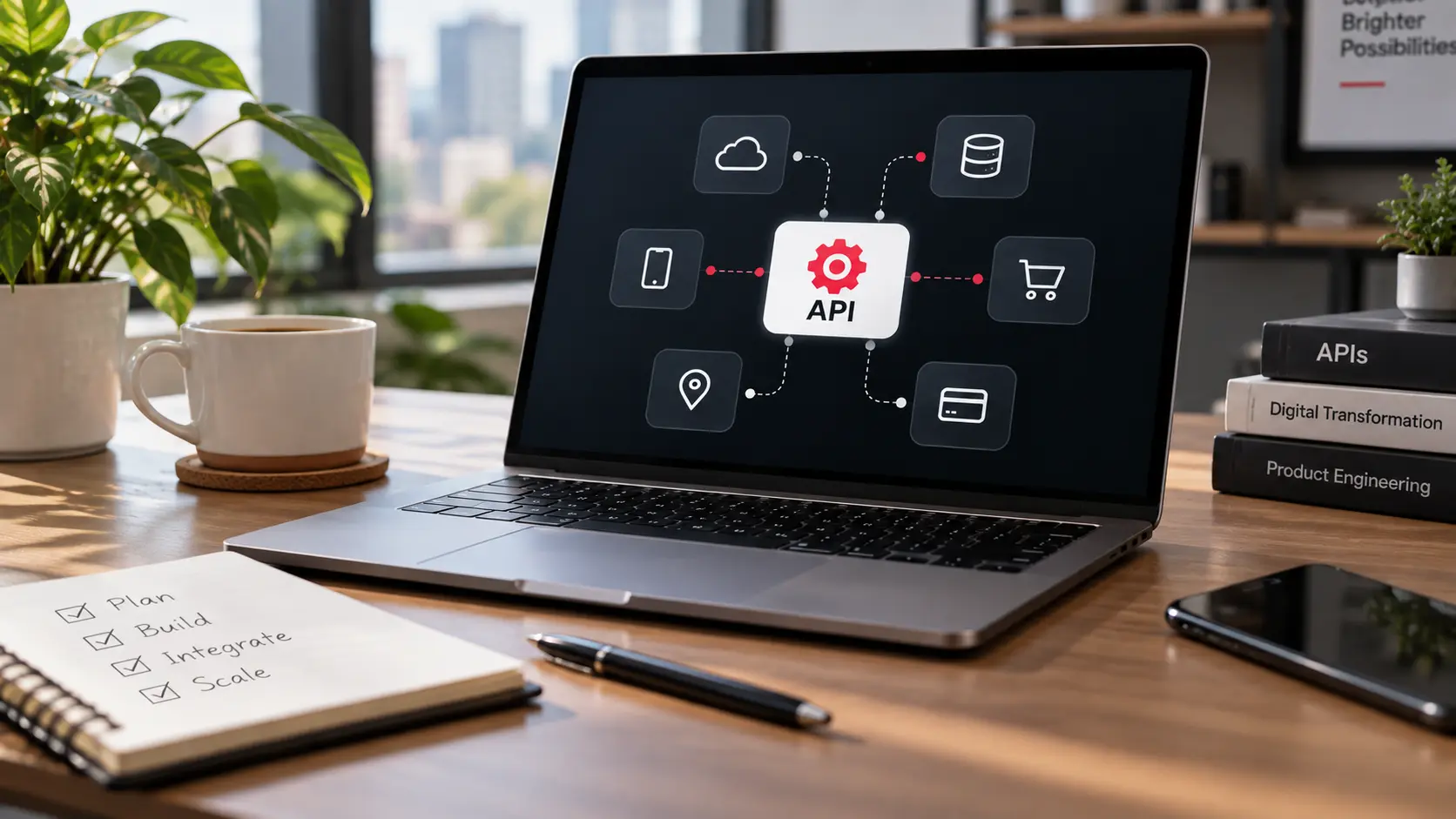
Checked the weather this morning? Paid for something online? Used a map app to find directions? Each of those small moments quietly used something called an API. You never saw it happen. That is exactly the point. This piece explains what an API actually is, in plain words, with no coding knowledge needed. What Does […]
 AI & Enterprise Strategy, AI Models
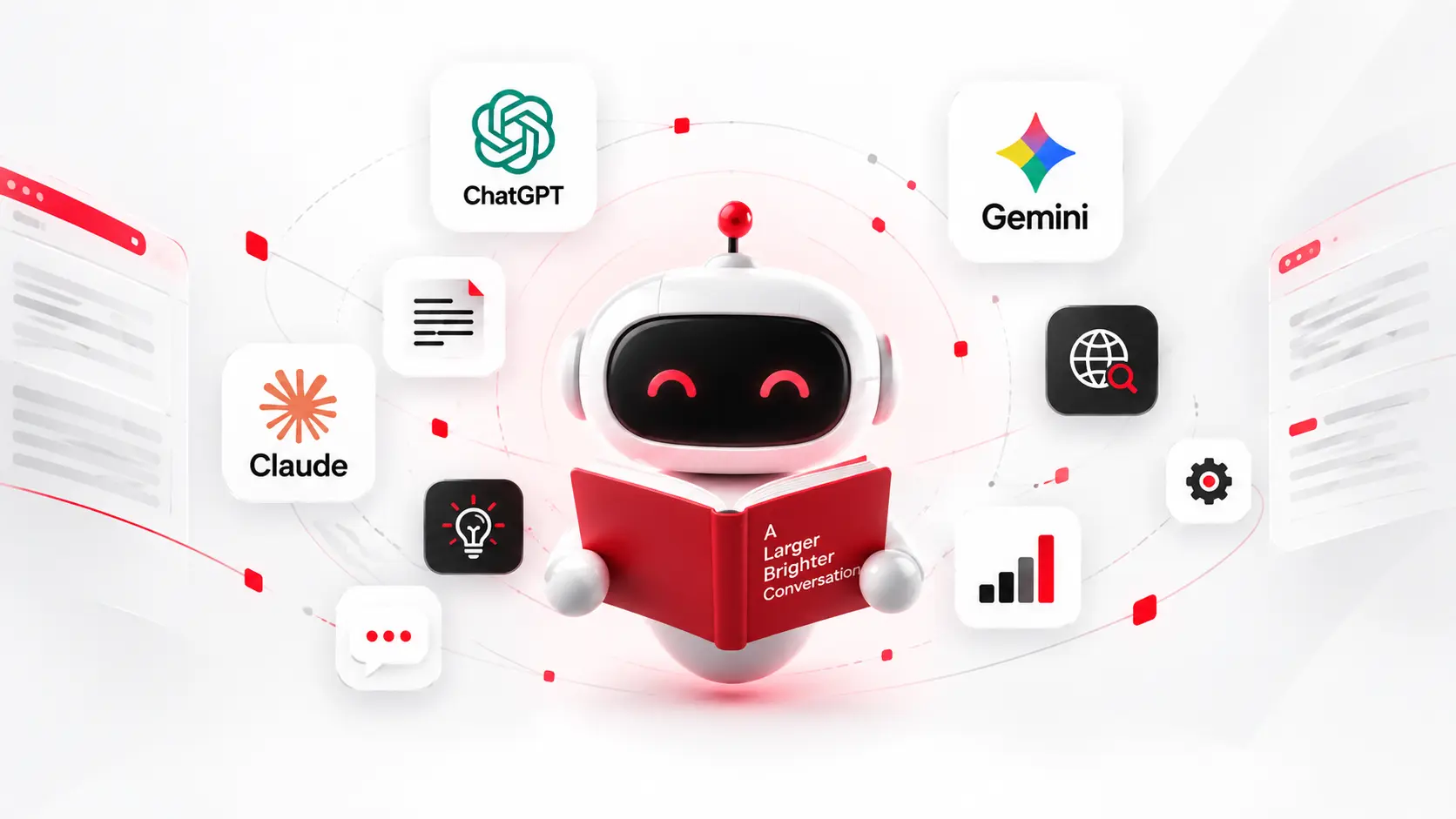
You have almost certainly used one. ChatGPT is one. Gemini is one. Claude is one. Every time you type a question into an AI chat tool, one of these systems is doing the work behind the scenes. The name sounds technical. The real idea is simple once someone walks you through it, step by step, […]
 AI & Enterprise Strategy
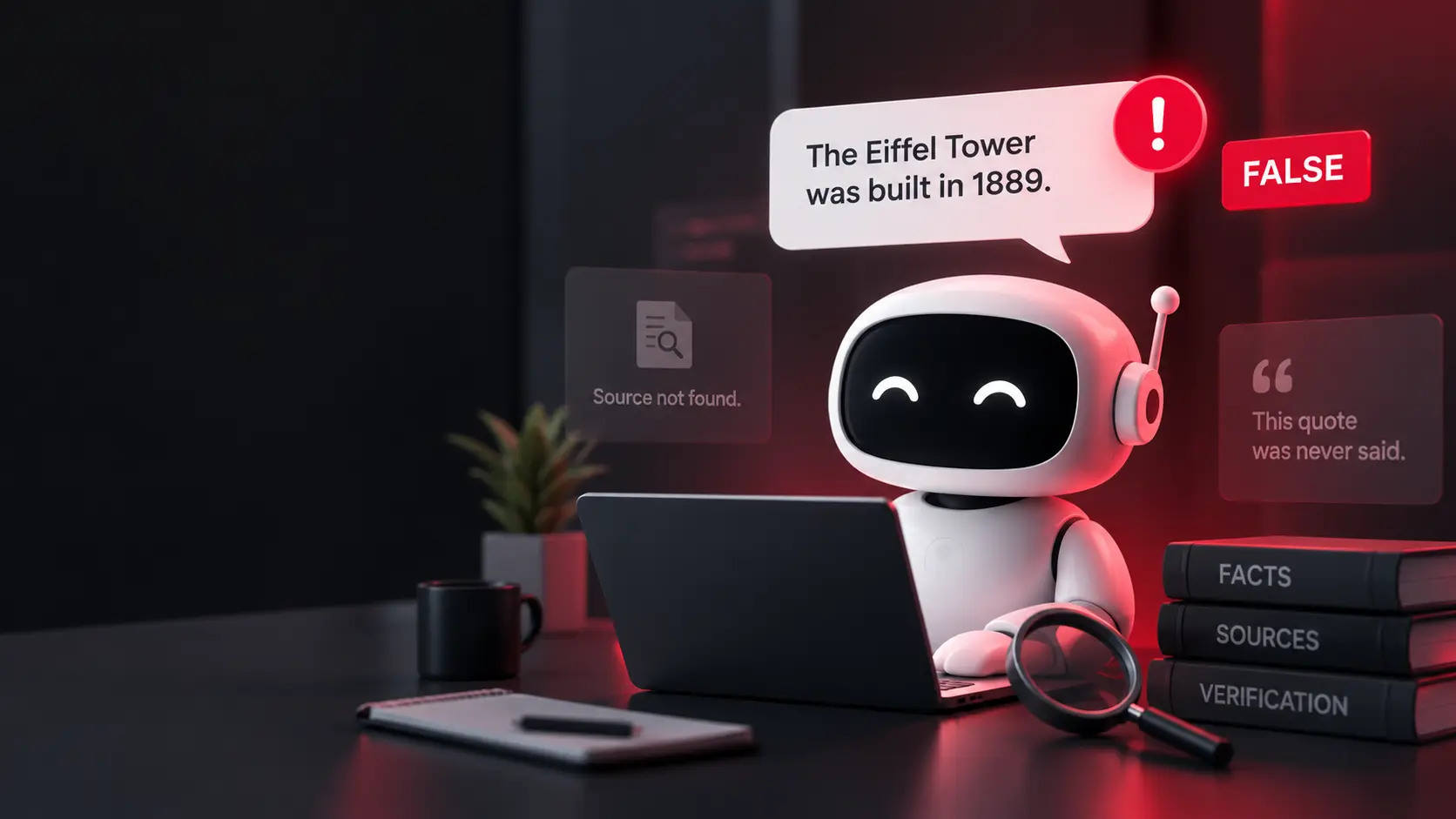
You ask an AI chatbot a question. It gives you a clear, confident answer. It sounds right. But it is not right. The fact is wrong. The source does not exist. The quote was never said. This happens more than most people think. It has a name in the AI world. It is called hallucination. […]