What is an API, and Why Does Every Business Seem to Need One?

Hem Kant
·
21 Sep, 2026
Checked the weather this morning? Paid for something online? Used a map app to find directions? Each of those small moments quietly used something called an API.
You never saw it happen. That is exactly the point.
This piece explains what an API actually is, in plain words, with no coding knowledge needed.
API stands for Application Programming Interface. That sounds complicated. The real idea behind it is not.
An API is a set way for one piece of software to ask another piece of software for something. It might ask for information, like a weather forecast. It might ask for an action, like processing a payment. Either way, the two systems do not need to know how the other one works inside. They just follow the same simple rules for asking and answering.
This same idea sits underneath the AI tools you might already use. When a company builds a product on top of a large language model, it usually connects to that model through an API rather than building the model itself.
The chat window you type into is the visible product. The API is the quiet connection making the actual answers possible underneath it.
Think about eating at a restaurant. You do not walk into the kitchen and cook your own food. You tell a waiter what you want. The waiter carries your order to the kitchen. The kitchen prepares it. The waiter brings your food back to the table.
You never had to learn how the kitchen works. You just needed to know how to order. An API plays the exact same role between two pieces of software. One system makes a request in a format the other system understands. The second system does its work behind the scenes. The API carries the result back. Nothing about the inside of either system needs to be visible to the other one.
This is also why the waiter is a useful comparison, not just a cute one. A good waiter does not let you wander into the kitchen and start rearranging things. An API works the same way. It only allows specific, agreed upon requests through, not free access to everything behind the scenes.
Picture a weather app on your phone. The app itself does not track weather patterns. It has no sensors, no forecasting team, no radar. What it has is a connection, through an API, to a separate weather service that does track all of that.
When you open the app, it sends a quick request through the API. Something like, what is the forecast for this location right now. The weather service answers back with the actual numbers. The app takes that answer and shows it to you, styled the way you are used to seeing it. The whole exchange happens in a fraction of a second, and you never see any of the back and forth. You just see the forecast appear.
Now picture a food delivery app doing something similar. When you place an order, the app sends a request to the restaurant’s system. It also sends a separate request to a delivery driver’s app, and another to a payment processor. Three different systems, three different companies in some cases, all talking to each other through APIs, all within the few seconds it takes for your order confirmation to show up on screen.
Most APIs require something called an API key before they will answer a request. Think of it as a password that proves the request is coming from somewhere trusted. Without the right key, the API simply refuses to respond.
This matters for a simple reason. An API key should be treated exactly like a password. Anyone who gets hold of it can make requests as if they were you, which is why a well run business keeps these keys locked down and never shares them carelessly.
You do not need to memorize any of this, but a few names come up often enough to be worth recognizing. REST is the most common style of API today, built around simple, predictable requests, the kind of setup most weather apps and checkout systems use.
Some older systems use a style called SOAP, which is more rigid and formal, and still shows up in banking and government systems that were built years ago.
Newer systems sometimes use something called GraphQL, which lets the requesting app ask for exactly the pieces of data it needs, nothing more, nothing less.
None of these names change the core idea. They are just different sets of rules for how the waiter takes your order. The kitchen still works the same way underneath.
|
Word |
What It Actually Means |
|
API |
The door that lets two systems talk to each other in the first place |
| Integration |
An actual, ongoing connection built using that door, so two specific tools share data automatically |
| Automation |
A task that now happens on its own, because the integration is already in place |
These three words get used interchangeably a lot, but the order matters. The API makes the connection possible. The integration is the real, working link a business actually built and relies on. Automation is the payoff once that link exists.
Without APIs, every piece of software a business uses would be its own island, cut off from the rest. Someone would have to move information between systems by hand, typing the same customer details into three different tools, or copying sales numbers from one dashboard into another one at a time.
APIs remove that manual step. A website’s checkout page can talk straight to a payment processor. A shipping tool can talk straight to an order system. A customer’s bank account can talk straight to a budgeting app, with the customer’s permission.
A well built API does not hand over everything it can see. It shares only the exact piece of information that was requested. Nothing more. This is why a payment confirmation app can tell you your purchase went through without ever seeing your full bank balance or account history.
This kind of careful sharing does not happen by accident. Someone has to design it with clear limits on who can ask for what. A business that treats this as a small technical detail often ends up with a real security problem later. Getting this right matters just as much as making sure the checkout page loads fast.
APIs are not permanent, fixed things. The company running one might update it, add new features, or retire an old version entirely. When that happens, anything connected to that API can suddenly stop working, sometimes without much warning.
This is a real, practical risk for any business relying on outside tools. A shipping provider changes its API. A payment processor updates its rules. Without someone watching for these changes and updating the connection on the business side, a working system can quietly break overnight.
This is one of the less visible reasons why connected systems need ongoing attention, not just a one time setup and a shrug afterward, the same discipline we described from a different angle in do you actually need an internal developer platform, where the real cost of a connected system is rarely the initial build.
APIs are becoming even more important as AI tools start doing real work instead of just answering questions. An AI assistant that books a meeting, updates a record, or completes an order is not doing that through magic. It is making the same kind of request through an API that a human would otherwise make by clicking through a system by hand.
That shift raises the stakes. A weak or poorly limited API used to be mostly a human inconvenience. The same weak point, now connected to an AI system acting on its own, becomes a much bigger risk. Businesses paying attention to this now, instead of treating API design as background plumbing nobody thinks about, are building on ground that will hold up as more of this work becomes automated.
If your business is connecting tools together and you want to make sure the setup is actually solid, not just working today, let us take a look with you.
We build this kind of connected system regularly, and a second set of eyes rarely hurts.

 AI & Enterprise Strategy, AI Models
You have almost certainly used one. ChatGPT is one. Gemini is one. Claude is one. Every time you type a question into an AI chat tool, one of these systems is doing the work behind the scenes. The name sounds technical. The real idea is simple once someone walks you through it, step by step, […]
 AI & Enterprise Strategy
You ask an AI chatbot a question. It gives you a clear, confident answer. It sounds right. But it is not right. The fact is wrong. The source does not exist. The quote was never said. This happens more than most people think. It has a name in the AI world. It is called hallucination. […]
 AI & Automation, AI & Enterprise Strategy, Compliance & Governance, Thought Leadership
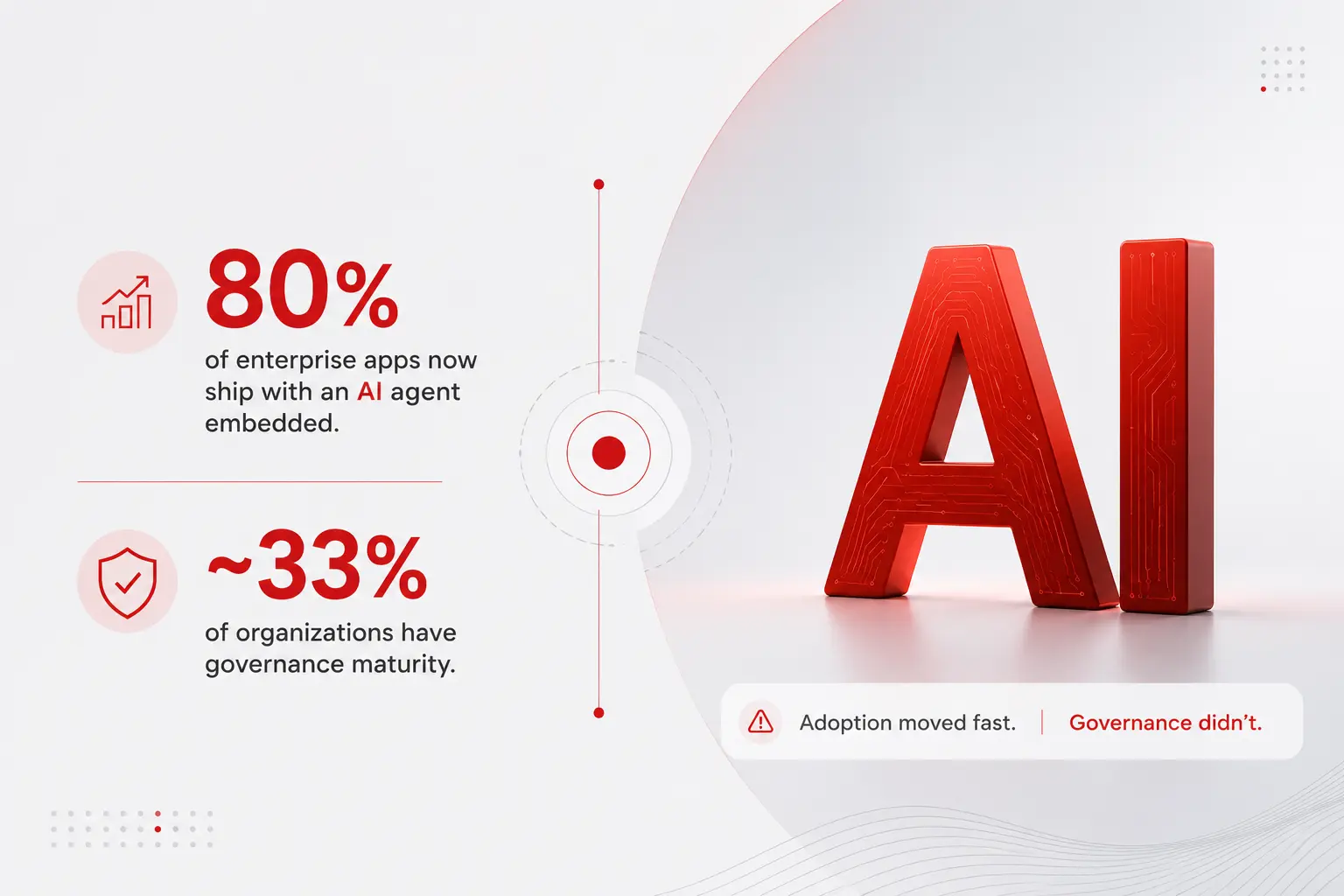
Is agentic AI ready for healthcare and finance is the wrong framing at this point. It is already running in both, at real scale, making decisions that affect real patients and real credit applications. The question worth asking now is narrower and more useful: has the governance around these systems kept pace with how fast […]