The New ADA Title II Timeline: 2027 and 2028 Explained
Hem Kant
·
16 Jun, 2026
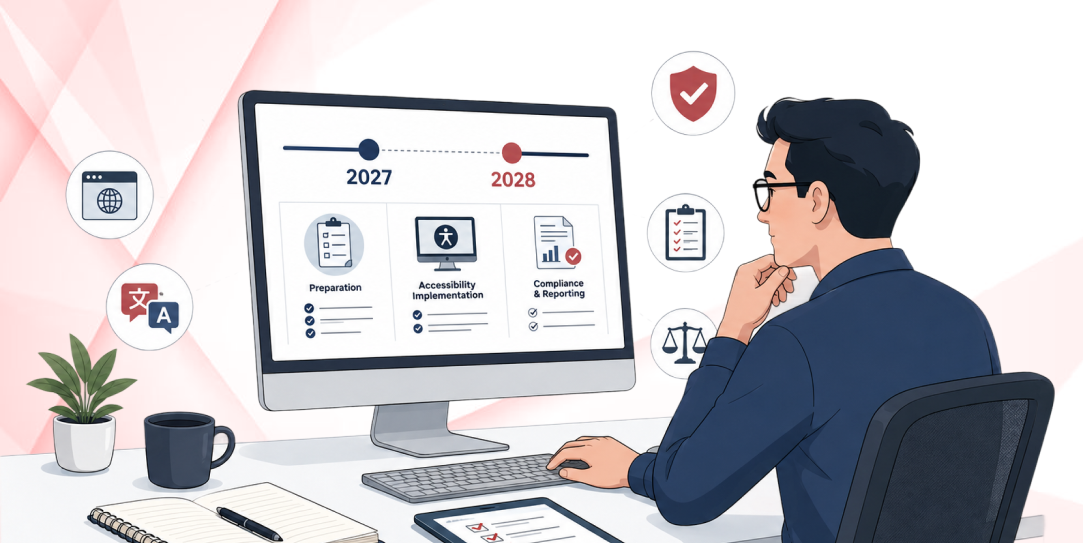
If you are a tech leader at a public entity, the April 2026 announcement from the U.S. Department of Justice might have seemed like a reprieve. It is not. The Federal Register ruling laid out a new timeline: public entities with populations of 50,000 or more must meet WCAG 2.1 Level AA compliance by April 2027, and those with fewer than 50,000 people must meet WCAG 2.1 Level AA compliance by April 2028. The standard has not changed; only the timeline has.
|
April 2027 Entities serving 50,000+ population WCAG 2.1 LEVEL AA REQUIRED |
April 2028
Entities serving fewer than 50,000 WCAG 2.1 LEVEL AA REQUIRED |
The Department of Justice recognized that real digital changes, such as assessing existing platforms, rectifying content issues, resolving keyboard accessibility problems, and improving governance workflows, require coordinated effort. Many public entities had not even initiated these processes yet. The extension emphasizes realism, not leniency. Compliance pressure remains.
The Department of Health and Human Services has its own timeline for Section 504, separate from Title II. If your organization deals with both public service and federal healthcare funding, you must adhere to both tracks. Confusing the two could lead to compliance issues.
In essence, smaller public entities gain additional time, but the technical requirements remain consistent for everyone.
More importantly, ADA Title II readiness is not only an accessibility issue. For many organizations, it is a signal that the current digital platform, content model, governance process, or procurement strategy may no longer support the requirements they are expected to meet.
Next, we will explore what WCAG 2.1 Level AA entails and why many teams underestimate its operational demands.
Title II digital accessibility is no longer about intent; it is about achieving a precise technical standard that either passes or fails an audit.
The Federal Register, Vol. 89, No. 80, establishes WCAG 2.1 Level AA as the required benchmark for all public entity web content and mobile apps. This replaces the old “effective communication” standard with clear, testable criteria. While the timeline has shifted, the technical bar remains unchanged.
It is straightforward: your content either complies or it does not. Here are some common failure points:
| Failure Area | What the Standard Requires | Common Audit Result |
| Keyboard accessibility | All interactive elements, forms, menus, modals must be fully operable via keyboard alone | Frequently fails, especially in third-party components and dynamic UI |
| Color contrast | Text and UI elements must meet a minimum 4.5:1 contrast ratio against their background | Frequently fails, often overlooked in branded color systems |
| Image alt text | All meaningful images require descriptive alt text; decorative images need empty alt attributes | Frequently fails, CMS-managed content often has missing or auto-generated alt text |
| Video captions | All pre-recorded video must include accurate closed captions | Frequently fails, auto-generated captions rarely meet accuracy thresholds |
| Form error handling | Error messages must be descriptive and programmatically associated with the relevant field | Frequently fails, generic ‘invalid input’ errors do not satisfy the criterion |
| Semantic HTML structure | Headings, landmarks, and lists must use correct HTML elements for screen reader navigation | Frequently fails, legacy platforms often use div-based layouts without semantic markup |
Here is where it becomes challenging.
First, accessibility overlays, those tools that claim to fix everything, do not actually meet Title II standards. They might superficially enhance the appearance, but they do not rectify the underlying code issues.
Second, the rule applies to mobile apps and third-party content. If you use a third-party tool on your site, you remain responsible for its accessibility.
Understanding the standard is merely the beginning. Knowing what it requires and having a solid plan to meet it are two distinct things. This is where procrastination becomes a platform risk, not just a compliance risk.
Postponing ADA Title II readiness is not just waiting; it is an engineering and governance risk that grows with every delay.
The 2027 and 2028 deadlines will create a remediation bottleneck that cannot be outsourced at the last minute. Everyone faces the same compliance window.
Accessibility consultants and engineering partners will be booked solid. If you begin late, you will be competing for limited resources when you need them most.
This is crucial for CTOs, CIOs, digital directors, and operations leaders planning multi-year projects. Level Access notes that the extension does not mitigate legal risks; ADA complaints remain valid regardless of the compliance date.
The U.S. Department of Justice Fact Sheet states that the rule applies to social media content as well, broadening the technical scope beyond websites.
Accessibility is not a checklist item to be added at the end. Attempting to add semantic structure, keyboard navigation, and contrast compliance to a legacy platform late in the game will yield fragile fixes rather than solid conformance.
The difference between an early, structured remediation review and a rushed rewrite under deadline pressure is significant in both cost and risk.
If your organization operates with fragmented systems, the challenge is even greater.
Legacy platforms that lack semantic HTML or accessible form patterns require foundational work, not just patches. Content teams also need governance, publishing standards, review workflows, and ownership models to ensure accessibility remains sustainable after the initial remediation work is complete.
Delaying this work does not reduce its scope; it merely shortens the time available to execute it properly.
Let’s explore what modernization entails and where the most significant technical and operational gaps typically are.
Meeting the DOJ Title II rule requires more than good intentions; you need a structured modernization plan that begins with a thorough evaluation of your platform’s current state.
The first step is a gap analysis between your current platform and the WCAG 2.1 AA standard. This involves evaluating every user interface against four principles: perceivable, operable, understandable, and robust.
You need to map failures to specific engineering issues, rather than treating accessibility as a design layer. A practical developer-level review covers semantic HTML, keyboard navigation, color contrast, ARIA labels, and form error handling. Without this baseline, any modernization effort lacks the control needed for real progress before the DOJ compliance deadlines arrive.
Fragile legacy platforms are the top engineering risk. Systems with outdated markup cannot be fixed with surface patches. They need structural intervention. Modern frameworks, accessible component libraries, and cleaner rendering pipelines can offer a more manageable path than retrofitting old templates.
BUILDING ACCESSIBILITY INTO YOUR DEVELOPMENT PROCESS
|
Process matters too, not just the platform. Building accessibility checks into a CI/CD pipeline, with automated contrast checks and pre-deployment WCAG scanning, turns accessibility from a last-minute compliance task into a continuous improvement practice. This approach reduces rework and creates audit trails that are important when procurement and regulatory scrutiny come together.
Governance matters just as much. Public entities and the vendors that serve them need clear ownership for accessibility decisions, content publishing standards, third-party tool review, documentation, and ongoing monitoring. Without that operational structure, compliance becomes a one-time cleanup project instead of a maintainable digital capability.
That convergence is already changing the GovTech and EdTech markets in ways that affect how contracts are won or lost.
GovTech and EdTech teams have a shrinking window; WCAG 2.1 AA readiness is becoming a procurement requirement, not just a compliance box to check.
Accessibility compliance is a standard requirement in public sector contracts. Procurement officers are updating criteria to reflect the DOJ rule.
According to ADA.gov, the rule covers many smaller jurisdictions, like public utility boards and library systems. For an SMB SaaS or platform company serving these markets, that is significant. One product gap can disqualify you before negotiations even start.
The impact is clear. Teams that can demonstrate WCAG 2.1 AA readiness, maintain accessible product workflows, and explain how they manage accessibility over time have a stronger position in procurement cycles. Those who cannot demonstrate readiness may hand opportunities to competitors.
| MULTI-TENANT SAAS CARRIES AMPLIFIED RISK
The risk grows in multi-tenant SaaS setups. One inaccessible component can cause failures across many client environments, raising costs and damaging reputation. Scaling accessibility across tenant setups requires careful platform decisions well before the deadline. |
This is why accessibility should sit inside a broader modernization conversation. If your platform needs accessibility investment, it may also be time to evaluate whether your CMS, component system, content workflow, third-party integrations, and governance model are still fit for the work ahead.
The ADA Title II deadline extension gives organizations more time, but it does not lower the standard.
The U.S. Department of Justice confirmed tiered dates that offer a grace period based on entity size. This is not an invitation to wait. It is time for responsible teams to address technical debt, assess risks in legacy platforms, strengthen governance, and integrate accessibility into the platform from the start.
Start with a readiness review of your current platform before beginning remediation. Without this, engineering efforts may address only symptoms rather than root causes, and the scope can expand without clear direction.
The strongest path is not rushed remediation. It is a structured evaluation of how accessibility gaps intersect with platform fragility, content governance issues, third-party tool risks, and modernization needs.
If your platform has not had a formal accessibility readiness review, now is the time to start. Contact LN Webworks to schedule a buyer-aligned discovery conversation and establish your clear next step before the 2027 and 2028 rush limits your choices.

 Compliance & Governance, Engineering & Architecture
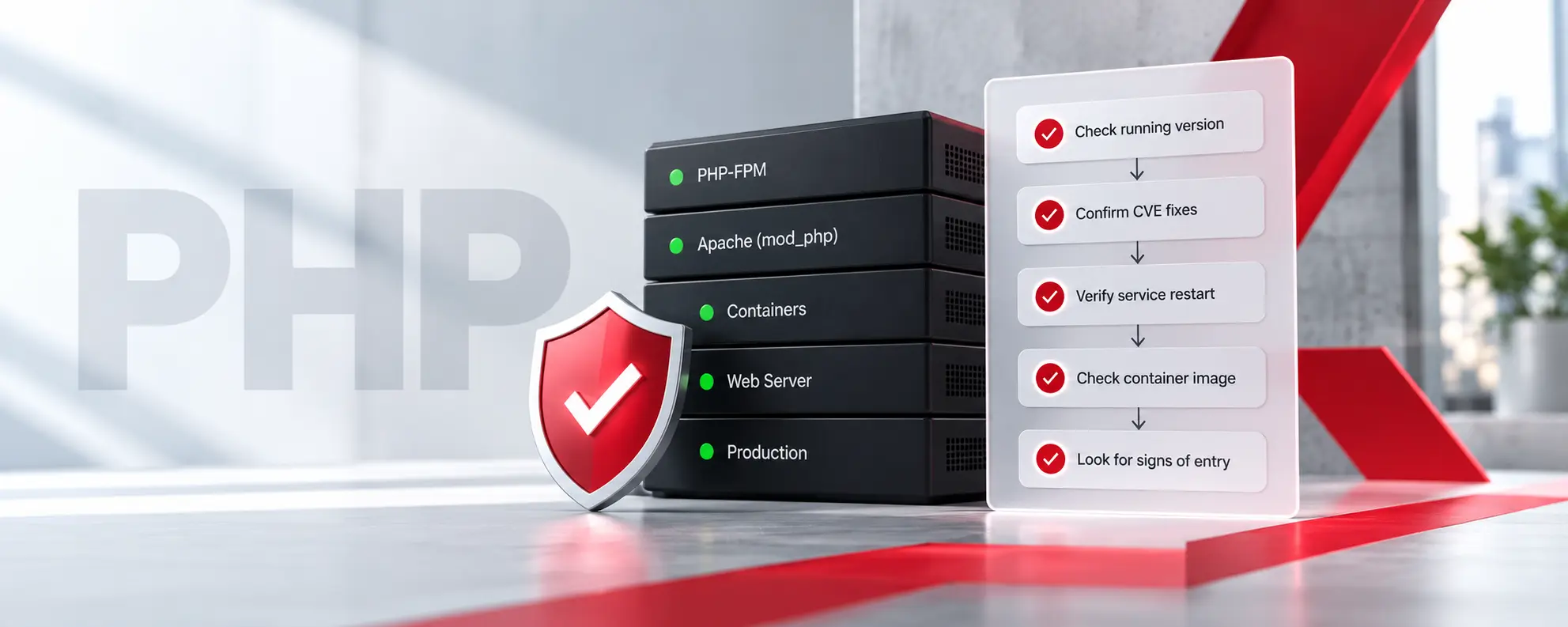
Key Takeaways Installed is not running. A new PHP package does nothing until the web server or the PHP-FPM workers restart. Check the PHP that serves traffic. The command-line version, the web server version, and a copy bundled inside an application can all differ. Version numbers can mislead. Linux vendors often backport fixes without changing […]
 AI & Automation, AI & Enterprise Strategy, Compliance & Governance, Thought Leadership
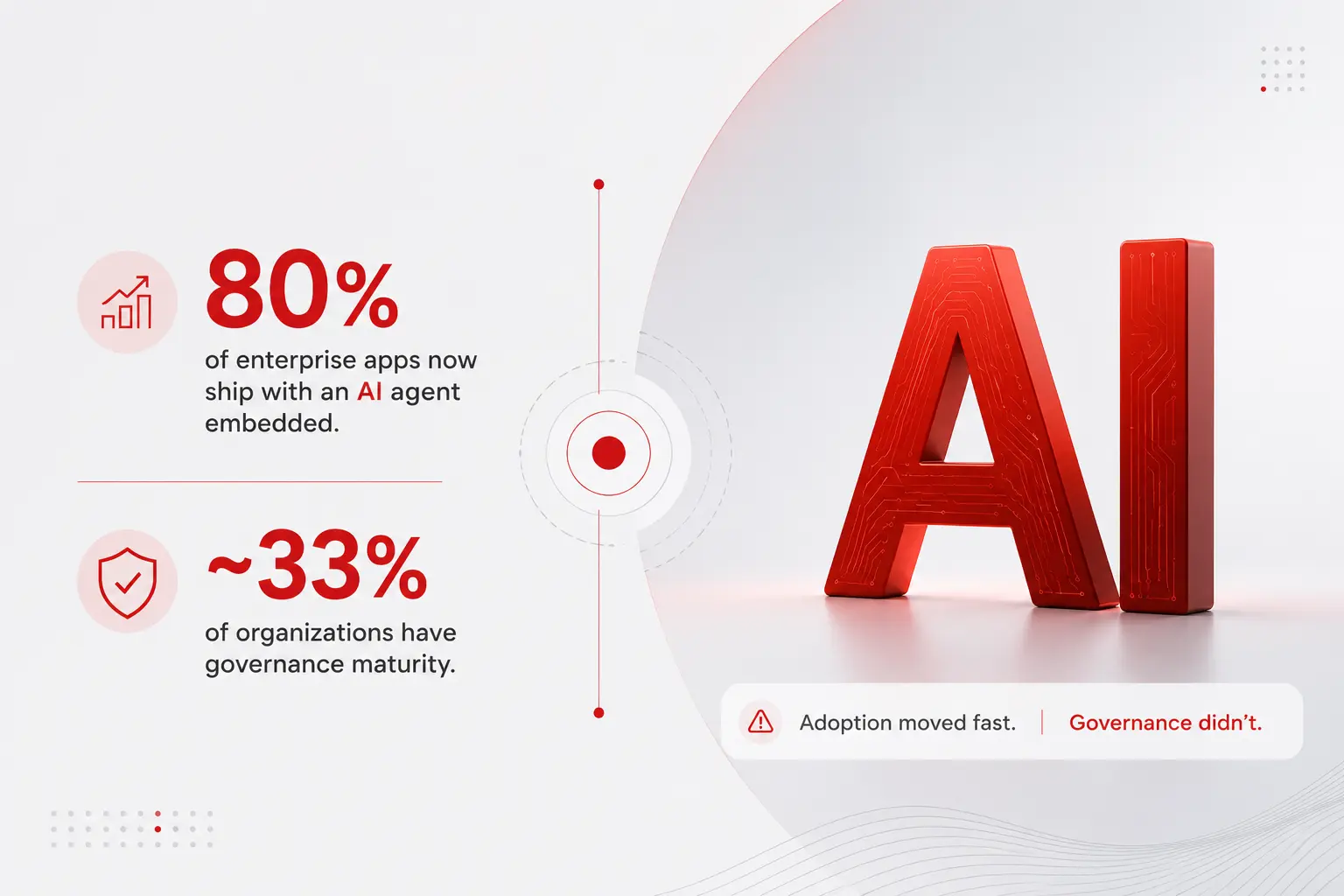
Is agentic AI ready for healthcare and finance is the wrong framing at this point. It is already running in both, at real scale, making decisions that affect real patients and real credit applications. The question worth asking now is narrower and more useful: has the governance around these systems kept pace with how fast […]
 Compliance & Governance, Healthcare Technology
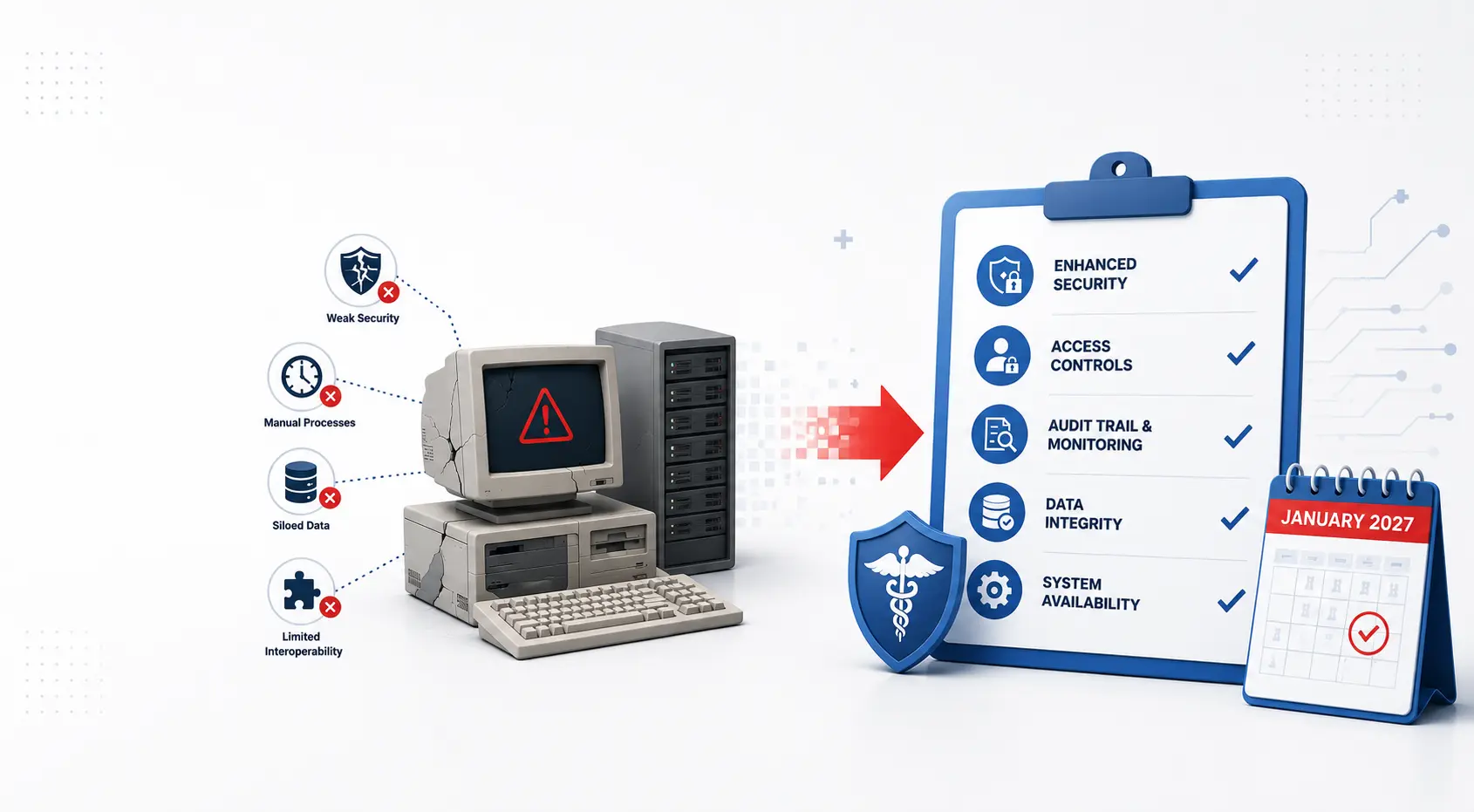
If your team is only tracking the CMS-0057-F deadline everyone talks about, you may already be behind on the one that’s already passed. The Interoperability and Prior Authorization Final Rule, finalized by CMS (the Centers for Medicare & Medicaid Services) in January 2024, requires Medicare Advantage plans, Medicaid, and CHIP managed care organizations, as well […]