How to Choose a Platform Modernization Partner Without Getting Burned

Hem Kant
·
16 Jul, 2026
KEY TAKEAWAYS
If you’ve been burned by a modernization partner before, you already know the pattern. The pitch was confident. The timeline was specific. The outcome slide had a big, satisfying number on it. Then, three months in, you found out that the number came with tradeoffs nobody mentioned in the sales call.
That’s not bad luck. That’s a sales process optimized to close the deal, not to show you what you’re actually signing up for. Agencies pitch outcomes because outcomes close deals. Tradeoffs are what your engineering team has to live with for the next two years.
This isn’t a pitch for why you should pick us. It’s the framework we’d want you to use, whether you pick us or not, the questions that actually separate a partner who’s done this before from one who’s guessing convincingly.
Here’s the pattern. An agency gets on a call, hears your problem for thirty minutes, and comes back with a proposal: a fixed scope, a fixed price, a launch date. It sounds like confidence. It’s actually a guess dressed up as a plan.
No one can accurately scope a modernization project without looking at the actual system first. Thirty minutes of conversation tells a partner what you think is wrong. It doesn’t tell them what’s actually wrong, and those two things are rarely the same.
We’ve written before about how most teams can name a symptom, not the compounding cause underneath it. A partner working off thirty minutes of conversation is scoping against the symptom.
A partner who skips the diagnostic and goes straight to a fixed-scope proposal isn’t being efficient. They’re betting that the gap between what you think is wrong and what’s actually wrong won’t be big enough to blow up the timeline. Sometimes that bet pays off. Often, it’s exactly why your last project ran over.
1. What does your diagnostic actually look like?
Ask them to get specific: what do they audit, how long does it take, what’s the actual deliverable? We’ll figure it out as we go is not a diagnosis; it’s an admission that the fixed price they quoted you was a guess. For reference, a real diagnostic produces a written risk map and a sequencing recommendation, not just a verbal, yeah, that tracks.
2. Show me a project where the plan changed once you found more debt than expected.
Every real modernization project hits this at some point. A partner who says it’s never happened either hasn’t done enough of these, or isn’t telling you the whole story. Ask what actually happened, how they communicated it, and what it cost.
3. Walk me through how you’d sequence this, not just deliver it.
A big-bang rewrite pitch is a red flag by itself, and it’s rarely the safer option it sounds like. Ask for the specific first slice they’d tackle, why that one, and how your team keeps shipping while the rest gets migrated. If the answer is a single monolithic timeline with nothing shipping until the end, that’s the guess talking again.
4. Who’s actually going to build this?
The person on the sales call is rarely the person writing the code six weeks later. Ask specifically who’s assigned, what their background is, and whether that team stays through the whole engagement or hands off partway through.
5. What happens if this takes longer than planned?
Not whether it will, it might not, but what the actual process is if it does. Fixed-price, fixed-scope contracts without a defined change process are how you end up paying for scope you never agreed to, or getting a rushed, corner-cut version of what you were promised.
IF YOU SEE THESE, KEEP LOOKING
A partner worth hiring can tell you what you’re giving up, not just what you’re gaining. Faster releases might mean a temporary increase in review overhead while the team adjusts. A phased migration might mean running two systems in parallel for a few months, with the maintenance cost that implies. None of that is disqualifying. It’s just true, and a partner who tells you upfront is more trustworthy than one whose pitch has no downside at all.
If every question you ask gets answered with confidence and zero nuance, that’s not a good sign. Real modernization work has real tradeoffs. A partner who can’t name a single one either hasn’t done enough of them to know, or isn’t planning to tell you until you’re already committed.
Here’s what it sounds like in practice.
A good partner, asked about a phased migration timeline, might say something like: “The first slice ships in six weeks, but for the two months after that, you’re running both the old and new billing systems in parallel, which means your team needs to watch two dashboards instead of one until we fully cut over.”
That’s a real tradeoff, stated easily, before you’ve signed anything. Compare that to a pitch where every answer is some version of “don’t worry, we’ve got it handled.” One of those partners is describing an actual plan. The other is managing your expectations toward a signature.
If you’ve made it through a sales process and can’t answer these five questions about the partner in front of you, that’s worth pausing on before you commit budget and a quarter of your roadmap to them:
The partner worth hiring is the one who wants to look before they promise, who can point to a time the plan changed and explain what happened, and who’ll tell you the tradeoff before you ask for it. That’s a higher bar than a confident pitch deck. It’s also exactly the bar we’d want you holding us to.
You don’t have to take our word for any of this. Read through our case studies and check whether they show tradeoffs, not just outcomes; that’s a fair test of any partner, including ours. If you’re evaluating options for a SaaS platform specifically, the same five questions apply regardless of who you’re talking to.
If you want to run this framework against us directly, that’s what a discovery call is for.

 Higher Education, Platform Strategy, Systems Integration
Ask an IT director at a growing university what breaks when they try to unify their systems, and the answer rarely starts with the software. It starts with a department that will not adopt the new standard, a data-sharing agreement nobody wants to sign, or a budget line that funded the project but not what […]
 API Strategy, Platform Strategy, SaaS Development, Systems Integration
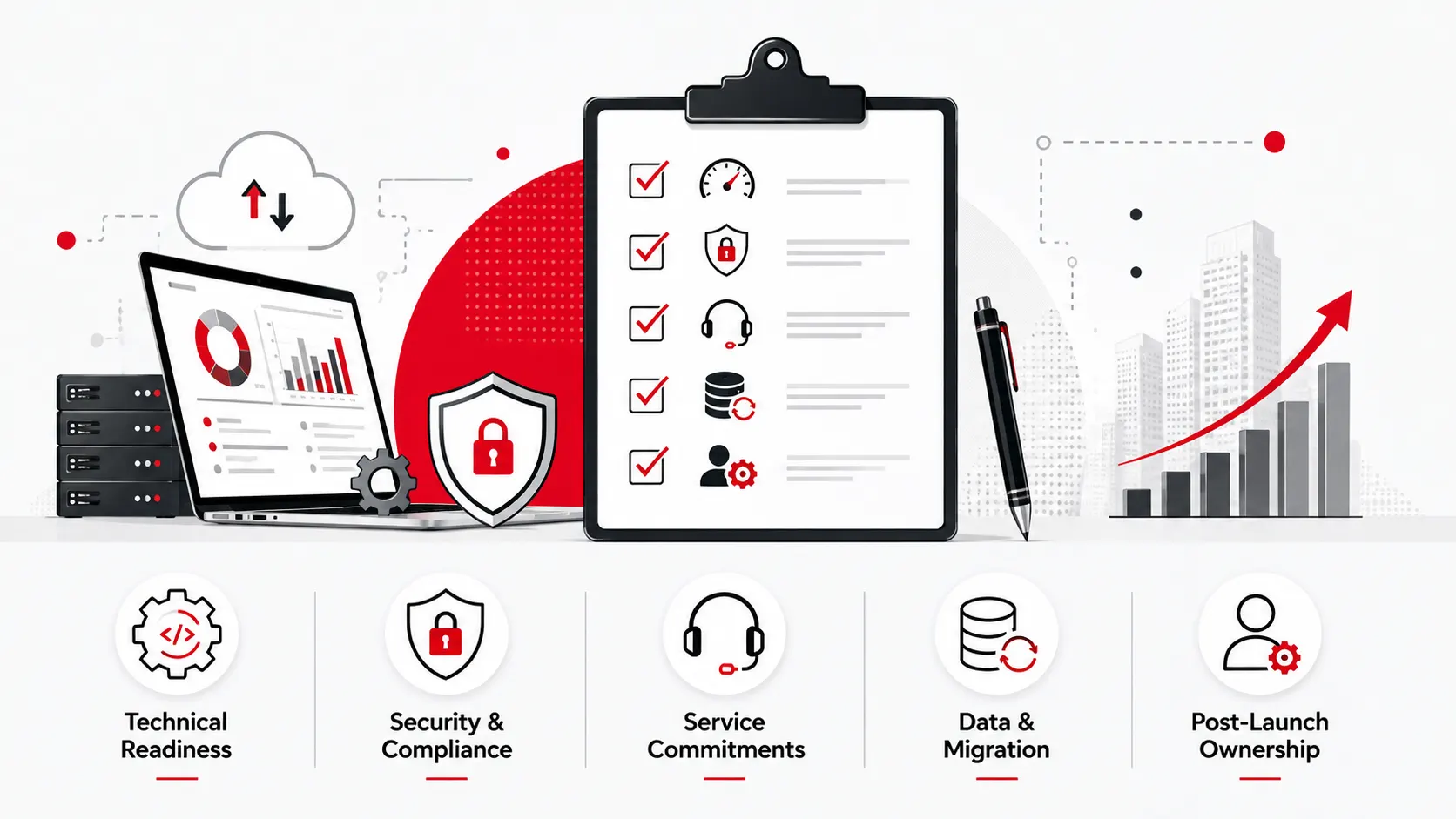
An enterprise deal usually gets signed by the people least equipped to know whether it is technically achievable. That is not a criticism of sales; it is how the roles are supposed to work. But a contract that promises a specific integration timeline, a specific uptime guarantee, or a specific data migration, without engineering confirming […]
 Platform Strategy, SaaS Development, Systems Integration
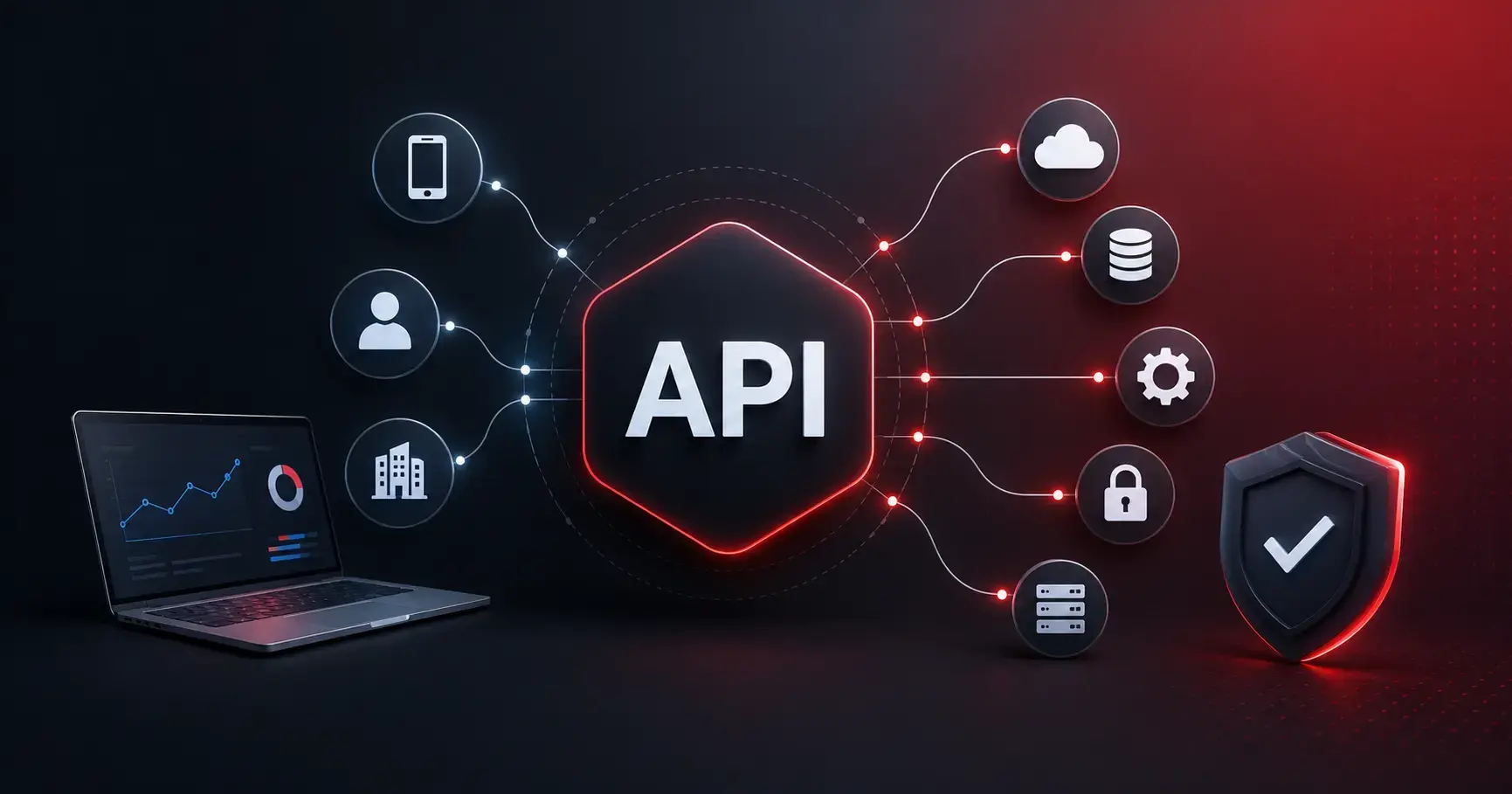
An API serving ten clients and an API serving a hundred are not the same system wearing a bigger traffic number. The rules that hold at one scale stop holding at the other, whether anyone wrote them down or not. What follows is not a wish list. It is the specific discipline, in versioning, rate […]