Does Every Business Need AI Now? An Honest Answer

Hem Kant
·
08 Oct, 2026
We sell AI work. So when we say that not every business needs an AI project, you are right to ask whether we mean it. We do, and this piece explains why.
“Why does every business need AI these days” is a fair thing to wonder about. The headlines say it daily, vendors say it louder, and someone on your leadership team has probably asked for a plan.
But does every business need AI?
Not in the way the headlines suggest. Every business needs a clear answer. Far fewer need a large project right now, and telling those two apart is where money gets saved or lost.
The Census Bureau asks US businesses about AI every two weeks. In its May 2026 analysis, about one in five said they had used AI in some business function. Larger firms use it far more than small ones. And that figure counts light uses, such as drafting text, so it is a generous measure.
The other four in five are not all falling behind. When the Federal Reserve Bank of Minneapolis studied the same data, it found that most firms not using AI said it simply does not apply to their operations.
It also found that almost all firms that do use AI saw no change in total headcount. For most of them, AI supports people and does not replace them.
That tells you something useful. AI is spreading, but it is spreading task by task. Nobody is buying “AI” as a whole. They are handing it one job at a time.
Think of AI as a fast, tireless assistant that is sometimes wrong. It suits work built from language and patterns, where a person can check the result. In practice, that means jobs like these:
There is good evidence that this works when the job fits.
A well-known study of customer support agents at a large software company, summarized by the Bureau of Labor Statistics, tested an assistant that suggested replies.
It raised the number of issues resolved by 14 percent overall. Newer agents gained the most, because the tool passed along the habits of the best performers.
Notice what made that case work. The task was narrow, the volume was high, and a human stayed in charge. When the job is specific to your own systems and data, the work is usually to connect AI to what you already run. That is the kind of engineering our AI development team does, and it is a different job from buying a subscription.
McKinsey’s 2026 global survey holds the most telling pair of numbers we have seen. About 80 percent of respondents said AI improved their own productivity. Yet only 37 percent said it had any effect on company profit. People feel faster, but the business does not always get richer.
In our experience, the gap comes from three habits:
Running costs also surprise teams, because most AI tools charge by use. If you want a grounded view of what to budget, we wrote up how much AI integration actually costs a business.
Not every kind of work is ready for AI. Use this as a rough filter before you spend anything.
Table: How well common business work fits AI today
| Kind Of Work | Fit Today | Settle This First |
| Routine customer questions | Strong | Approved answers, and a clear handoff to a person |
| Summaries of calls, meetings, and long documents | Strong | Who may see the content, and who checks the summary |
| First drafts of marketing and sales copy | Good | A style guide and a human editor |
| Searching your own policies and files | Good | Clean, current documents and clear access rules |
| Decisions on pricing, credit, or hiring | Weak without oversight | Legal review and a person who makes the final call |
| Work with no written process | Poor | Write the process down first, then revisit |
| Tasks done once or rarely | Poor | Usually faster to do by hand |
If your work sits mostly in the bottom three rows, waiting is a sound decision. You lose very little by letting the tools mature while others pay for the early mistakes.
Then run a small pilot, with one team and one task, for a few weeks. If the number does not move, stop. That is a good outcome, because you spent little to learn it.
When the job reaches across several systems, it becomes AI and automation work, and the plan needs an engineer in the room from the start.
If you run a small company, the pressure can feel heavier because you have no data team and no spare budget. The good news is that you also need less. A five-person business rarely needs a custom build. It needs one tedious task handled faster.
Begin with the AI features inside the tools you already use. Let them draft replies, summarize calls, or tidy notes. Give one person a few hours a week to try it and report back. Only when a task clearly pays for itself should you think about connecting AI to your own systems.
Small firms also have an advantage that large ones envy. You can change how a task works in an afternoon, without a committee. Use that speed to test, and be quick to drop what does not help.
Doing nothing is also a choice, and it has costs. Your people are probably already pasting company text into public AI tools. That is the real near-term risk for most firms: unmanaged use, not being “behind.”
So the minimum is cheap. Write a short policy on what staff may and may not put into AI tools. Name one person to track the question. Review it every quarter.
Also check the software you already pay for. Your CRM, helpdesk, and accounting tools are adding AI features all the time. You may already own what you need, and trying it costs almost nothing.
So, why does every business need AI these days? It does not, if you mean a large program with a big budget. It does need a considered position, because customers, staff, and vendors are all moving.
The firms that gain are rarely the loudest. They pick a task and measure it before and after. They keep what works and drop what does not, and they never confuse a purchase with a result.
You can do that this month. Pick one task. Measure it. Try AI on it for six weeks. Keep it or drop it.
Bring us one task. If you have a job you suspect AI could handle, tell us about it. We will say in plain words whether it should, what a trial would cost, and what to measure.
We would rather say “not yet” early than build something you do not need. Book a Discovery Call →

 AI & Automation
OpenAI released a new flagship AI model on September 3, 2026. It’s called GPT-6 Astra. President Greg Brockman told reporters it marks a “generational leap in capability” and called it the start of the “AGI era.” That’s a big claim. Some of what backs it up is genuinely impressive. Some of it needs a closer […]
 AI & Automation, Ecommerce
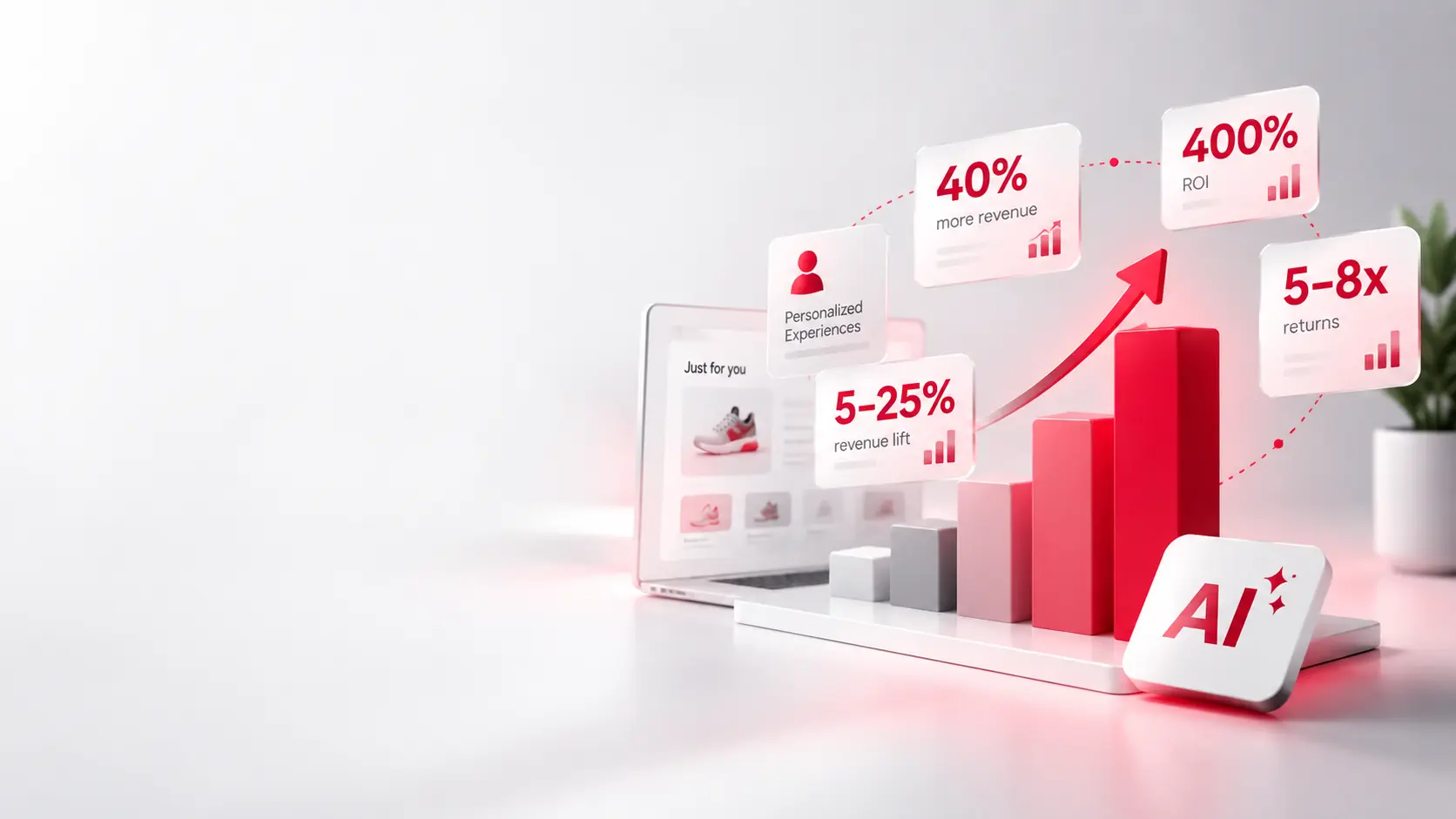
Search “AI personalization ROI” and you’ll find the same handful of numbers everywhere. And trust us, those numbers are interesting at best, and misleading at worst. 40% more revenue. 400% ROI. 5–8x returns. They all sound impressive. They also contradict each other, sometimes within the same article. The problem isn’t that personalization doesn’t work. It’s […]
 AI & Automation, AI & Enterprise Strategy, Compliance & Governance, Thought Leadership
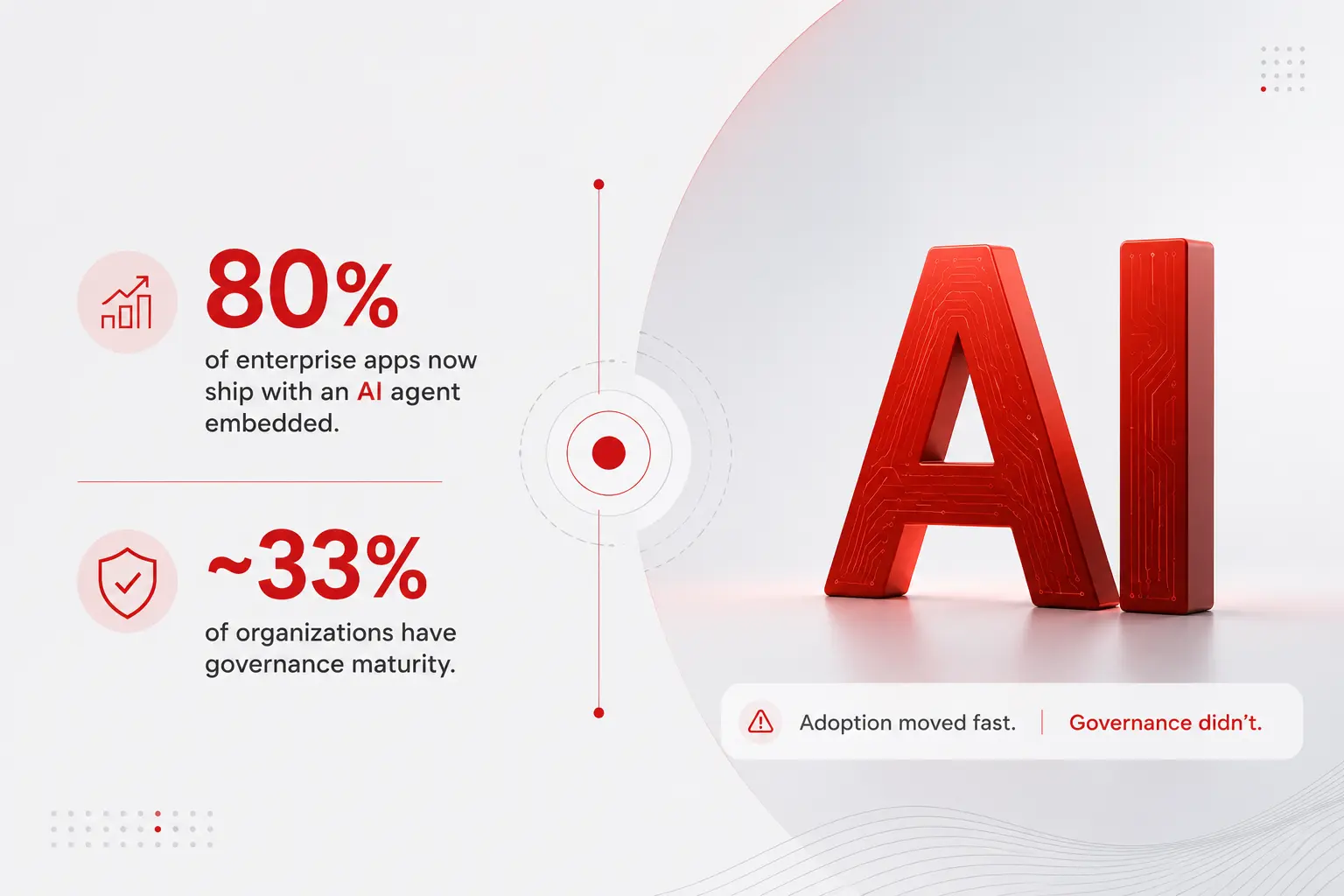
Is agentic AI ready for healthcare and finance is the wrong framing at this point. It is already running in both, at real scale, making decisions that affect real patients and real credit applications. The question worth asking now is narrower and more useful: has the governance around these systems kept pace with how fast […]