Digital Transformation Trends to Be Mindful of in 2023

LN Webworks
·
06 Aug, 2026
The digital progress landscape shifts steadily, and the Digital Transformation Trends to Be Mindful of in 2023 reflect how much operational complexity has grown for SMB SaaS companies, higher education institutions, and healthcare systems. Fragmented systems, mounting technical debt, and pressure to deliver more with existing teams are no longer edge cases; they are the operational baseline for most organizations navigating practical digital progress today. Understanding which trends carry real delivery weight and which ones introduce risk without clear return is where a partnership mindset matters most. This article examines digital transformation trends to be mindful of in 2023 and the shifts shaping platform architecture, workflow automation, and systems integration, helping your organization identify clear next steps rather than chasing every emerging capability.
The digital progress landscape shifts steadily, and the Digital Transformation Trends to Be Mindful of in 2023 reflect how much operational complexity has grown for SMB SaaS companies, higher education institutions, and healthcare systems. Fragmented systems, mounting technical debt, and pressure to deliver more with existing teams are no longer edge cases; they are the operational baseline for most organizations navigating practical digital progress today. Understanding which trends carry real delivery weight and which ones introduce risk without clear return is where a partnership mindset matters most. This article examines the shifts shaping platform architecture, workflow automation, and systems integration in 2023, helping your organization identify clear next steps rather than chasing every emerging capability.
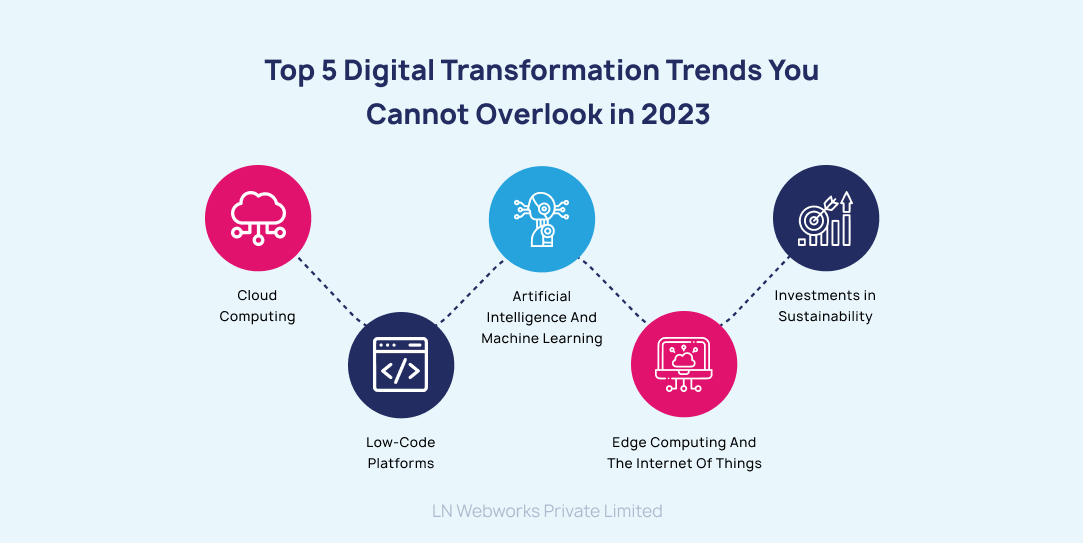
Cloud computing refers to the on-demand availability of computer resources, especially data storage and computing power, without direct active management by the user. It is one of the most phenomenal digital transformation trends in 2023. Its lucrative benefits such as:
According to experts, hybrid and multi-cloud environments will gradually witness a significant increment in application. Netflix, General Electric, Pinterest, eBay, Apple, and Fitbit are some companies that have integrated cloud computing into their digital strategies.
Investing in cloud computing provides organizations with a strategic advantage by enhancing scalability and operational resilience. If such eminent organizations have invested their trust in cloud computing, it has to be something incredible. So, in case you also invest in this cutting-edge technology, you can rest assured that you will not suffer even a twinge of regret at your decision.
Low-code platforms refer to software solutions that enable the creation of applications with minimal hand-coding, using visual interfaces and pre-built templates. Among the Digital Transformation Trends to Be Mindful of in 2023, the growing adoption of low-code platforms stands out as one with direct operational relevance for SMB SaaS companies, higher education institutions, and healthcare systems managing lean internal teams.
Low-code platforms reduce the technical barrier to building and maintaining software. Drag-and-drop interfaces and pre-built components allow non-technical staff to contribute to product workflows without depending entirely on engineering resources. For organizations carrying technical debt or working through legacy modernization, this matters because it shifts some delivery burden away from already stretched development teams.
From a delivery realism standpoint, low-code platforms also reduce time-to-launch for new features and internal tools. Their capacity for API integration with existing systems means they can fit into a broader systems integration strategy rather than requiring a full rebuild of what is already in place.
Drupal, for example, functions as a low-code content management platform that gives content teams meaningful control over publishing workflows without requiring engineering involvement at every step. For organizations where manual coordination between content and technical teams creates recurring delays, this kind of platform architecture reduces that friction in a maintainable way.
If your organization is evaluating whether a low-code approach fits your current stage of practical digital progress, the right starting point is a clear assessment of where your team’s coordination bottlenecks actually exist not a broad platform switch based on trend adoption alone.
Artificial Intelligence (AI) refers to the simulation of human intelligence in machines that are programmed to think like humans and mimic their actions. Machine Learning (ML) is a subset of AI that involves the use of algorithms and statistical models to perform tasks without explicit instructions, relying on patterns and inference instead. AI and ML are dreamy technologies for businesses as they have the potential to enhance efficiency, promote data-centric decision-making, and automate repetitive processes.
Personalization has also become possible only because of these technologies. Chatbots are also dependent on them to function. For instance, chat GPT is a cutting-edge AI chatbot that relies on natural language processing to render a fantastic user experience.
Further, as per experts, the application of AI and ML will only increase further in times to come. If you have not started tapping into the potential of these technologies, it is high time you start thinking about it. They can not only introduce ease into the lives of your employees but also push your business toward incessant growth.
Edge computing refers to a distributed computing paradigm that brings computation and data storage closer to the location where it is needed to improve response times and save bandwidth. Among the Digital Transformation Trends to Be Mindful of in 2023, edge computing and the Internet of Things carry particular relevance for organizations managing distributed operations, multiple physical locations, or device-dependent workflows.
Edge computing shifts data processing closer to the source rather than routing everything through a centralized cloud environment. For healthcare systems managing patient-facing devices or higher education institutions running campus infrastructure, this reduces latency and keeps time-sensitive data processing local. It also supports compliance pressure by limiting how far sensitive data travels before it is processed or stored.
The Internet of Things (IoT) refers to the interconnection via the internet of computing devices embedded in everyday objects, enabling them to send and receive data. IoT extends this further by connecting devices sensors, equipment, and systems so they can exchange data across a network without manual coordination at every step. When integrated thoughtfully into a broader platform architecture, IoT connectivity can reduce the operational complexity that comes from managing fragmented systems that do not communicate with one another.
The practical value of both technologies depends on whether your data foundations and integration foundations are ready to support them. Organizations still working through legacy modernization or systems integration at Stage 1 or Stage 2 of the Digital Progression Framework will find limited return from edge or IoT investment until those foundations are stable. The clear next step is not adoption for its own sake, but an honest assessment of whether your current architecture can support the data volume and governance requirements these technologies introduce.
Given the rising environmental challenges, the IT sphere is shifting toward sustainability. Sustainability in IT refers to the development and implementation of digital solutions and strategies that minimize environmental impact, conserve energy, and use resources efficiently. As the world is largely governed by software today, it is crucial for information technology to take an environmentally conscious approach. A majority of leaders in the IT domain consider sustainability among the top goals of their organization.
Consequently, there is an inclination toward products and tools that support the sustainability goals of governments and businesses worldwide. As an entrepreneur, if you also bubble with the spirit to make some contributions toward healing the environment, investing in sustainability might be the best thing to do. Your investments will not go in vain as even customers prefer companies with a focus on sustainability.
Matching strides with digital transformation trends is imperative for businesses to ensure thriving success in today’s competitive world. By incorporating the above-mentioned trends in your digital strategies, you can reap incredible results for your business. Enhanced reputation, streamlined processes, and enhanced efficiency are some of them.
If you are feeling convinced to integrate these cutting-edge technologies into your business processes, LN Webworks is ever-ready to offer its valuable assistance. Our technology experts can make the entire process effortless for you. So, without waiting any longer, contact us today.

 Other, SaaS Development
SaaS CRMs win on speed. Custom wins on fit and ownership. This isn’t a pitch for either one. Every early-stage SaaS company hits this decision within the first year, usually right after the founder realizes a spreadsheet isn’t a CRM. The default answer is almost always a SaaS CRM: HubSpot, Salesforce, Zoho, sign up in […]
 Other
Other
Most “audits” and “assessments” promise clarity but deliver a sales deck with language that lacks clarity. You book the call expecting evidence about your specific platform, and what shows up is a generic pitch for whichever package is easiest for the firm to sell. That’s the actual reason process transparency matters here, not because a […]
 Other
Other
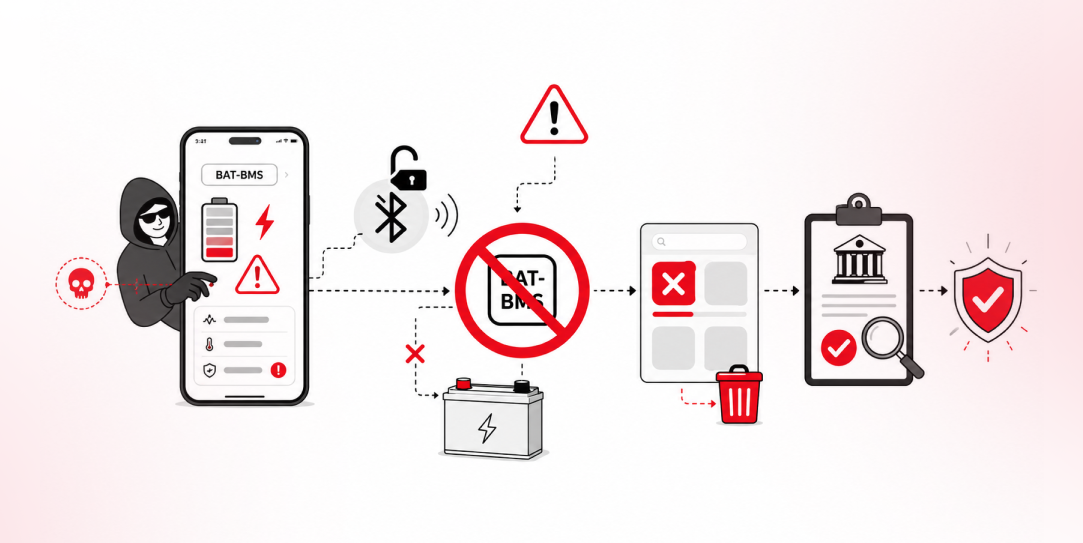
In late June and early July, videos started circulating on Instagram of people walking up to moving e-rickshaws, tapping a phone, and watching the vehicle lose power mid-ride. It spread as a prank trend before anyone fully understood the mechanism. Drivers in Patna (India) reported it first, assuming mechanical failure, until investigators traced it to […]