How Are AI Chatbots Actually Changing Healthcare?
LN Webworks
·
30 Jul, 2026
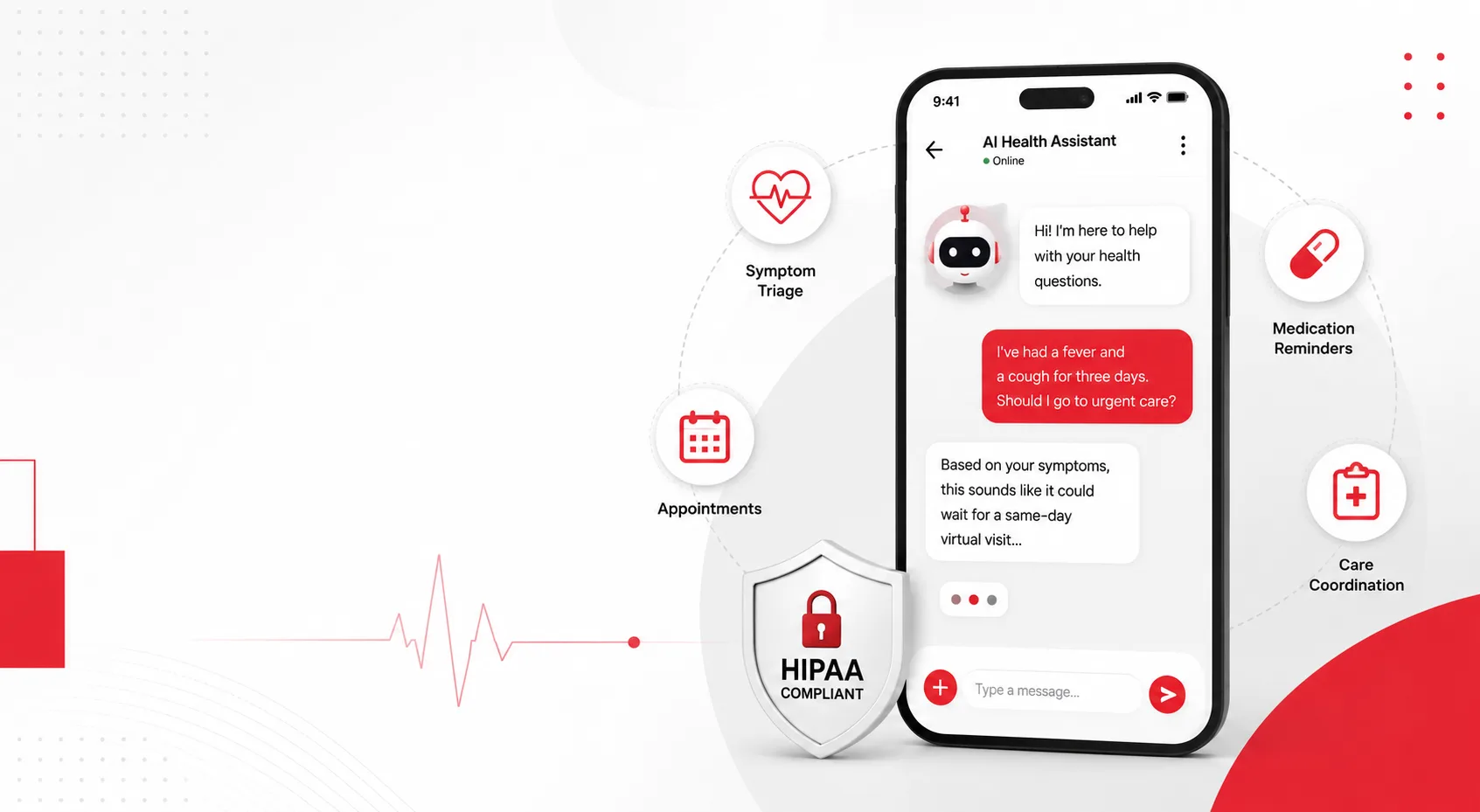
Patient: “I’ve had a fever and a cough for three days. Should I go to urgent care?”
Chatbot: “I’m sorry you’re not feeling well. Based on your symptoms and the duration, this sounds like it could wait for a same-day virtual visit rather than urgent care, but if you develop chest pain or trouble breathing, please go to the ER right away. Would you like me to book the earliest available virtual appointment?”
Patient: “Yes, please.”
Chatbot: “Booked for 2:15 PM today with Dr. Chen. I’ve sent a confirmation and a short symptom questionnaire to your patient portal.”
That exchange is a plausible, composite example, not a specific deployed product, but it’s close to what’s already live across dozens of health systems. The real question isn’t whether conversations like this happen. It’s how much of healthcare’s actual weight, diagnosis, liability, trust, they can carry yet, and where that line sits today.
Two things are true about AI chatbots in healthcare at once, and most coverage only tells you one. Adoption has moved faster than almost anyone predicted. Reliable, trusted clinical use is still genuinely rare. The gap between those facts is the real story, not whichever headline number a vendor wants you to notice.
| 75% of U.S. health systems run at least one AI application, up from 59% a year earlier | <20% have reached reliable AI use in core clinical diagnosis |
Roughly one in three U.S. adults now uses an AI chatbot for health information, roughly double the share from the year before. Consumers are cautiously optimistic about what that means: about 53 percent expect AI to improve access to care, and 46 percent expect it to lower costs. None of that is hype. It’s real, measured behavior change happening faster on the consumer side than the institutional side has caught up to.
ADA Health is the most rigorously studied example. A widely cited BMJ study pitting Ada against seven primary care physicians across 200 real scenarios found the AI identified 99 percent of conditions to the physicians’ 100 percent, with lower raw accuracy, 71 percent versus 82 percent. The telling number: used together, human and AI gave safe advice 97 percent of the time.
Tools like Wysa and Youper have found genuine traction, offering structured check-ins between therapy sessions, not instead of them. This is also the category with the clearest cautionary tales: Woebot shut down, and Babylon Health, once a highly valued AI-first platform, collapsed entirely. Traction doesn’t guarantee survival.
The clearest, most reliable results aren’t in clinical decision-making; they’re operational: documentation, scheduling, insurance questions, medication reminders. AI scribe tools alone cut physician charting time by 40 to 45 percent, a large recovery of clinician time with comparatively low clinical risk.
The healthcare-specific pressure is most acute here, tied directly to CMS-0057-F’s requirement for payer-side FHIR APIs by January 2027. Chatbots sitting on top of those APIs are becoming the practical interface patients use, which means whether the FHIR compliance underneath is real or just claimed matters more than the chatbot layer itself.
A real deployment, not a demo, tends to follow a consistent sequence, and skipping steps here is the most common way a promising pilot never reaches production.
Triage, scheduling, medication adherence, and billing are different problems with different risk profiles. Treating “AI chatbot” as one project sets scope and risk tolerance incorrectly from day one.
What happens when an answer suggests something urgent, and how fast the bot hands off to a human, needs a clinician’s judgment, not a product manager’s best guess.
Any tool touching PHI, protected health information, needs a signed BAA with every vendor in the chain. A bot reading from or writing to a system like Epic or Cerner needs that integration built to clear legal review, not just technical review.
Ambiguous symptoms, unexpected answer formats, and edge cases where the only safe response is “talk to a human now.”
Durable results tend to start with one well-scoped use case, proven safe in production, before expanding, rather than an ambitious multi-purpose assistant on day one.
Pricing varies by exactly how much clinical and regulatory weight the chatbot is expected to carry, but 2026 market data clusters into three fairly consistent tiers for healthcare specifically:
|
Tier |
What It Covers |
Typical Range |
| Basic patient-facing bot | FAQs, appointment reminders, basic intake, HIPAA-compliant hosting | $30,000–$100,000 |
| Integrated triage & portal assistant | Symptom routing, EHR/patient portal integration, medication reminders | $100,000–$300,000 |
| Enterprise clinical platform | Deep FHIR/EHR integration, multi-system orchestration, regulatory-grade documentation | $300,000–$1,000,000+ |
HIPAA compliance itself, encryption, access controls, audit logging, and a real BAA rather than a checkbox reference typically add $15,000 to $30,000 on top of any tier, and it’s not optional.
This is also where build-versus-buy gets genuinely different from a typical SaaS decision: a bot reading from or writing to a system like Epic or Cerner under a real BAA usually can’t be satisfied by an off-the-shelf platform at all. Custom becomes the only option that clears legal review, not a preference.
The honest explanation for the 75 percent versus 20 percent gap isn’t reluctance. The tasks AI handles well right now, administrative, low-stakes, are genuinely different from the tasks health systems are cautious about, high-stakes clinical judgment, where being wrong has real consequences. Conflating the two is how organizations end up over-trusting a chatbot in the wrong context, or under-using one in the right one.
The Black Box Problem
A documented example: an AI tool tells a nurse a patient has a 78 percent chance of developing sepsis in six hours, without explaining which data points drove that number. Health systems have flagged this directly to policymakers as a genuine barrier, because it creates real, unresolved liability questions when an AI-influenced decision goes wrong, and nobody can reconstruct why.
WHAT SYSTEMATIC REVIEWS CONSISTENTLY NAME AS THE REAL RISKS
The FDA has authorized more than 1,300 AI-enabled medical devices, but about three-quarters of those are radiology tools, not chatbots, reflecting a genuine pattern: regulated clinical AI has matured fastest in narrow, well-defined problems with clear ground truth, not in open-ended conversational tools.
The FDA held a dedicated advisory committee meeting specifically on generative AI mental health devices in late 2025, and updated its Clinical Decision Support and General Wellness guidance in January 2026, both signs that regulators are actively still working out how conversational AI in healthcare should be governed.
State legislatures are moving too: more than 250 AI-related healthcare bills were introduced across U.S. states in a recent policy cycle. Whatever a health system deploys today should be built assuming the regulatory ground will keep shifting under it for at least the next few years, not treated as a fixed target.
A quieter, less-discussed blocker sits alongside the regulatory one: research consistently names a shortage of AI-literate staff as a top deployment barrier. A chatbot deployed without staff who understand its actual limitations tends to get either over-trusted or ignored entirely, and buying a better tool doesn’t fix a team that hasn’t been trained on what “better” actually means for the tasks they’re using it for.
The organizations getting real value aren’t the ones chasing the most ambitious AI use case. They’re the ones being precise about which category a given tool falls into, administrative automation versus clinical decision support versus a consumer-facing conversational layer, and matching their risk tolerance and oversight to that category honestly, rather than treating “AI chatbot” as one undifferentiated thing.
That precision is exactly what we help healthcare organizations get right.
We build AI chatbots and conversational layers scoped to a specific, well-defined use case, integrated properly under a real BAA rather than around one, and tested against the messy scenarios that actually show up in production, not just the clean demo cases.
Whether that’s a patient-facing intake assistant, a triage tool that hands off cleanly to a human, or a prior authorization workflow that sits correctly on top of your FHIR APIs, the build discipline is the same: scope it honestly, integrate it properly, and don’t ship something that looks impressive in a sales call and breaks on the first real patient interaction.
If you’re not yet sure which category your use case actually falls into, or what your current systems can support before adding a conversational layer on top of them, that’s exactly the kind of gap a Modernization Readiness Audit maps first, for organizations in the healthcare sector specifically.
If you already know what you want to build, let’s talk about building it properly the first time.

 Healthcare Technology, Systems Integration
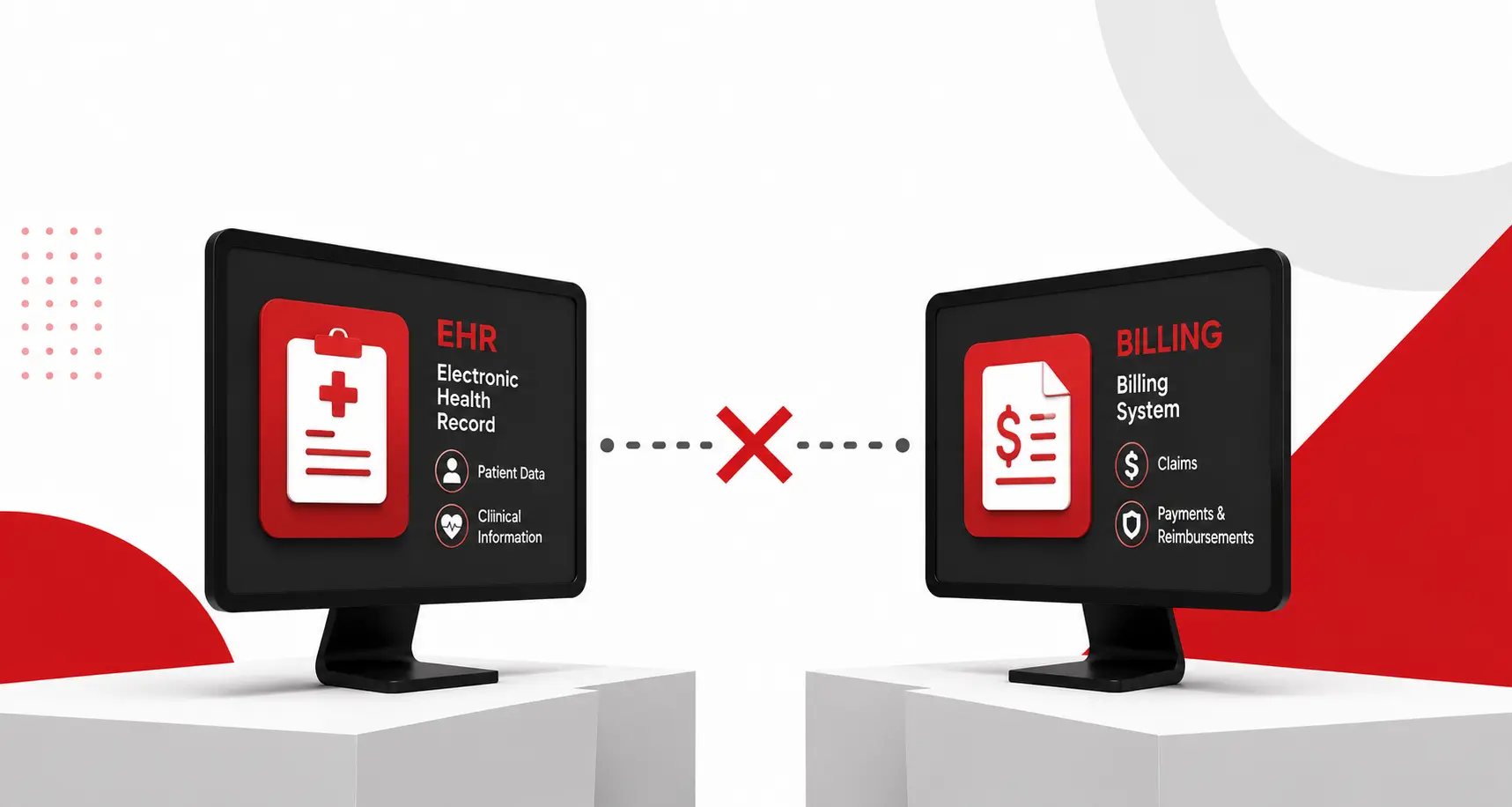
Most explanations for why an EHR and a billing system do not talk to each other assume the problem is a bad integration, a vendor that cut corners, or a connection nobody maintained properly. That framing is usually wrong. The real reason is more fundamental, and once you see it, the recurring billing errors, the […]
 Healthcare Technology
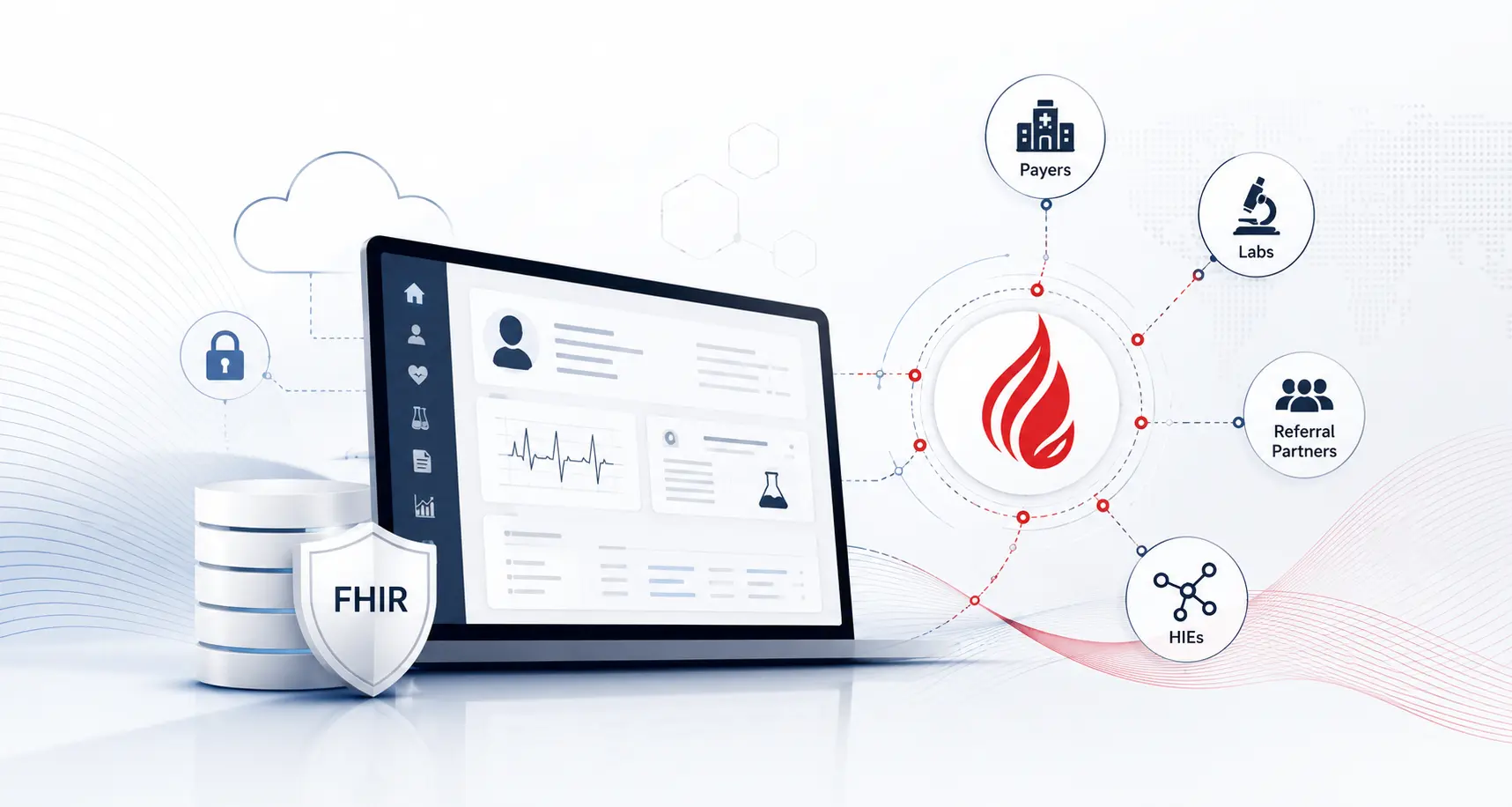
Ask a vendor if their EHR (electronic health record system) is FHIR-compliant, and most will say yes without hesitation, because it’s almost always technically true. Ask them to prove it exchanges data with your specific payers, labs, and referral partners in production, and the confidence tends to get quieter. That gap, between certified and actually […]
 Compliance & Governance, Healthcare Technology
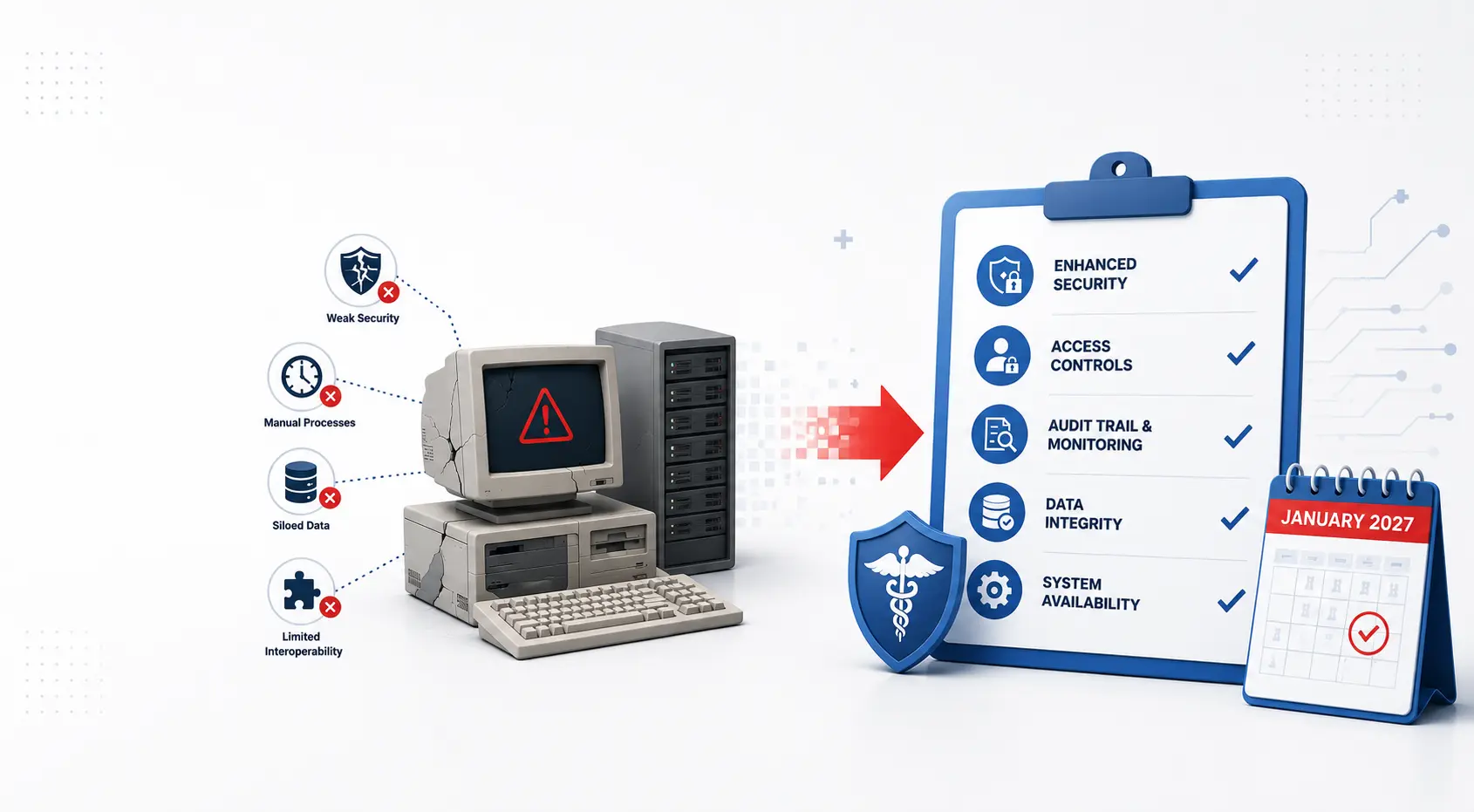
If your team is only tracking the CMS-0057-F deadline everyone talks about, you may already be behind on the one that’s already passed. The Interoperability and Prior Authorization Final Rule, finalized by CMS (the Centers for Medicare & Medicaid Services) in January 2024, requires Medicare Advantage plans, Medicaid, and CHIP managed care organizations, as well […]