What Is Ecommerce Website Development: A Complete Guide
 Pankaj Kumar
·
19 Sep, 2025
Pankaj Kumar
·
19 Sep, 2025
Given that there are between 12 and 24 million active e-commerce websites worldwide, it’s simple for an online store to become lost in the mix.
But how to get noticed? Excellent website design that provides clients with the experience they require.
The process of creating your ecommerce website’s technical features from a Ecommerce development company , such as how it works, takes payments, reacts to user input, and looks, is known as e-commerce website development. The procedures to follow prior to launch, how to hire a developer or team of developers to help you fulfill your vision, and what ecommerce web development is will all be covered in this article.
Your Guide To Building an Ecommerce Website
In today’s digital age, having an eCommerce website is essential for businesses looking to expand their reach and boost sales. This guide will walk you through the key steps to build an effective and user-friendly eCommerce website.
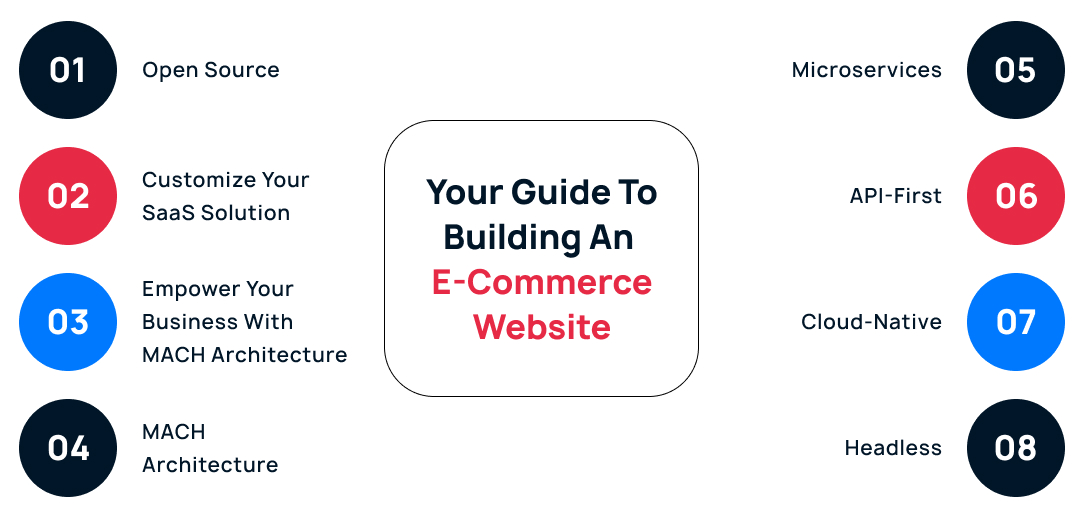
Open Source (Build your website from scratch)
Open source will be the right choice for you in case you already have a web development or IT team. Open-source platforms are the perfect answer in which you will be able to change all aspects of the code; in short, you can build your website from the start with less or no customization limits.
But while using open source, you need to keep in mind that your business will be responsible for things such as web hosting, PCI compliance, security issues, manual patches, and updates. It is one of the main reasons why some brands view open source as too expensive, cumbersome, and tech-heavy, especially.
Customize Your SaaS Solution
SaaS is a subscription-based service that can be hosted in the “cloud” and is developed and managed by a third-party vendor. SaaS enables you to rent the platform effectively rather than create and develop a custom solution yourself. The platform provider handles all of the responsibilities that come with operating your software, including hosting, security, product upgrades, and PCI compliance. SaaS solutions, therefore, make it possible for companies to launch swiftly and at a reasonable cost.
Read More : Low-Code SaaS Development: A Beginner’s Guide
Empower Your Business with MACH Architecture
The frontend storefront and backend management have been integrated into a single monolithic structure for decades by the conventional e-commerce approach.
For small and mid-sized businesses, a monolith solution might be a wise choice. However, it can also bring some challenges as your business scales and needs more complexity, including launching multiple websites or expanding into new regions.
MACH Architecture
MACH (Microservices, API first, Cloud-native SaaS, and Headless) is a set of best practices for developing corporate software development stacks. In contrast to a monolithic design, MACH gives you the freedom to select the technology that best suits your future goals and business requirements.
Microservices
Microservices are small services that complete a specific task and are brought together to create an application. They are updated, independently developed, deployed, and managed while using different codes.
API-first
API (application programming interface) is the source that makes it possible to connect and communicate to deliver content between different services or applications. It implies that APIs must be the primary focus of the application’s development.
Learn More : Top 8 API Integration Tools in 2024
Cloud-native
Utilizing the full potential of the cloud hosting and SaaS technologies, a cloud-native application licenses the technology through subscription services and manages, monitors, and maintains it.
Headless
Headless commerce architecture is basically a separation of a website’s frontend presentation layer from its backend e-commerce functions. This makes it possible to create the user interface and integrate several channels with more design flexibility.
How To Select The Right Ecommerce Website Developer?
We have listed below a few points that you should look for while choosing the best Ecommerce web developer based on your web designing needs.
73% of American consumers feel that the customer experience is a crucial consideration when making an online purchase. Yet, only 49% think that businesses offer a positive experience, according to a PWC study.
The best way to make sure that your ecommerce web development team offers the best experience is to hire one with designing and developing experience for ecommerce.

Explore Developers’ Unique Strengths
Experienced developers will be able to bring your brand to life with the beautifully crafted frontend design. At the same time, others excel in backend personalization and technical implementation.
Please make sure you are aware of the developers’ strengths while you are assessing them for your online business.
Although some developers are proficient in both frontend design and backend coding, they usually choose one as their primary area of concentration. Verify that the developer you select has the abilities you require.
The following are some of the most important factors to think about when creating your e-commerce website:
- SEO Optimization (Search Engine Optimization)
- PCI compliance and web security
- CMS (Content Management System) integration
- Multiple payment gateways and options
- Shopping cart designs
- Mobile optimization
- Product catalog filtering
Align Your Choice with Your Needs
Do not rush and select the first developer or developing company; search for the one that aligns with your needs and what your ecommerce custom storefront requires. Also, check their skills and experience before finalizing.
For instance, in case your ecommerce solution is using an open-source framework, then the backend developer is more likely to be more necessary than someone who is focusing on design.
You could require more frontend work than anything else if you’re using a SaaS platform, but you might also want someone with experience developing APIs. A specialist is ideally suited to manage additional complexity, even if the majority of SaaS platforms come with a relatively strong collection of apps with pre-built connectors.
Top Functionalities For A High-Performing Ecommerce Site
Based on your business requirements and model, you must want different features and functionality in your ecommerce site. For example, a small business or a startup would not need to support multiple currencies, but it might be a vital feature for a cross-border retailer.
The simple way to determine what shopping cart functionality you need is to work from general to specific.
- Enumerate every general requirement, including marketplace integrations and preferred payment gateways.
- Include extras that your company requires, such as shipping rate and sales tax computations that happen automatically.
- List all of the nice-to-haves in order of importance, with 1 representing a feature that is essential for increasing sales and 5 representing a practical add-on that could improve the efficiency of your daily operations.

Responsive Design
As more and more customers use mobile phones to shop online, your business might require a website that supports mobile-friendly, responsive web design. You can also have your web developer create a mobile app.
In short, the main goal is to ensure that your business is able to deliver a consistent shopping experience to the customers whether they are using the website from mobile or desktop.
Boost Traffic with SEO
For your content and essential aspects of your website design, SEO is one of the great distribution strategies.
Having a high Google search engine ranking for pertinent keywords will assist in attracting interested internet searchers to your website. SEO traffic can be more cost-effective since it can naturally bring you high-intent, more likely-to-convert potential customers.
Site Speed
According to a study by Google, the chances of bounce increase with every couple of seconds added to page load time.
Because Google uses site speed as a ranking criterion, websites that load quickly are also advantageous for SEO. For this reason, you should work with e-commerce website developers who understand how to make your e-commerce business fast-loading in addition to being aesthetically pleasing and functional.
Related Article : What Is Performance Testing And Why Is It Important?
CMS (Content Management System)
Having a CMS is an essential part of an ecommerce site, as it houses any content together, including visuals, blog posts, and any other blocks of content in a design- all in one place.
With the help of CMS, you will also be able to modify or add new content, and your e-commerce website will automatically update to reflect the modifications. In this manner, you can regularly add fresh material to your website that promotes your goods.
Product Management
Online retailers are likely to have all the products in stock that you want; they will also offer multiple versions of products, and when necessary, they provide discounts and promotions.Make sure your e-commerce site has the features needed to add, change, and inventory tracking while you’re building it so you can reliably provide clients with the goods they desire.
Checkout and Secure Payments
In this digital era of using Paypal, Apple Pay, and mobile wallets, ecommerce can not just offer only one payment option.
The ability of your e-commerce platform to link with numerous payment gateways is essential because research indicates that nine out of ten buyers speed up their decision-making process and even increase their spending when presented with flexible and smooth payment options.
Security
When you are developing an online store, it means that you are also dealing with lots of sensitive data, including credit card numbers, customer phone numbers, and other payment information. So, handling all of it with care is your responsibility.
To make payments, you must adhere to PCI Compliance rules; otherwise, you run the risk of incurring fines, losing your ability to accept payments, losing the trust of your clients, and experiencing other financial repercussions associated with fraud.
However, specific platforms’ minimal minimum might not be sufficient. Although some platforms include SSL certificates, adequate security may need additional in-house infrastructure expenditure or third-party applications.
Integration
All the ecommerce platforms can’t come with every single feature you want. Make sure your platform has plugins and API integrations with the solutions you require so you may personalize your website.
What kind of operation do you want for your back office? Make sure the platform you select has the integration you require because many companies place a high priority on integrating their e-commerce solution with their current ERP, OMS, PIM, or CRM systems.
Marketing Strategy
Early on in the process of creating your online business, start formulating your e-commerce marketing plan. This will assist you in defining your website’s structure and identifying any features you require.
For instance, you should include social sharing features on your website if you plan to use social media for advertising. Alternatively, you could develop a mobile app or incorporate push notifications if mobile commerce plays a significant role in your strategy.
6 Simple Steps to Build Your Custom E-commerce Site
We do not recommend that you build your custom ecommerce website from scratch, nor is it necessary You will be able to find many platforms that can help you make an ecommerce store with minimal technical skill or coding required on your part.
However, choosing your platform is not the only step you must do before beginning the development process. Before you go in, take into account these points.
Set Strong Business Goals For Success
Before you begin the action of selling online, you must figure out the operational bells and whistles.
- Will you sell directly to customers through your e-commerce business?
- Do you wish to increase online traffic in order to support your physical business operations?
- Would you like to grow a firm from B2C to B2B or the other way around?
Make sure to know whether your target audience needs a quick and straightforward shopping experience, just like with necessities items such as consumer-packaged goods- or if they will take some time to go through your site and find new products. Your response will determine how you should design your website for a particular consumer journey.
Explore Your Platform Choices
Do not worry; nowadays, you do not have to build your website from scratch. There are tons of ecommerce solutions you can choose from, and find the right one as per your requirements.
The various e-commerce platforms available have their own set of benefits and drawbacks, so you must be clear about which aspects are essential to the success of your online business.
Add Products
Ensure that you will be able to add and edit product listings easily and that your inventory can sync across all of your sales channels. This can help you avoid overselling your products and streamline back-office procedures.
- High-quality product images: Assure your clients that they will get precisely what they ordered from you.
- Product Description: Especially for products that have undergone extensive research, be sure to include all relevant details, such as product specifications and sizing information.
Configure Payment and Shipping Options
A website developer will help streamline the shopping cart and checkout process; they will also guide you on integrating payment gateways into your site and get shipping set up. You will usually get numerous payment gateway options available to choose from.
Customers are becoming more interested in using alternative payment options, such as buy now and pay later, but you don’t have to integrate them all. Additionally, you should select payment gateways that support your target locations if you’re selling internationally.
QA and Launch Website
After the website is shifted from stage to production, please give it a quick test drive to make sure that you are all set in terms of ecommerce website performance, design, and easy navigation.
- Check all calls-to-action and form titles on the homepage and landing pages.
- Try out the secure checkout process.
- Verify payment processing integrations (such as Stripe, PayPal, and credit cards) one more time.
- Make sure that every image is high quality while yet being load speed optimized
- Review the product descriptions and categories that are missing.
- Verify that every link and form works
- Make sure your tax settings are accurate.
- Ensure that every item in the inventory is listed right.
- Check your promo codes and vouchers.
Related Article : Custom eCommerce Solutions
Turning Ideas Into Reality: A Case Study From Our Portfolio
Octave Clothing partnered with LN Webworks to enhance its e-commerce platform, improving online functionality and user experience. This collaboration helped Octave attract more customers, streamline operations, and achieve significant growth in the competitive apparel market.
Wondering what we did to help? Check out Octave Case Study.

Final Thoughts
There are tons of complications that could occur while launching an B2B ecommerce business. Whether you start with an advanced platform or an out-of-box solution, you will still need expert web development help to ensure seamless growth.
Ready to Build Your Dream B2B eCommerce Platform? At LN Webworks, our expert team is here to guide you every step of the way. Book Your Free Consultation Now!
Author