What Is Responsive Web Design? Why It’s Essential for Modern Websites
 Deepak
·
22 Sep, 2025
Deepak
·
22 Sep, 2025
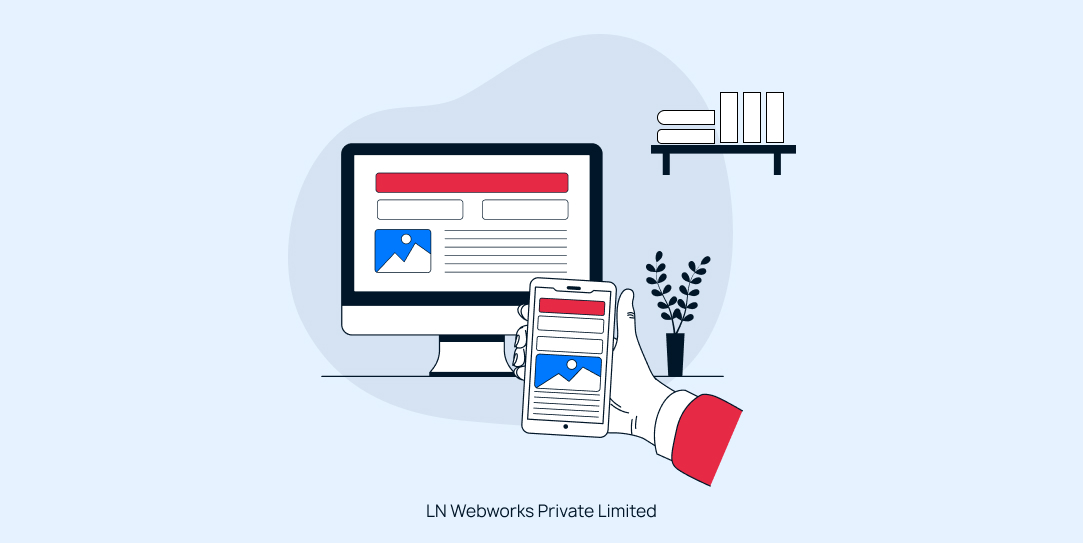
Users in today’s digital environment visit websites via a range of devices, including desktop computers, tablets, and cellphones, on desktops, tablets, and smartphones. Given the variances in screen sizes, it is essential to provide a uniform and user-friendly experience on every device. Here is where responsive web design (RWD) finds application.
Define Responsive Web Design
Responsive web design is a method of web development wherein webpages may change to fit the screen size and resolution of the device under usage. This implies that every device—from a big desktop display to a medium-sized tablet to a tiny smartphone screen—the same website may look excellent and operate well on.
Using flexible grids, graphics, and CSS media queries helps Responsive Web Design provide a smooth user experience across all devices. Simply said, it guarantees that content moves and changes itself to precisely suit any screen.
How Does Responsive Web Design Work?
Responsive Web Design uses a small set of fundamental ideas to provide a flexible and adaptive layout:
Flexible Grid Layouts
Responsive Web Design use percentages and relative units for widths, margins, and paddings rather than set pixel specifications. This lets the design scale appropriately in line with the screen size of the device.
Flexible Images
Images are adjusted to scale within the flexible grid, therefore resizing to suit the layout and screen size without sacrificing quality. Smaller displays where big graphics might otherwise skew the layout or call for too much scrolling find this very helpful.
Media Queries
Depending on the device’s characteristic such as screen width and height—CSS media queries let many styles apply. This allows the design to vary for certain platforms, therefore offering an ideal layout for desktop, tablet, and mobile users.
These three components cooperate to provide a website that can dynamically adjust its look and layout to fit any screen size or orientation, hence improving usability and accessibility.
Advantages Of Responsive Website Design
These 10 main advantages of Responsive Web Design each help to improve user experience and corporate performance.
1. Enhanced User Interface
On smaller displays, responsive web design offers a perfect experience across devices, therefore removing the requirement for horizontal scrolling or zooming. Whether they’re on a phone or a PC, consumers can therefore easily explore, read, and engage with content. Offering a consistent experience helps you to raise the possibility of people remaining on your website longer, seeing more pages, and interacting with your content, thereby immediately increasing satisfaction and conversion potential.
2. More Mobile Traffic
Responsive Web Design guarantees that your website is attractive and accessible to mobile visitors as a lot of internet traffic is made by mobile devices. Since it serves consumers on the move, a site that adjusts to different screen sizes catches a broader audience. This mobile accessibility lowers bounce rates since mobile visitors are less likely to quit because of bad layout or usability problems, therefore improving your chances of reaching a wide audience.
3. Improved Search Engine Optimization, or SEO
Responsive Web Design is critical for SEO as Google and other search engines give mobile-friendly sites top priority in their results. Having a responsive website simplifies your SEO approach and helps search engines to crawl and index your content as you have a single URL structure for all devices. Being mobile-friendly increases the likelihood of your site ranking higher as well, thereby facilitating user access to it via search results.
4. Simple Maintenance
Keeping distinct versions for desktop and mobile calls for more work than running a single responsive website. Responsive Web Design allows once installed upgrades, content changes, and bug fixes to be mirrored across all devices. This saves time and money required for website upkeep so your staff may concentrate on enhancing other facets of the site. It also guarantees that, independent of the device your consumers are using, they get regular, current content.
5. higher Conversion rates
A flawless user experience across devices motivates users to interact more deeply with your content, therefore lowering friction and facilitating the completion of tasks like form completion or purchase. Responsive Web Design maximizes every component for usability, therefore directly influencing conversion rates. Users who have a flawless experience are more likely to trust your website and follow through on calls to action, therefore generating more leads or purchases.
6. Quicker Page Loading Times
For mobile visitors on weaker connections specifically, responsive websites are generally tuned to load fast on all devices. Both user experience and SEO depend on speed as people are more likely to quit a slow-loading website. Faster load times result from responsive web design’s ability to provide ideal image sizes, simplified coding, and improved performance. A quick website helps retain visitors, lower bounce rates, and improve the general performance and rating of your site.
7. Flexibility toward Future Tools
Designed with adaptability in mind, responsive web design allows your site to automatically change to new devices and screen sizes that could surface going forward. As technology develops responsive design reduces the need for redesigns or extra coding by concentrating on scalable layouts and flexible grids. This future-proofing guarantees that your site stays relevant and functioning as user behavior evolves, therefore saving on redevelopment expenses and maintaining accessibility of your site.
8. Simplified Data Analytics
With one responsive website, tracking user data and evaluating performance across devices is much easier. Responsive Web Design lets you track user activity in one consistent manner instead of keeping track of distinct measures for desktop and mobile versions. Clearer perspective of user involvement provided by this simplified data collecting helps you decide on content, design, and functionality with accuracy. It also streamlines reporting so that faster changes and improvements may follow.
9. Money Saving Strategies
Constructing a single responsive site is considerably less expensive than building separate desktop and mobile sites. Through consolidation of development and maintenance activities, responsive web design lowers both front-end and continuing expenditures. Investing in improving the single responsive site will eventually provide better outcomes with less resources than paying for redundant effort on two versions. This effectiveness enables companies to provide a high-quality service while nevertheless keeping within their means.
10. Improved consistency Of Brand
Consistent experience on all devices helps to establish user confidence and reinforces the character of your brand. Responsive Web Design guarantees that, independent of screen size, colors, fonts, layouts, and message stay the same. This consistency strengthens your brand and increases user familiarity, therefore facilitating visitor connection with and memory of your site. Users who experience a flawless brand develop trust, boost loyalty, and inspire repeat visits.
Why Responsive Web Design Is Crucially Important For Current Websites
a. Serving Mobile Users
Many of the online visitors come from mobile devices. Without responsive web design, these users can battle unclear content, terrible layouts, and too much scrolling. A responsive website solves these problems, therefore improving the user experience and increasing accessibility to a larger audience.
b. Raising Conversions
Visitors will be more likely to interact with your site if all of the devices have a good, simple interface. Regardless of the device a user is using, responsive websites often receive better conversion rates as visitors may quickly access and engage with the information. Responsive Web Design aids in filling out forms, making purchases, and contacting support—all of which serve to enable these behaviors and hence raise conversion rates.
c. Simplified Analytics and Reporting
Tracking and analytics are easier on a single responsive site. Managing one instead of tracking many versions of a website would simplify your statistics and provide a better view of how people interact with your content on several devices.
d. Advantage of Competitiveness
Inactive websites might look antiquated and unprofessional. Modern, flexible design provides companies unique appeal and faith in the brand. Having a responsive website may make a big difference in a competitive market, helping you keep visitors who would otherwise go for a more mobile-friendly site.
e. Shortened Maintenance Period
You cut the time and money needed for updates by just keeping one version of your site maintained. Responsive websites simplify maintenance, thus accelerating and more effective modification, issue fixing, or content updating becomes possible.
f. Good Brand Image
Modern, adaptable design shows expertise and flexibility, thereby leaving people with a good view of your business. Visitors link responsive, aesthetically pleasing websites with businesses that respect their digital footprint and user experience. A well-designed flexible website may inspire confidence in consumers, therefore increasing their likelihood of seeing your company as reputable and forward-looking. This can help to build customer loyalty and draw fresh business.
g. Better Content Priority
Responsive design helps you to consider closely the hierarchy and structure of your content. Mobile devices have limited area, so Responsive Web Design drives designers to give top priority to important information and guarantee that critical messages are instantly accessible. This emphasis on content clarity enhances consumers’ whole experience and helps them discover what they need fast, therefore increasing the impact of the content on all kinds of devices.
Finally
Any modern website needs responsive web design; it is no more just a fad. Consistent and easily available experience is crucial when people view websites from many different devices. From enhanced user engagement and higher conversion rates to improved SEO, responsive design provides a spectrum of advantages that make it rather important for both companies and consumers equally.
Investing in Responsive Web Design guarantees your site is future-proof, accessible, and user-friendly whether you are building a new website or upgrading an old one. Using a responsive strategy not only satisfies present needs but also helps your website to be ready for the changing digital scene. Get in touch today to explore our web development services and start building a digital experience that truly works for your business.
Author