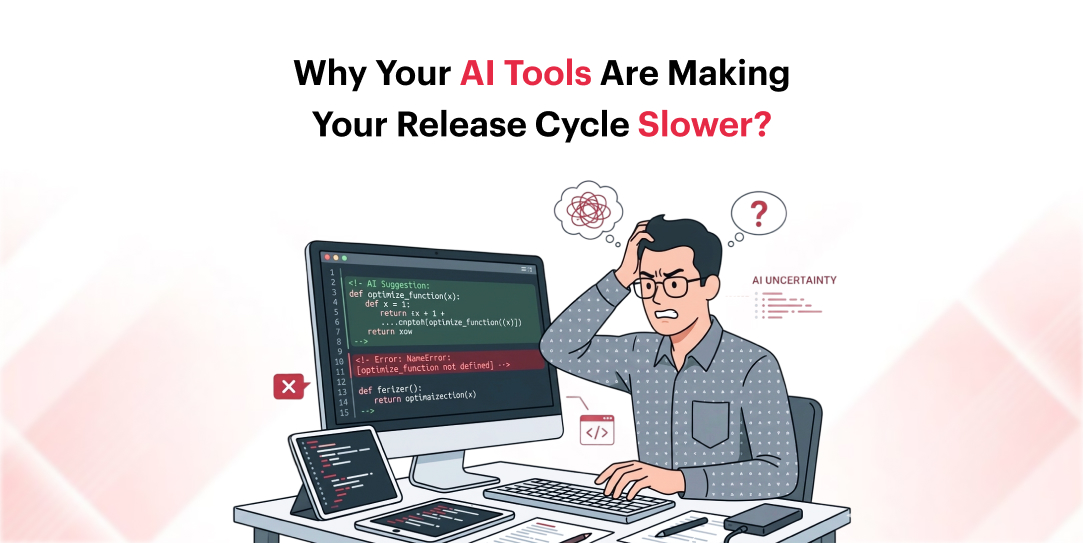
Why Your AI Tools Are Making Your Release Cycle Slower?
Hem Kant
·
20 Apr, 2026
The AI coding tool industry sold engineering leaders a simple promise: your team will ship faster. It was wrong, not because the tools don’t work, but because writing code faster and shipping software faster are fundamentally different problems.
The industry lumped them, and most teams are now paying the price in slow, confused releases and bloated review queues.
Simply, AI tools have moved the bottleneck, not eliminated it. Code creation is no longer what slows your release cycle. Code verification is. And every AI-generated line of code your team doesn’t fully understand is a line that takes longer to review, longer to trust, and longer to ship.
The faster your developers write, the slower your organization delivers, unless you have deliberately rebuilt the pipeline between the two.
That rebuild is what this piece is about. Not whether AI tools are good or bad, but where they actually create drag on delivery and what structurally needs to change.
The most rigorous study on AI-assisted developer productivity was conducted by METR (Model Evaluation & Threat Research) in 2025. It was a randomized controlled trial, not a vendor survey, not self-reported data.
Sixteen experienced open-source developers were given real tasks from their own repositories, projects they’d worked on for years. And the result was shocking: developers using AI tools took 19% longer to complete their work.
But here’s the part that should concern engineering leaders even more: those same developers predicted AI would make them 24% faster. They felt faster. They weren’t.
AI creates a dangerous disconnect between perceived productivity and actual delivery speed. Seeing complex functions appear instantly triggers a feeling of achievement, but the verification cost downstream eats the time saved upstream.
— Adapted from Baytech Consulting’s analysis of the METR findings.
The explanation comes down to a cognitive phenomenon called context-switching cost. Experienced developers hold deep mental models of their codebase. When they write code manually, creation and verification happen simultaneously; they check the code against their internalized architecture as they write.
AI breaks that loop. The developer shifts from author to reviewer, reverse-engineering logic they didn’t write, checking for hallucinations, and assessing architectural fit.
For complex tasks, this verification overhead exceeds the time saved by not having to type. And that overhead doesn’t stay contained; it compounds into the kind of AI-specific technical debt that most teams don’t recognize until it’s already slowing everything down.
The individual productivity paradox is only half the problem. The bigger issue is what happens at the organizational level, specifically, in your PR queue.
AI-generated pull requests are consistently two to three times larger than manual ones. They touch more files, more logic, and more architectural connections.
According to an analysis of over eight million pull requests across 5,000 teams, the acceptance rate for AI-driven PRs within 30 days drops to roughly 30–35%, compared to 80–85% for manually written code.
Most AI pull requests never reach production, not because of syntax errors, but because reviewers can’t determine the code’s intent or how it fits the existing architecture.
Here’s how the bottleneck cascade works in practice:
Developers produce more code, more commits, and larger changesets than before. Output volume spikes across the team.
Each AI-generated Pull Request requires more review time because the reviewer must verify intent, not just correctness. PR review times increase by up to 91%.
Your senior engineers, the same people best positioned to use AI productively, are now spending their time reviewing AI output from the rest of the team.
Despite higher commit volume, features sit in the queue longer. Cycle time, the metric that actually tracks delivery, flatlines or gets worse.
The LeadDev State of AI-Driven Software Releases 2026 report, which surveyed over 400 engineers, confirms this pattern: AI is writing more code than ever, but release processes haven’t kept pace.
Spotify saw this firsthand. With 90% of their developers using AI daily, they observed a 30% increase in code changes per developer, accompanied by a corresponding increase in review time and quality concerns.
Their response was to treat AI as a systems design problem, not a tooling problem, and to invest in automated verification and background coding agents to manage the flood.
It’s a pattern we’ve seen across enterprise clients: the real cost of AI adoption shows up not in the tooling budget, but in the hidden operational overhead nobody forecasted.
There’s a cultural dimension to this problem that’s harder to measure but just as damaging. The industry has started calling it “vibe coding”: a workflow in which the developer acts as a director rather than a writer, loosely guiding AI through prompts and accepting output based on a general sense of correctness rather than rigorous verification.
It’s psychologically addictive. Watching complex functions materialize instantly creates a dopamine hit that mimics real achievement. But the code produced this way often lacks explainable intent; reviewers can’t tell why a particular approach was chosen, what assumptions were made, or where side effects might hide.
The result is code that looks plausible but is architecturally incoherent, and that costs your team far more time downstream than it saved upstream.
This matters especially for teams building products with long maintenance horizons, whether that’s an ecommerce platform handling thousands of daily transactions or an internal tool your operations team depends on.
Vibe-coded output creates a new category of technical debt that compounds silently until something breaks in production, and by then, the original developer has moved on, and nobody can explain why the code works the way it does.
The teams getting real delivery gains from AI share a common trait: they stopped measuring output and started measuring throughput. Here’s what that looks like in practice.
| What teams measure now (and shouldn’t) | What they should measure instead |
| Lines of code generated | Cycle time, commit to production |
| Number of commits per developer | PR merge rate within 24 hours |
| AI adoption rate across the team | Post-deployment defect rate |
| The developer self-reported speed gains | Review queue depth and wait time |
Automate the first review pass
Deploy AI-based PR reviewers as a first line of defense, tools that catch syntax errors, style violations, and basic bugs before a human reviewer sees the code. This keeps your senior engineers focused on architectural review rather than formatting checks.
Adopt a bimodal strategy
Use AI aggressively for low-risk, well-defined tasks, boilerplate, unit tests, documentation, and migration scripts. Restrict or flag AI-generated code on mission-critical paths where architectural coherence matters most. Not every task benefits equally from AI assistance, and pretending otherwise is what creates the bottleneck.
Invest in verification infrastructure proportionally
For every dollar you spend on AI coding tools, you should be spending at least as much on test automation, observability, and progressive delivery systems (feature flags, canary releases, automated rollbacks).
These aren’t theoretical suggestions. They’re the principles behind how we approach digital strategy engagements, treating delivery pipeline health as a first-class concern alongside feature development.
Teams that need to scale AI-assisted development without drowning in review debt need this kind of structural thinking, and we’ve documented it in depth in our guide to using AI in development without creating an unmaintainable codebase.
AI tools aren’t the problem. Misunderstanding what they accelerate is. They accelerate code creation. They don’t accelerate code delivery, not automatically, and not without deliberate investment in the review, verification, and deployment systems that sit downstream.
The teams that will ship faster in 2026 aren’t the ones generating the most code. They’re the ones who’ve rebuilt their delivery pipeline around the reality that code creation is no longer the bottleneck and have acted on the implications.
That might mean fewer tools, not more. It might mean saying no to the new AI coding assistant and yes to a better observability stack. It definitely means measuring what matters.
If your release cycle has stalled and output is rising, the problem isn’t your developers. It’s the pipeline between their commits and your customers, and it’s exactly the kind of structural challenge we help teams solve across web, mobile, and enterprise platforms.
That conversation is worth 30 minutes of your time.

 Other, SaaS Development
SaaS CRMs win on speed. Custom wins on fit and ownership. This isn’t a pitch for either one. Every early-stage SaaS company hits this decision within the first year, usually right after the founder realizes a spreadsheet isn’t a CRM. The default answer is almost always a SaaS CRM: HubSpot, Salesforce, Zoho, sign up in […]
 Other
Other
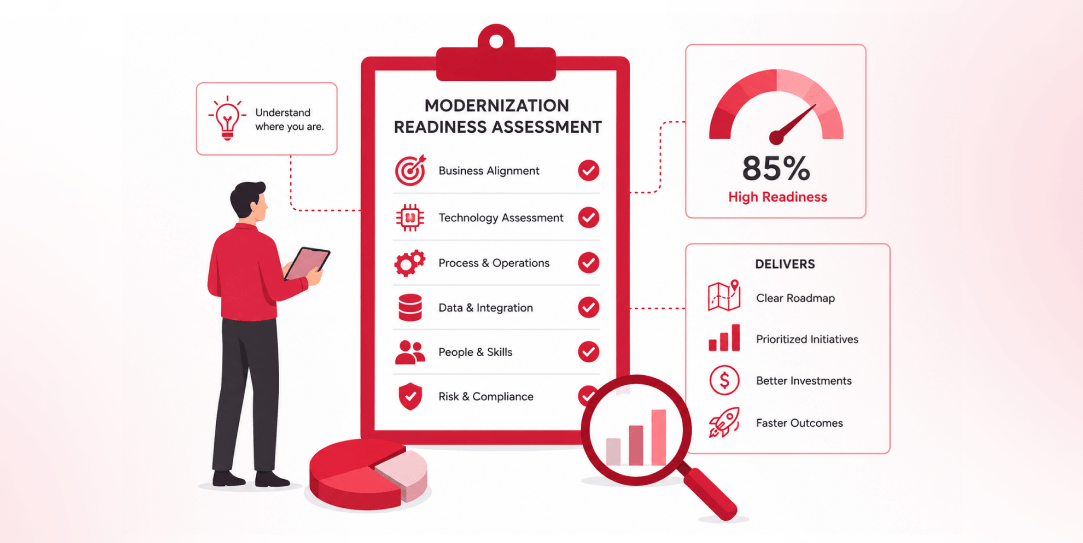
Most “audits” and “assessments” promise clarity but deliver a sales deck with language that lacks clarity. You book the call expecting evidence about your specific platform, and what shows up is a generic pitch for whichever package is easiest for the firm to sell. That’s the actual reason process transparency matters here, not because a […]
 Other
Other
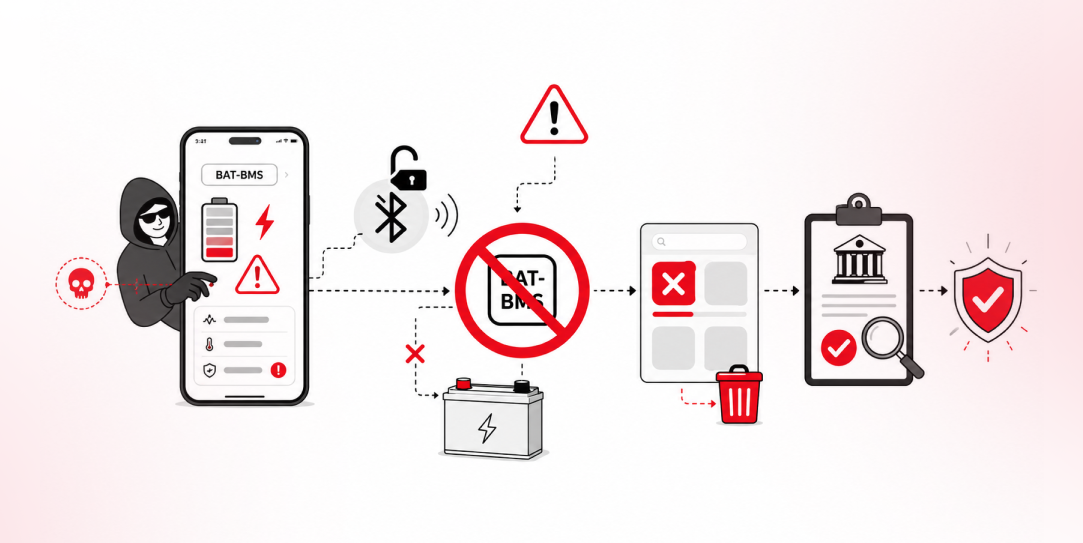
In late June and early July, videos started circulating on Instagram of people walking up to moving e-rickshaws, tapping a phone, and watching the vehicle lose power mid-ride. It spread as a prank trend before anyone fully understood the mechanism. Drivers in Patna (India) reported it first, assuming mechanical failure, until investigators traced it to […]