How AI Is Rewiring Buyer Research and Search Behavior in 2026

Hem Kant
·
05 Mar, 2026
The funnel hasn’t disappeared. It’s been compressed, fragmented, and handed to a machine.
Let’s be honest: the way buyers research, compare, and choose products today bears almost no resemblance to how they did three years ago. If your marketing, SEO, or demand generation strategy is still rooted in 2022 thinking, there’s a very real chance you’re invisible to the exact buyers you need to reach.
AI has entered the search conversation, not as a sidebar feature, but as the primary interface through which millions of buyers now discover, evaluate, and shortlist their options. And the shift is structural, not cyclical. It won’t reverse.
This piece breaks down exactly what’s happening in AI-driven buyer research, why it matters for your business, and what forward-looking teams must do right now to remain visible, cited, and trusted. Everything a buyer needs to make an informed decision is right here, no click required.
Traditional search was rule-based and transactional. You typed a query, received a list of blue links, and chose where to click. It was predictable, indexable, and for marketers, controllable. You could rank. You could track. You could optimize.
AI-native search is none of those things. It’s generative, synthesized, and conversational. Instead of returning a list, it returns an answer. Instead of sending you somewhere, it keeps you here.
| 58.5%
Of U.S. Google searches now end in zero clicks |
37%
Consumers now start searches with AI tools, not Google |
decline in CTR reported by some publishers since AI Overviews |
When more than half of all searches end without a single click to an external site, the content-traffic-conversion funnel marketers have relied on for a decade is structurally under pressure. The game has shifted: your goal is no longer winning the click, it’s winning the citation.
For businesses like those we work with at LN Webworks, this isn’t abstract. It directly affects how enterprise web platforms need to be architected, how content needs to be structured, and how AI integrations need to be designed to stay competitive.
Understanding what buyers are doing, step by step, is more important than any high-level trend. So let’s get specific.
Buyers are no longer starting with a search engine. They’re starting with a conversation. ChatGPT, Perplexity, Google Gemini, and Claude are the first places a buyer types their problem. They describe what they need in plain language and expect a comprehensive, reliable answer in return.
For B2B buyers, this often means using AI to define the problem before they even know which solution category they need. “What are the biggest challenges companies face when scaling a remote sales team?” becomes the entry point that eventually leads to CRM research, software comparisons, and vendor shortlisting, all mediated by AI.
The era of the two-word query is over for research-intent searches. Search trend data suggests a growing dominance of long-form, natural-language queries in AI-assisted search environments.
Buyers aren’t typing “CRM software pricing” anymore. They’re asking: “What’s the best CRM for a 50-person marketing agency that integrates with Salesforce and costs under $150 per user monthly?”
This shift toward long, natural-language, context-rich queries has two major implications.
First, content that answers specific, layered questions will outperform content optimized for broad head terms.
Second, the buying intent encoded in these queries is richer than anything keyword research tools historically captured, which means AI models have significantly more signal to work with when deciding what to recommend.
Here’s a paradox that B2B sellers need to sit with.
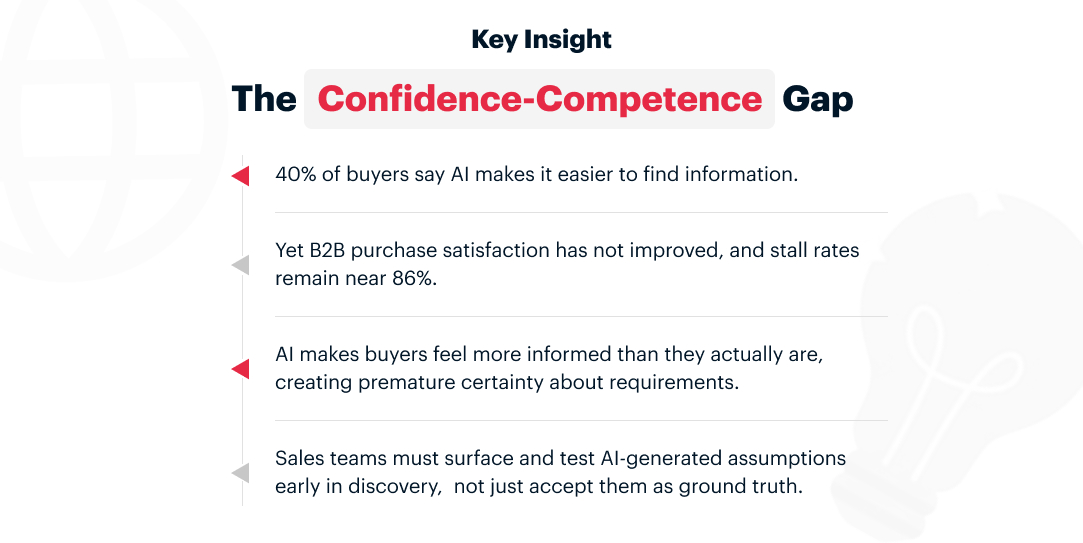
According to Forrester, 80% of buyers say they trust AI tools at least sometimes, a 19% point increase year over year. And yet, 86% of B2B purchases stall during the buying process, and 81% of buyers report dissatisfaction with the vendor they ultimately chose.
What’s happening is that AI makes buyers feel more informed than they actually are. They receive confident, synthesized answers that compress complexity and smooth over nuance.
If the trends above feel significant, they’re a warm-up for what’s coming next: AI agents that don’t just assist buyers, they become buyers.
In 2026, agentic AI is moving from experimental to operational. These aren’t chatbots answering questions. They’re AI systems with persistent goals, access to tools, and the ability to take multi-step actions.
They can search, compare, request demos, fill out forms, and, in some cases, complete purchases entirely without human interaction at each step.
| 36%
of consumers prefer purchasing via an AI agent over a human |
24%
already comfortable with AI agents shopping for them |
of Gen Z comfortable with AI agents making purchases on their behalf |
What does this mean for your product pages, pricing pages, and checkout flows? These assets were built for human eyes to scan for trust signals, read testimonials, and respond to design cues.
An AI agent reads none of that. It reads structured data, schema markup, pricing clarity, and text that it can parse programmatically.
Companies that fail to make their web presence machine-readable risk being systematically excluded from shortlists, not because their product is inferior, but because their content isn’t readable by the systems doing the shortlisting.
This is a core reason our AI development services now include AI-readiness audits alongside traditional performance audits. See how we’ve applied this in our client case studies.
Here’s a question worth sitting with: where do your buyers actually search?
If your answer is “Google,” you’re describing where buyers searched in 2019. In 2026, the honest answer is: everywhere. And that’s not hyperbole, it’s operational reality.
The discipline emerging in response is called Search Everywhere Optimization, or multi-platform discoverability, and it requires a fundamentally different content distribution strategy. According to Search Engine Land, brands need dedicated strategies for each discovery surface, not a single SEO playbook applied everywhere.
This directly affects how we advise clients on their web development strategy and UI/UX design; every interface now needs to be optimized both for human decision-making and AI parsing.
Traditional SEO is about relevance signals, backlinks, keyword density, and Core Web Vitals. Generative Engine Optimization (GEO) is about answer quality: Is your content self-contained enough that an AI can extract a complete, accurate answer from it?
We explored the distinction in depth in our earlier piece: Google Search vs. AI Answer Engines: Where Should Brands Focus in 2026? The short answer is: both, but with very different strategies.
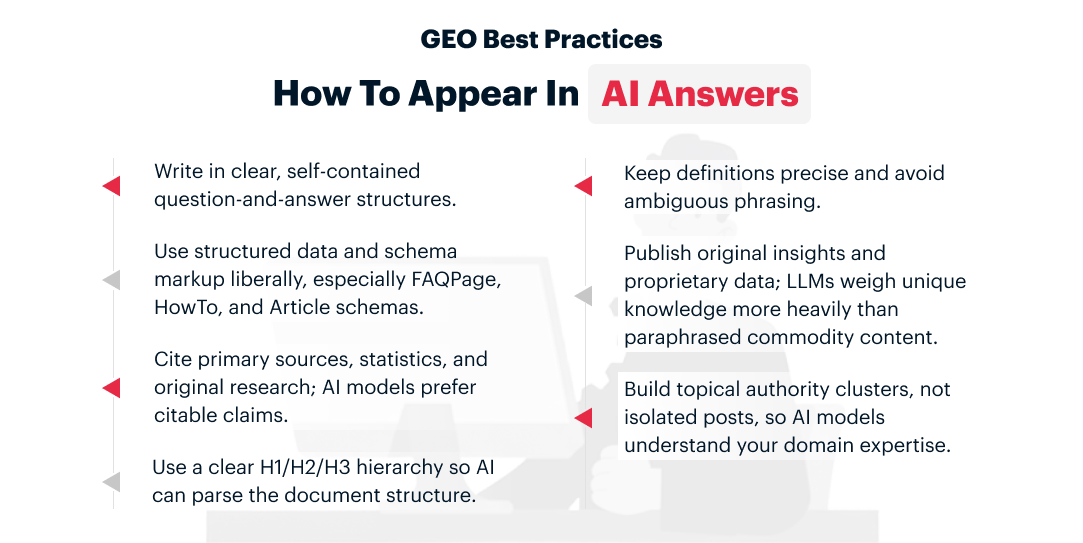
The brands navigating this transition most effectively share a set of common strategic commitments. They’re not doing everything differently, but they’ve made targeted adjustments to their content, distribution, and technical infrastructure that compound over time.
Original data is the most citable asset in an AI-driven search world. Brands that regularly publish surveys, benchmark reports, and industry studies create a content moat competitors can’t replicate quickly. When an AI answers “What are the key challenges in B2B sales automation?”, your original research should be the source it reaches for.
AI models aren’t trained on paid advertising. They’re trained on the open web, editorial coverage, forum discussions, peer reviews, and industry reports. Brands that have neglected earned media in favor of paid and owned channels are discovering they have thin coverage in the sources AI models learn from. The result is invisible or underrepresented in AI-generated answers, even when their product is excellent. HubSpot’s marketing data consistently shows earned media driving higher trust than paid placements.
Forward-thinking brands are auditing their product pages, pricing pages, and checkout flows for machine-readability, ensuring structured data is accurate, pricing is explicit, and key differentiation signals are text-accessible rather than buried in images or interactive elements. If you’re unsure where to start, our guide to critical website performance issues covers the technical foundations your platform needs.
The brands that will win in an AI-driven search and research world are not the ones that run the best AI-themed campaign. They’re the ones that treat AI-readiness as foundational infrastructure, building content, technical, and sales systems that work in a world where buyers are AI-augmented, and search is AI-mediated.
This is not a moment for incremental optimization. It’s a moment to reconsider how buyers find you, evaluate you, and reach the conversation that matters.
The funnel still exists. The buyer journey still unfolds. But the mechanism has changed, and the window to get ahead of that change, rather than catch up to it, is right now.
“The brands cited by AI today will be the brands trusted by buyers tomorrow. Citation is the new first-page ranking.”
If this sparked questions about your platform’s visibility in AI search, or how your digital infrastructure needs to adapt, let’s have that conversation. It’s worth 30 minutes of your time.

 Digital Transformation, Platform Strategy
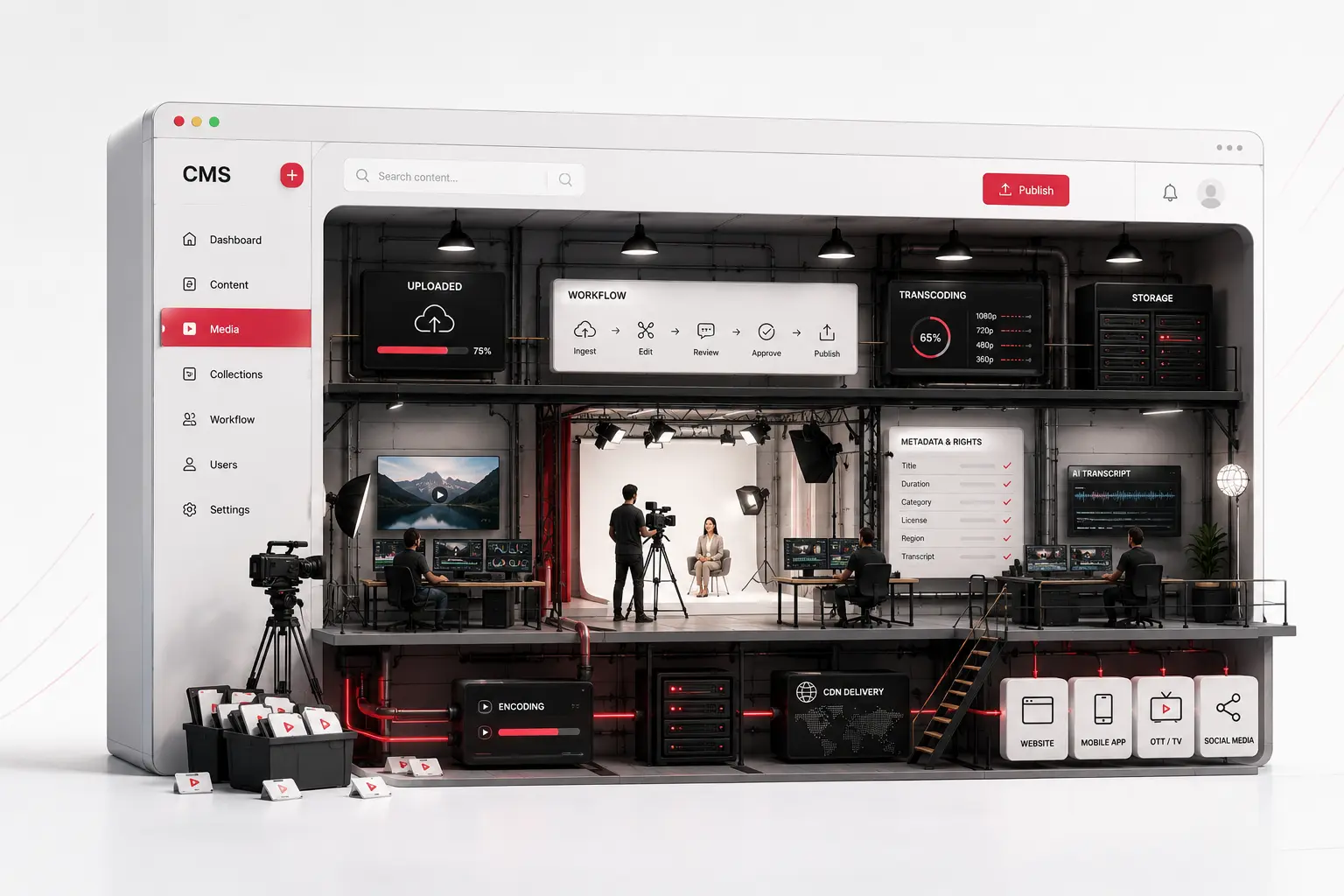
A content management system built to publish articles and a cms built to publish video are not the same product wearing different skins. That is the assumption most publishing and media teams get wrong the moment leadership signs off on a video-first strategy. Budget goes toward producing video: cameras, editors, a streaming vendor, sometimes an […]
 Digital Transformation, Platform Strategy
KEY TAKEAWAYS Most agency pitches sell outcomes without ever showing the tradeoffs behind them. Ask to see the tradeoffs, not just the promise. A partner who proposes a fixed scope and price before running a real diagnostic is guessing, not evaluating your platform. Ask how they’ve handled a project where they found more debt than […]
 Digital Transformation
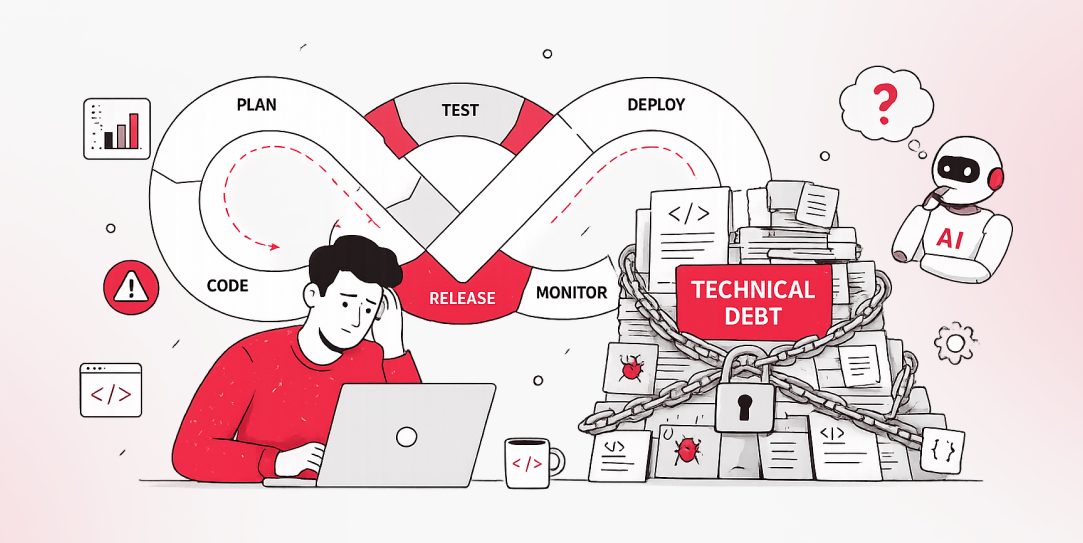
It’s tempting to blame this year’s AI coding tools for a slower release cycle. Sometimes that’s exactly right. But for most SaaS platforms, the AI tooling isn’t the root cause. It’s the accelerant, finally showing you a problem that was already there. Ask your engineering lead why the last release slipped, and you’ll get an […]