Most marketing agencies allocate 90% of their budget to the vibe and 10% to the tech. They deliver a site that looks like a Ferrari but has the engine of a lawnmower. If your conversion rates are stalling despite great creative, your agency is likely missing the invisible technical killers that drive users and Google away.
Performance today isn’t a backend concern. It’s a marketing feature. Google has made this explicit by tying rankings and visibility to real user experience signals through Core Web Vitals, which measure how fast, stable, and responsive your site feels to real users.
Here is the unfiltered truth about why your site is probably slow and the page speed issues your agency isn’t telling you about.
1. Third-Party Script Bloat (The GTM Junk Drawer)
Marketing teams are addicted to data. They will add TikTok, Meta, LinkedIn, and three heat-mapping tools to Google Tag Manager without a second thought.
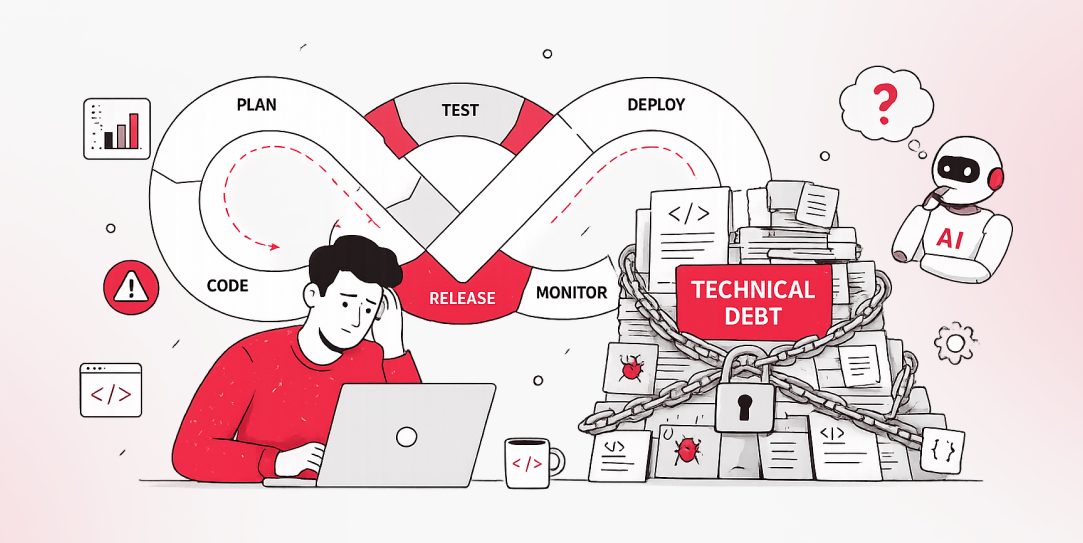
The problem is that they add scripts but never delete them. During our comprehensive website audits, we frequently find sites still running tracking codes for campaigns that ended years ago. These third-party scripts are like anchor chains; your site is trying to sail forward while dragging three years of dead tracking pixels.
If your agency isn’t doing a script audit every quarter, they’re sabotaging your page load time for data they aren’t even using.
2. The LCP Crisis: Heavy Hero Images and Video
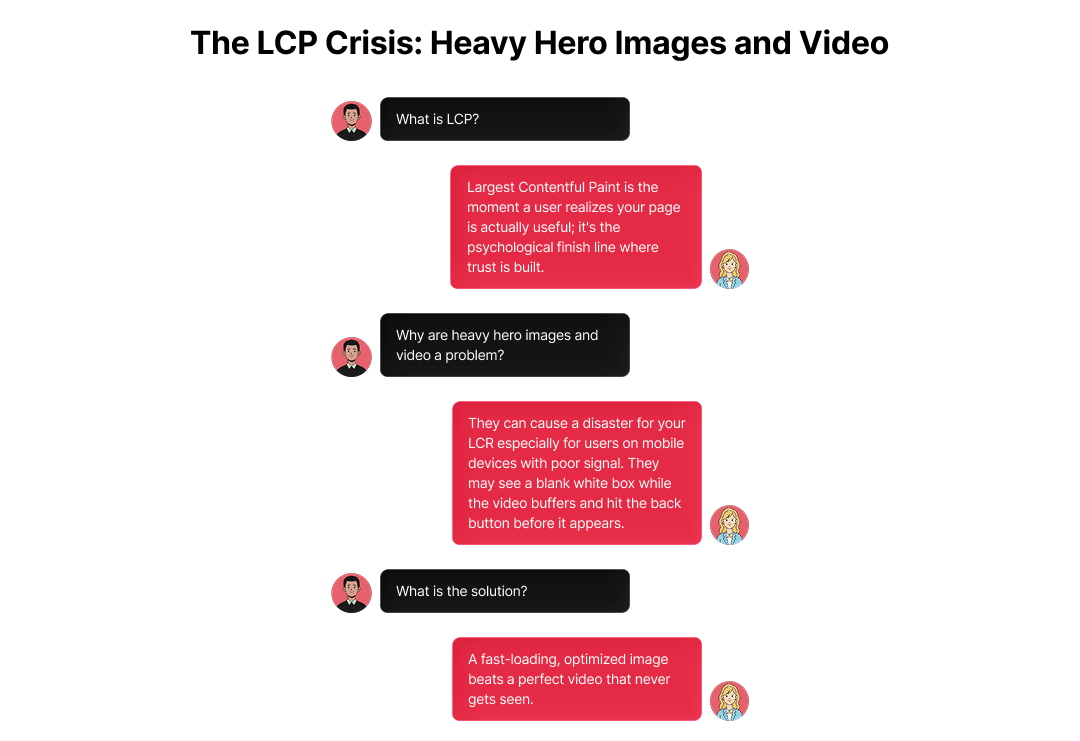
Nothing screams premium like a 50MB auto-playing background video. It looks great in a boardroom presentation on office Wi-Fi, but it is a disaster for your Largest Contentful Paint (LCP).
Your actual customer is likely on a phone with two signal bars. They aren’t seeing your brand story; they are seeing a blank white box while the video buffers.
By the time it appears, they have already hit the back button. A human-centric agency knows that a fast-loading, optimized image beats a perfect video that never gets seen.
3. Bloated Page Builders and CSS Trash
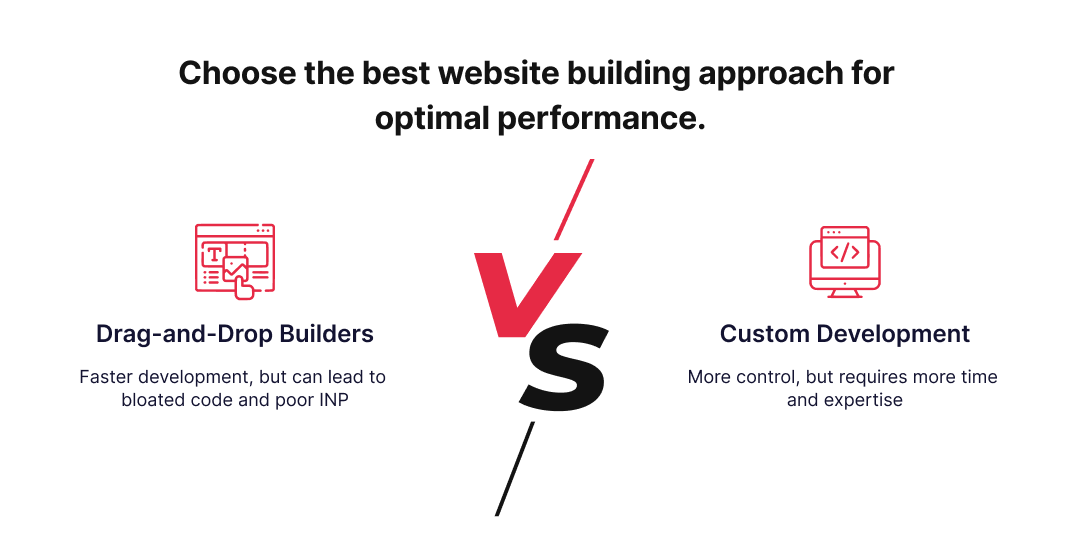
Agencies often use drag-and-drop builders like Elementor or Divi because they’re faster to build with. However, to enable an agency to move a button two pixels to the left, these builders load thousands of lines of unnecessary code.
You are essentially buying a 1,000-piece Lego set to build a simple box house. All that excess code forces the browser to work harder, directly impacting your Interaction to Next Paint (INP) and overall responsiveness. If LCP is how a site looks, INP is how it feels; it measures the delay between a user clicking a button and the site actually providing a visual response.
4. Ignoring Mobile-First Indexing
This is the industry’s biggest blind spot. Designers work on $4,000 Macs, and clients approve mockups on high-speed office fiber. But Google has used mobile-first indexing since July 2019, meaning it judges your site based on the mobile experience rather than the desktop version.
If your agency is not running a website speed test while throttled to a mediocre 5G connection, they aren’t seeing the truth. They are designing for themselves, not for the 70% of your traffic that uses a three-year-old iPhone to navigate your site.
5. Cumulative Layout Shift (The “Jumpy” Page)
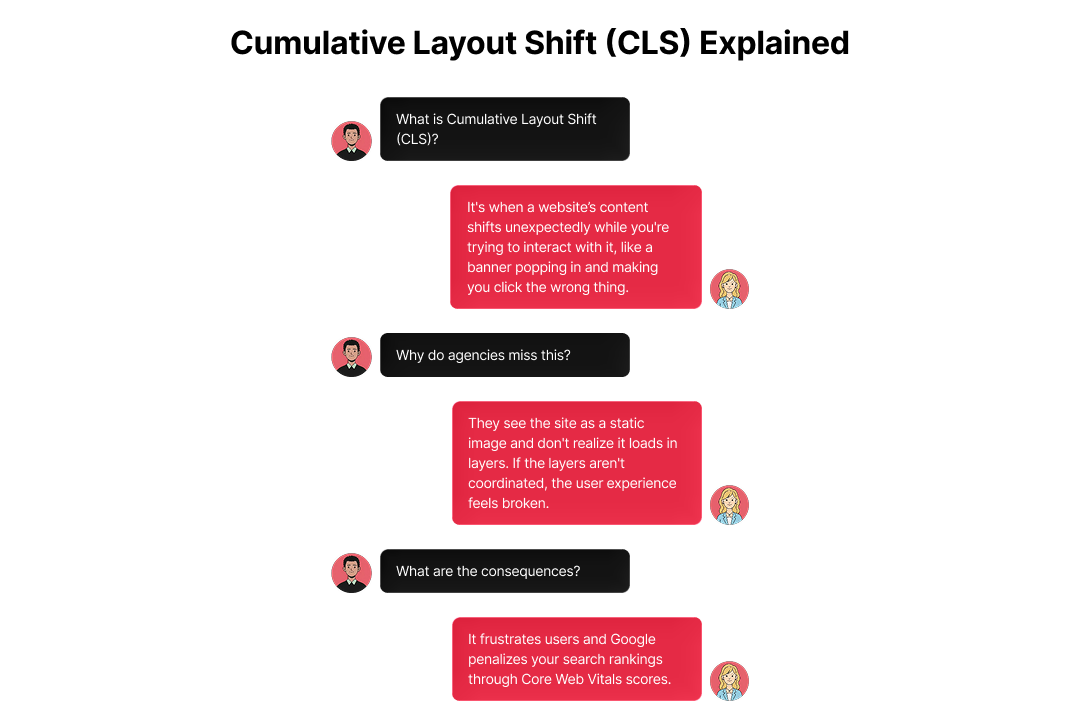
You know that feeling when you go to click a link, but a “Sign up!” banner pops in at the last second, and you accidentally click the wrong thing? That is Cumulative Layout Shift (CLS).
Agencies miss this because they see the site as a static image. They don’t realize that a website is a living document that loads in layers. If those layers aren’t coordinated, the user experience feels broken.
Not only does this frustrate users, but Google also penalizes your search rankings for it through Core Web Vitals scores.
6. The SEO vs. Page Speed Paradox
Your SEO specialist wants a 2,000-word guide with 20 rich media examples to rank for keywords. But if the SEO person and the Designer aren’t in the same room, you end up with a page that is optimized for keywords but so heavy it takes 8 seconds to load.
Google’s algorithm now weights speed as a primary ranking factor. You can have the best content in the world, but if your user experience (UX) is laggy, you’ll be buried on page two of the search results.
Conclusion: Stop Letting “Pretty” Kill Your Profits
Performance is a marketing feature. A fast, plain website will almost always out-convert a beautiful, slow one.
In 2026, beauty shouldn’t be a burden. If your site isn’t snappy on a mediocre phone, your agency has failed to deliver a site that actually sells.
Is your website actually a sales machine, or is it just sitting there looking pretty?
Most agencies won’t tell you the truth because they don’t want to admit their design choices are the problem.
We provide a No-Filter Website Performance Audit that analyzes your Core Web Vitals, identifies zombie scripts, and provides a clear roadmap to reduce your bounce rate and optimize your conversion rate (CRO).
Click here to book your Free Website Audit.
The Author
Hem Kant
Content Strategy and Integrity Lead (Social+ Services)
Curious by nature, Hem Kant is a strategist and writer who grounds his work in quiet reflection. He draws inspiration from the stillness of winter, clean cityscapes, good books, and honest talk (Networking). He writes with a commitment to integrity and a sharp focus on essential detail, delivering work defined by substance and insight.