What Website Audits Reveal That Marketing Reports Never Do?

Hem Kant
·
24 Feb, 2026
Look, I know how it goes. You sit down for your weekly marketing meeting, and you are handed a beautiful PDF. It’s got green arrows, colorful pie charts, and a slide dedicated to brand awareness. It feels good, and you believe that is progress.
But there is a massive elephant in the room that those reports are designed to ignore.
A marketing report is like a real estate agent showing you a house. They will highlight the crown molding, natural light, and open concept. But a proper website audit is the guy you hire to crawl the foundation with a flashlight to tell you the wood is rotting and the electrical wiring is a fire hazard.
If you really want to know why your growth has stopped or why your ad spend is no longer effective, you have to stop looking at the dashboard and start looking at the plumbing.
Here is the raw, unvarnished truth about what’s actually happening on your site, the stuff your marketing agency probably is not even looking at.
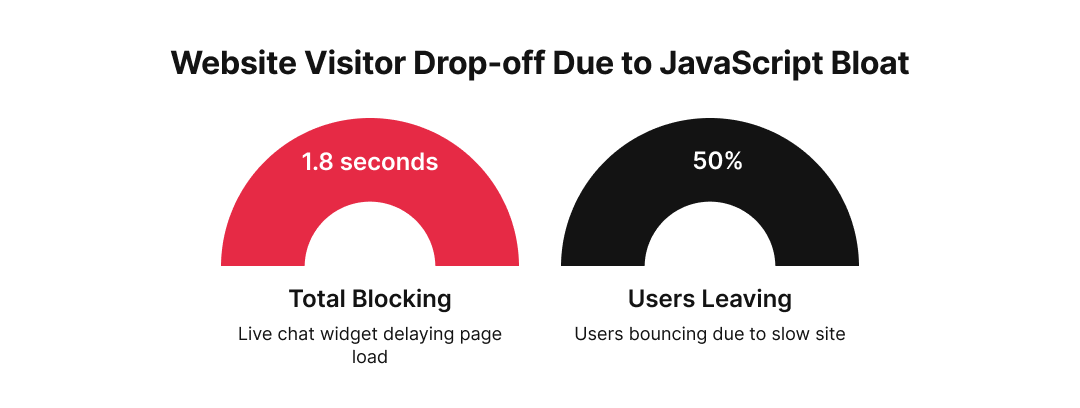
Your marketing report shows a bounce rate or engagement rate. You see that 50% of people leave, and you think, “Maybe the headline isn’t catchy enough?”
Actually, it’s probably because of JavaScript Bloat.
Think of your website like a backpack. Every time you add a cool feature, a chatbot, a heat-map tool, a fancy slider, or a third-party review widget, you are dropping a heavy rock into that backpack.
A technical audit shows you the Total Blocking Time (TBT). This is the window when a user is on your site, trying to click a button, but their phone is frozen because it’s still processing 40 tracking scripts from a growth-hack campaign you ran in 2022.
The practical reality is your marketing report won’t tell you that your Live Chat widget is delaying your page load by 1.8 seconds. People aren’t bouncing because of your copy; they’re bouncing because they think your site is broken.
What to do: Run a Core Web Vitals assessment to identify which scripts are slowing down your site. Consider implementing lazy loading or removing outdated third-party tools.
Marketing reports love to focus on Keywords and Backlinks. But there’s a more fundamental question: Is Google even invited to the party?
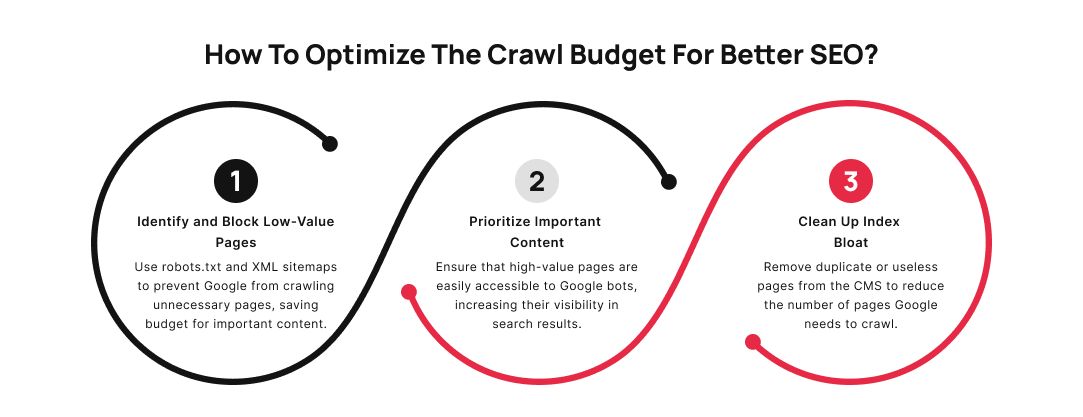
Every time a search engine bot visits your site, it has a Crawl Budget. It’ll only spend a few seconds looking around, then move on to the next site.
Most sites have Index Bloat. Your CMS (like Shopify or WordPress) is likely generating thousands of useless pages, tag archives, filtered search results, or duplicate staging URLs.
If Google has a budget to look at 100 pages, and 80 of those pages are “Category Archive Page 47,” it might never even find that brilliant blog post you spent $500 on last week.
An audit shows you where you are wasting Google’s time. If you don’t clean the junk out of your basement, your front door will never show up in search results.
You can use your robots.txt file and XML sitemaps strategically. Block low-value pages from being crawled and prioritize your most important content.
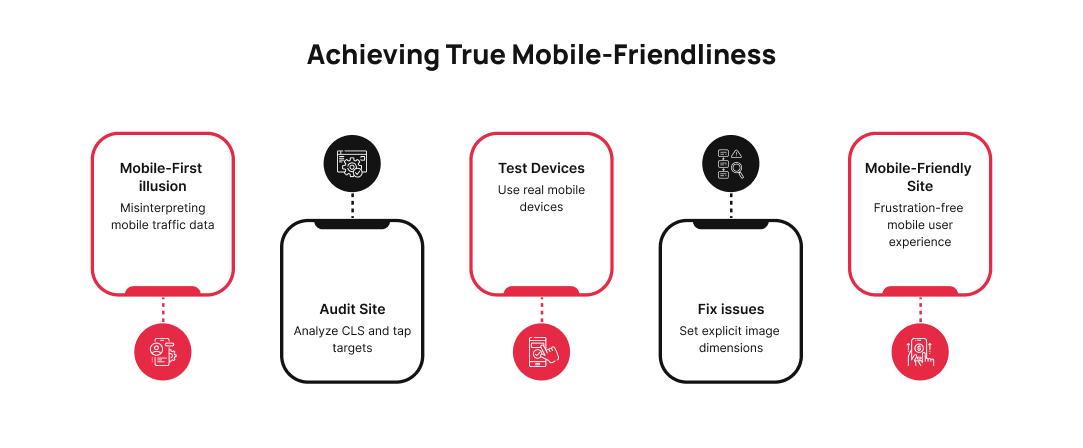
We have been told for a decade that sites need to be responsive. Your marketing report shows a Mobile vs. Desktop traffic split. You see 70% mobile and think, Cool, we are mobile-friendly.”
But are you? Really?
We often look at something called Cumulative Layout Shift (CLS). You have experienced this: You are on a phone, about to click Buy Now, when a late-loading image shifts the page, and you accidentally click Cancel or a banner ad.
Marketing reports don’t track user rage. They just see a dropped session. An audit shows you that your site is physically frustrating to use.
If your Tap Targets are too close together, or your fonts are too small for a human thumb to navigate, you are losing money because of bad physics, not bad marketing.
What you can do is test your site on real mobile devices, not just browser simulators. Use Google’s Mobile-Friendly Test to identify layout shift issues and fix them by setting explicit dimensions for images and ad slots.
Marketing reports show you referral traffic. They show you that a big publication is linked to you. Great!
But what happens when you changed your URL structure six months ago?
An audit often finds Redirect Chains. Instead of a user going from Point A to Point B, they are being bounced: Point A → Point B → Point C → Error.
Every time you redirect a link, you lose a little bit of SEO juice (authority) and add a few milliseconds of lag. If you have a chain of three redirects, you are essentially asking your visitors to sit through three loading screens before they see your content. They won’t do it.
Your report shows lost traffic; an audit shows broken plumbing.
You can audit your redirect chains using tools like Screaming Frog or your server logs. Update old links to point directly to the final destination and eliminate unnecessary hops.
Your marketing team assumes the site is up. But an audit checks the header security.
Have you ever seen a not secure warning in Chrome?
Most people think that only happens to shady sites. But if your SSL certificate is misconfigured, or if you are pulling in a single insecure image from an old server, the browser will flag your site.
An audit reveals Mixed Content Errors. If a user sees a security warning at the exact moment they are supposed to enter their credit card info, it doesn’t matter how good your trust badges are. They are gone.
Ensure all resources (images, scripts, stylesheets) load over HTTPS. Use SSL Labs to test your certificate configuration and fix any mixed content warnings.
Marketing reports show you how your new content is performing. Audits show you how your old content is sabotaging it.
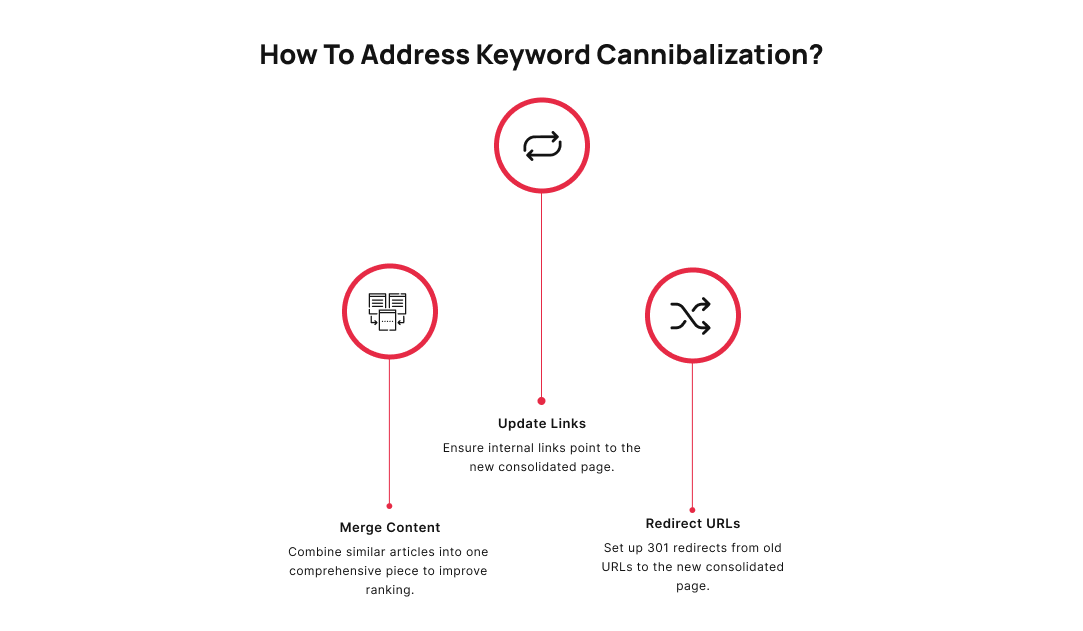
If you have five different articles about Small Business Accounting, Google doesn’t know which one to rank. Instead of one page ranking at #1, you have five pages ranking at #25.
The Audit reveals this is Keyword Cannibalization. An audit finds these overlaps and tells you to kill your darlings. By merging three “okay” posts into one “behemoth” post, you usually see a traffic spike that no new marketing campaign could ever deliver.
You can use Google Search Console to identify which pages are competing for the same keywords. Consolidate similar content, set up 301 redirects from old URLs to the new comprehensive piece, and update internal links.
The biggest difference is this: Marketing reports are about what people are doing. Website audits focus on how your website is affecting users.
If you have been spending money on ads and SEO but the needle isn’t moving, we can almost guarantee the problem lies in the technical foundation.
You don’t need more traffic; you need a site that doesn’t push people away the moment they arrive.
Ready to uncover what’s really holding your site back?
Book your free website audit with LNWebworks, and we’ll show you exactly where you’re wasting your efforts and how to fix it.

 Digital Transformation, Platform Strategy
Picture the same Tuesday morning, a few months from now. Someone closes a deal in the CRM. The billing record updates itself in the background. Nobody opens a second tab. Nobody retypes a single detail. That is not a fantasy. It is what actually happens once this problem gets fixed, and it is a smaller […]
 Digital Transformation
A system does not become a problem simply because it is old. Some platforms run reliably for a decade or more. Others become difficult to change after only a few years. The difference is not the date the system was built. It is what the system now costs your business to maintain, change, secure, and […]
 Digital Marketing, Digital Transformation
You have published the content. You have worked on SEO. You have fixed some technical issues and built pages around the keywords your customers search for. Still, the rankings are not moving. For some B2B companies, the problem is even more frustrating. A page that once brought consistent traffic has started slipping, while newer competitors […]