How Can Drupal Commerce Drive Your E-Commerce Revenue to New Heights?
 LN Webworks
·
19 Sep, 2025
LN Webworks
·
19 Sep, 2025
Every e-commerce platform is different and comes with its own unique and specific needs. Some can use simple ready-made tools, while others need special software made just for them. New trends like smart personalization, easy shopping on phones, and caring for the environment are also important for online shops.
To help businesses achieve personalized website goals, Drupal comes into the scene. It’s like a toolbox that lets you build your online store just the way you want. Drupal commerce is great because it’s flexible and lets you try out new ideas. But there’s more to it.
Today, we’ll learn more about what makes Drupal Commerce special, like its features and how it’s built.
Why Does E-Commerce Matter Even Now?
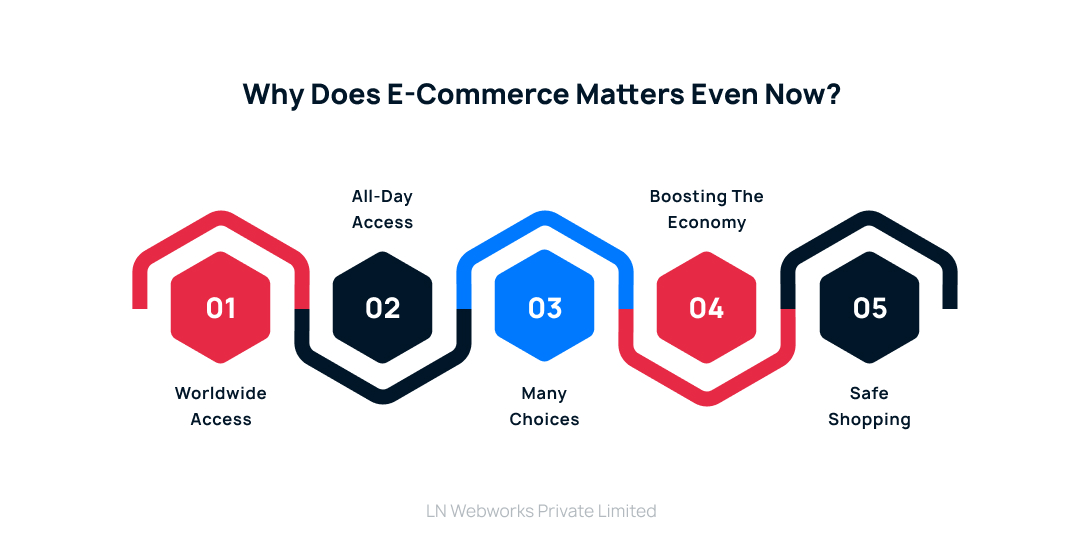
Worldwide Access
With just an internet connection, people from anywhere can shop on e-commerce sites.
All-Day Access
Enjoy the convenience of being able to shop anytime, day or night.
Many Choices
Unlike traditional stores, e-commerce offers a huge range of products to choose from.
Boosting the Economy
E-commerce helps economies grow by providing a wide range of goods, without the limits of physical stores.
Safe Shopping
Make purchases without touching anything, keeping transactions safe and easy in the online shopping world.
Opting For Drupal Commerce For Your E-Commerce Website
The important question to ask here is – why choose Drupal over the many available options?
Of course, choosing a great e-commerce CMS amid the abundance of platforms like Magento, WordPress, & Shopify can be challenging.
But, Still Drupal stands out of these all quite simply. Here’s why:
Open-source and adaptable
Drupal Commerce is open-source, meaning it can be modified to suit your unique business requirements.
Flexibility for intricate business needs
It’s flexible enough to handle complex business operations and adapt to changes as your business grows.
Rules-based structure
Drupal Commerce operates on a rules-based architecture, enabling administrators to set up sophisticated business rules and workflows, offering greater control over e-commerce processes.
Core Features of Drupal Commerce
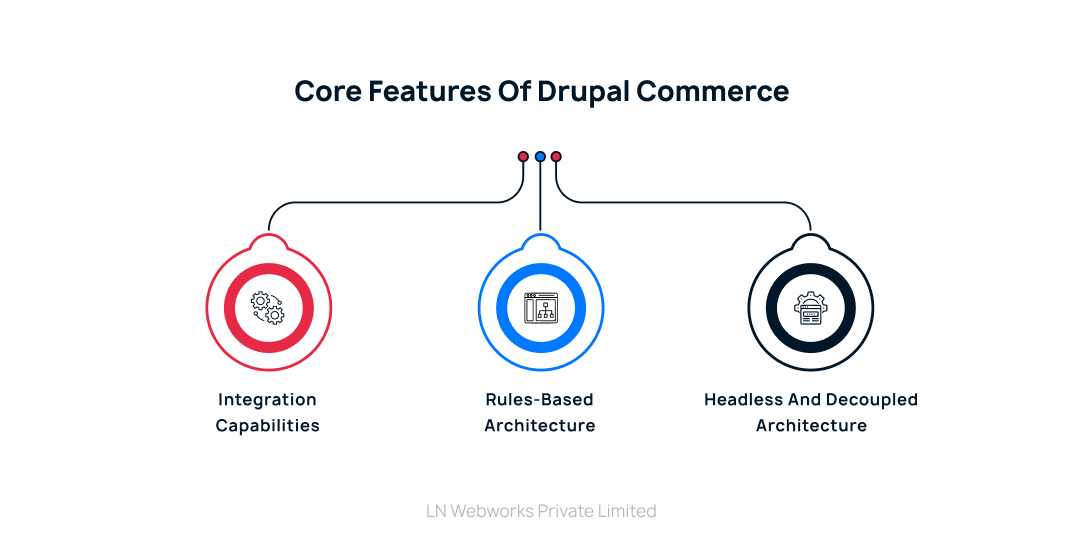
Integration capabilities
Drupal seamlessly integrates with various third-party services and tools essential for e-commerce operations.
Rules-based architecture
This feature enables administrators to define complex business rules and workflows easily.
Headless and Decoupled Architecture
Businesses can use Drupal as a back-end while employing different front-end technologies, allowing for unique and tailored user interfaces.
Add-On Features:
- Manage Many Stores – Drupal Commerce makes it simple to create and handle several stores.
- Deal in Different Currencies – You can handle transactions using various currencies.
- Flexibility and Expandability
- Strong Content Management
- Supported by a Community
- Customizable Look and Mobile-Friendly Design
- Search Engine Friendly
- Speak Many Languages
- Ensures Security
With this being known, let’s have a closer look at the Drupal Commerce components.
Breakdown of Drupal Commerce Architecture
Let’s take a closer look at the structure and components of Drupal Commerce.
Store
This is one of the most important aspects of Drupal Commerce. It is made to help you add products and control important aspects. Some of these aspects include billing, shipping countries, and even currency options. Without a store, you can’t add products to the platform.
Product Architecture
Understanding the structure of products is essential before adding them to Drupal Commerce. For instance, if your store sells items like t-shirts or shirts, these products may come in various sizes, colors, types, fabrics, and more.
To manage this complexity, Drupal Commerce introduces the concept of Product Attributes. For example:
Product Type
This defines the category of the product, such as “Accessories”.
Size
An attribute representing different sizes available for the product.
Color
An attribute representing different color options for the product.
Drupal Commerce
- Each product is represented by a single product entity.
- This product entity can have multiple variations, such as different sizes and colors.
- For example, a t-shirt product entity might have variations in size (small, medium, large) and color (green, orange, red, blue).
Let’s Wrap It Up!
Drupal Commerce is a powerful solution, offering unique flexibility and a range of features. With its open-source nature and extensive customization capabilities, Drupal Commerce empowers businesses to tailor their online stores to meet unique needs and drive revenue growth.
To boost your business reach out to expert Drupal E-commerce Development Services providers like LN Webworks. With a team of Drupal experts that spans over a decade of experience, we provide Drupal commerce solutions designed to make your ecommerce visible and more customer-centric. Reach out to us now!
Author