Custom vs. Template-Based eCommerce Websites: What’s Right for Your Brand?
 Anirudh
·
12 Jan, 2026
Anirudh
·
12 Jan, 2026
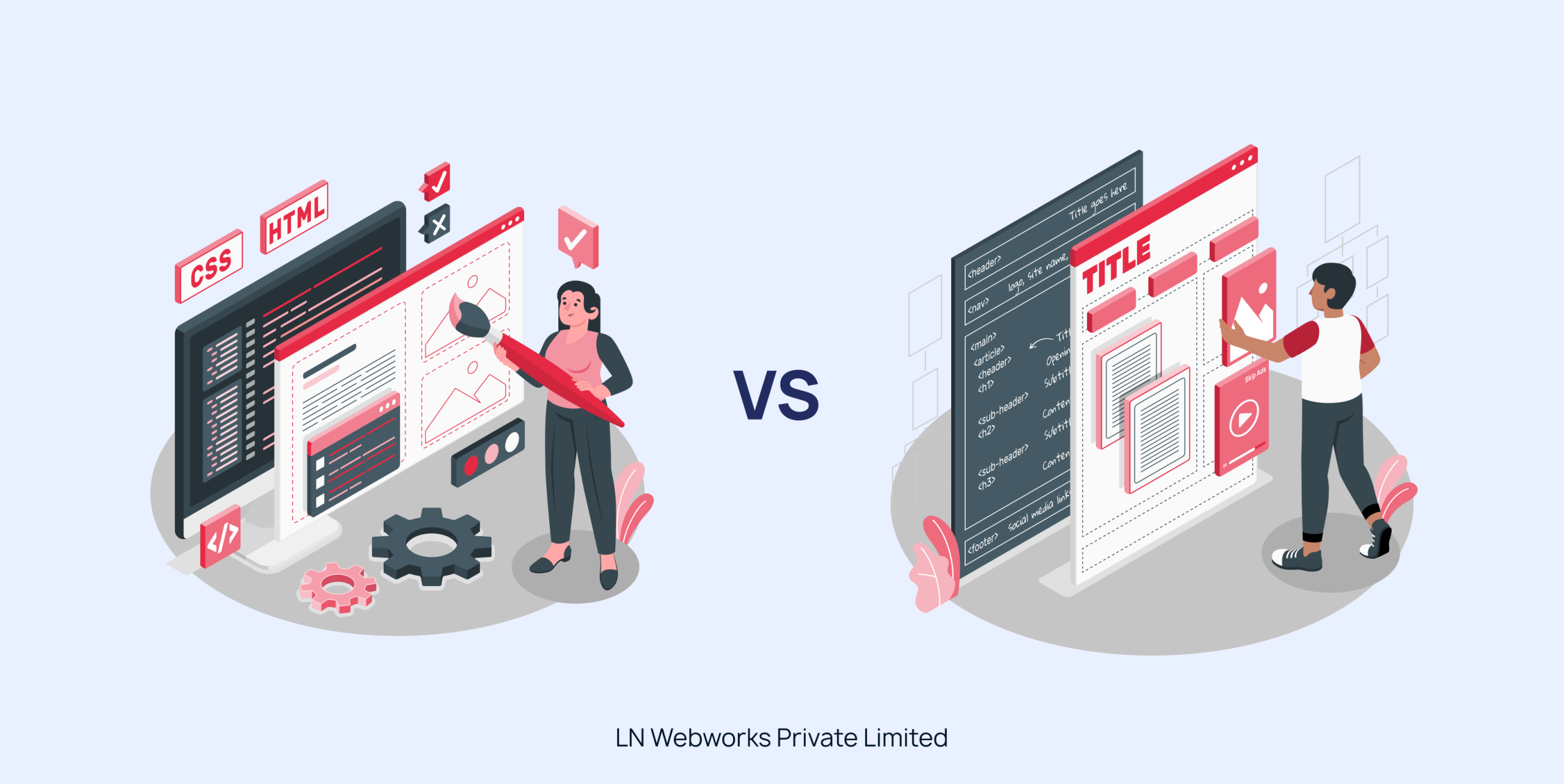
Do you know: poor UX sends shoppers away and makes them reluctant to return. Your eCommerce website is not just a storefront: it is the face of your brand and a primary driver of growth. Whether you are launching a new store or modernizing an existing one, the choice between a custom build and a template-based platform shapes branding, UX, scalability, cost, SEO control, and long-term flexibility.
This guide clarifies when each approach makes sense, how to weigh the total cost of ownership, and how to future-proof your platform decision.
The Importance of Choosing the Right eCommerce Platform
Brand perception and uniqueness
Your website is often the first touchpoint for buyers. A custom eCommerce website gives you full creative control to tell your brand story with unique components, micro-interactions, and content structures. Template-based sites provide a fast starting point, but the theme limits your options for brand-differentiating design patterns.
User experience and engagement
Custom builds align flows to your audience and use cases: navigation, search, merchandising, and checkout are designed to reduce friction and boost conversion. Templates keep costs low and speed up launch, but deeper UX changes may be constrained by how the theme is built.
Operational agility and business evolution
Custom architectures evolve with the business. They support new integrations, advanced catalog logic, and role-based workflows as you expand into B2B, subscriptions, marketplaces, or new geographies. Template-based platforms are efficient early on, yet can struggle as complexity grows and may require workarounds or migration.
Understanding Custom Web Development
What is custom web development?
A custom build is engineered around your goals, data structures, and team workflows. It gives you control over information architecture, performance budgets, and integration strategy.
Advantages of custom
- Enhanced branding: Purpose-built components reinforce identity and trust.
- Full functionality control: Ownership of features, data models, and integrations.
- Optimized experience: Performance tuning and accessibility built into the core.
Considerations
- Higher upfront cost: Expert design and engineering increase initial investment.
- Longer timelines: Strategy, design systems, and QA add time; they also reduce rework later.
- Ongoing stewardship: Security, upgrades, and continuous improvement need a reliable partner.
Understanding Template-Based Solutions
What are template-based solutions?
Template platforms (for example: Shopify themes or WooCommerce themes) use pre-designed layouts with light customization. They are ideal for quick launches with limited budgets or simple catalogs.
Advantages of templates
- Faster launch: Go live in days or weeks.
- Budget-friendly: Low initial cost and smaller teams.
- User-friendly: Non-technical teams can manage content and merchandising.
Common limitations
- Restricted design control: Pushing beyond a theme’s structure can be difficult.
- Limited scalability: Complex promotions, multi-store, or B2B features may require heavy apps or replatforming.
Plugin and app reliance: Add-ons can impact page speed, security, and costs over time. and security.
Custom vs. Template-Based eCommerce: A Practical Comparison
| Dimension | Custom Website | Template-Based Website |
|---|---|---|
| Time to Launch | Longer: strategy, design system, engineering, QA | Faster: configure theme and core apps |
| Upfront Cost | Higher | Lower |
| Total Cost of Ownership | Predictable with a planned roadmap | Can rise: premium themes, apps, and workarounds |
| Design Flexibility | Full control: unique brand experience | Limited by the theme structure |
| Scalability | Built for growth: multi-brand, B2B, subscriptions | Adequate early on; may require migration later |
| Performance & SEO | Code and architecture optimized for targets | Varies by theme and app bloat |
| Accessibility & Compliance | WCAG-first approach baked in | Dependent on the theme and plugins |
| Integration Strategy | API-first, composable, replaceable services | App marketplace: quick but sometimes rigid |
Cost Considerations and Total Cost of Ownership
A custom build concentrates investment up front and reduces later rework by aligning technology with your operating model. Template-based builds minimize initial spend; however, premium themes, third-party apps, and custom workarounds can compound costs. When forecasting TCO, model:
- Licenses and apps: current and projected.
- Performance budgets: potential ad efficiency and conversion lift.
- Team workflows: time saved by right-fit CMS and automation.
- Future expansions: B2B accounts, subscriptions, marketplace, or international.
Speed of Implementation
Templates are the fastest path to a credible storefront and a good choice for validation-stage brands. Custom projects require discovery, design systems, and sprint-based delivery, delivering a tailored foundation for confident scaling.
Flexibility and Customization
Custom solutions design the platform around your processes: omnichannel content, complex pricing, ERP/CRM orchestration, and analytics governance. Templates allow surface-level changes and app-based enhancements; profound logic often requires custom engineering or a platform shift.
Scalability and Future-Proofing
Custom, API-first builds support composable commerce and headless frontends as you expand into new channels and regions. Templates handle basic growth; as complexity increases, you may hit performance ceilings or run into app conflicts.
Search Optimization and Site Performance
Custom builds can harden technical SEO: clean HTML, structured data, logical URL and taxonomy, and lean bundles tuned for Core Web Vitals. Templates may include additional scripts and CSS that slow page load times or limit markup control. Whatever you choose, prioritize:
- Crawl efficiency: sitemap hygiene, canonicalization, and robots discipline.
- Rich results: product, breadcrumb, and review schema.
- Mobile-first speed: image optimization, critical CSS, and third-party script audits.
- Accessibility: keyboard navigation, color contrast, alt text, and error-handling.
When a Template Is the Right Choice
Choose a template when you need:
- A fast launch to validate demand.
- A simple catalog and straightforward promotions.
- Minimal integrations and a lean operations team.
- Clear appetite to re-platform once product-market fit and operational needs are proven.
When a Custom Build Is the Right Choice
Choose custom when you need:
- Differentiated brand experiences and conversion-focused UX.
- Multi-brand or multi-region governance with complex catalogs.
- B2B features: account hierarchies, quotes, tiered pricing, and purchasing rules.
- Deep integrations: ERP, CRM, PIM, CDP, and data warehousing.
- Strict performance, accessibility, and security standards.
Why Choose LN Webworks
LN Webworks is a founder-led partner: not a transactional vendor. We help growth-focused organizations launch faster and scale with confidence.
What you can expect:
- End-to-end delivery: discovery, UX, engineering, QA, and enablement.
- Platform fit: Drupal Commerce, Magento/Adobe Commerce, Shopify, or a hybrid/headless platform.
- Agile transparency: two-week sprints, daily visibility, and open billing.
- Future-ready builds: performance, accessibility, and security by design.
Proof points: we have delivered 1,100+ projects across SaaS, ecommerce, franchise, nonprofits, and universities with a 4.9★ rating on Clutch.
Bottom Line
There is no one-size-fits-all answer. Templates excel for speed and budget control in early stages. Custom platforms reward brands that compete on experience, operations, and scale. The best choice depends on where you are today and how you plan to grow over the next 12 to 36 months.
If you want help choosing the right approach for your roadmap, get in touch with LN Webworks. We will map your requirements to the most sensible path forward and stand up a platform you can trust to grow with you.