Pros and Cons of Choosing Drupal for Your Large eCommerce Website
 Deepak
·
15 Apr, 2026
Deepak
·
15 Apr, 2026

There are many options available to you when it comes to designing and developing your website. One of the most popular choices is Drupal, a powerful and easy-to-use CMS tool that has grown into a robust web development platform.
Drupal is used in over 200 countries and available in 182 languages. Big brands like Harvard, Ubuntu, The Economist, Sony Music, and even the White House, trust Drupal to power their websites. With its advanced features and user-friendly admin interface, Drupal is a favorite among website developers and owners. Drupal ecommerce development services offer numerous benefits for businesses looking to create a large ecommerce website.
But, how do you know if Drupal is the right choice for your ecommerce website? We have prepared a list of pros and cons of using Drupal for an ecommerce platform that can assist you to form a right decision.
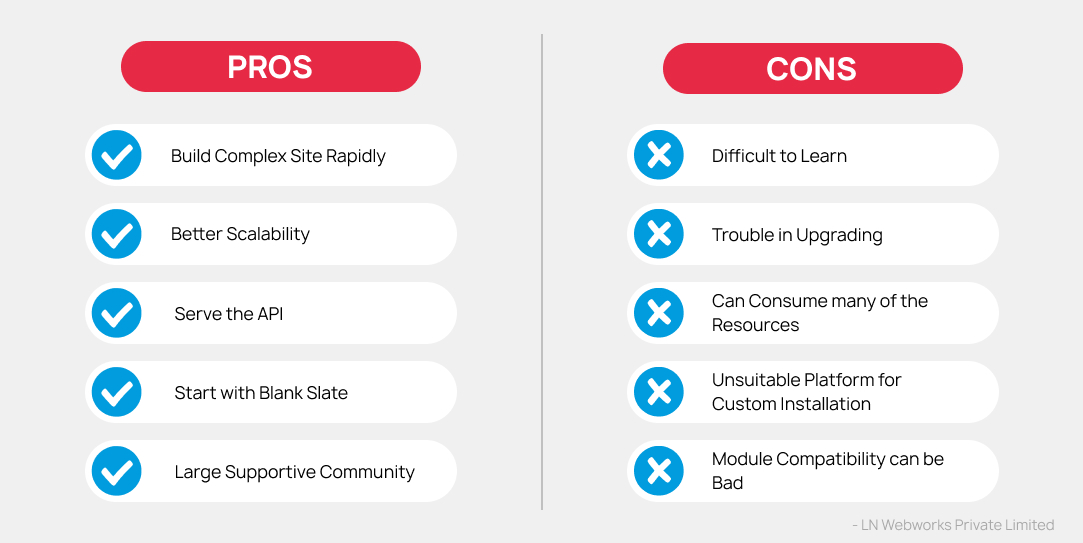
The Advantages of using Drupal for eCommerce development
Free and Open-Source: Drupal is free to use and its source code is open, allowing for customization according to specific needs. This makes it an accessible and affordable option for businesses and developers.
Designed for Professionals: Originally developed for professional use, Drupal is a powerful and flexible tool for web development. Its professional design and functionality make it a popular choice for businesses and organizations.
Highly Customizable: Drupal offers ample room for creativity, enabling developers to create complex and original designs. Its flexibility and customization options allow for a unique and personalized website.
Fast Speed: Drupal’s built-in caching system results in faster load times compared to other CMS options. This provides a better user experience and can also improve SEO.
Rich Source of Modules: Drupal’s open-source nature allows for additional modules to be added, increasing functionality and customization options. This means developers can easily add features to a website without having to build them from scratch.
Built-in Queries, Forums, and Multi-blogs: Drupal comes with built-in features that help developers get started with projects quickly. Its built-in queries, forums, and multi-blogs make it easy to create e-commerce website.
High Security: Drupal’s security measures are robust, making it a safer option compared to other free competitors. This helps to protect sensitive information and keep websites secure.
Large Professional Community: Drupal has a large online community of professional programmers who contribute to its development and offer support. This means developers can easily find help and resources when working with Drupal.
By leveraging these advantages, Drupal eCommerce websites can offer exceptional customer experiences and help businesses achieve their goals.
Disadvantages of using Drupal for eCommerce development
Steep Learning Curve: Drupal has a steep learning curve, making it challenging for new web developers to become familiar with the platform. This difficulty can make development and promotion difficult, especially for those who are not well-versed in web development.
Complex Interface: The professional construction system of Drupal can be complex and less intuitive than other CMS platforms. This can make it difficult for developers to create, manage, and optimize an e-commerce website, potentially leading to errors and frustrations.
High System Requirements: Drupal is a resource-intensive CMS, requiring higher hosting fees and more advanced server configurations compared to other CMS platforms. This can be a disadvantage for small businesses or those with limited resources.
Limited Free Design Options: Drupal offers limited high-quality design options in its free version. This can make it challenging for website owners to find a design that fits their brand and vision. Many users engage in self-development, leading to a shortage of quality themes for site design.
Installation Challenges: Updating and installing modules in Drupal can be challenging, especially for developers who have worked on simpler CMS platforms. The installation process is made through FTP, which can be time-consuming and complicated.
While Drupal’s stiffness can be an advantage, it can also be a disadvantage for some users. It’s essential to weigh the pros and cons carefully before choosing Drupal for your ecommerce website.
Conclusion
While Drupal is undoubtedly a powerful platform for ecommerce development, it’s worth considering the pros and cons before making a decision and determine whether it’s the best solution for your specific needs with the help of expert providers like LN Webworks.
However, its complexity and potential drawbacks may make it less suitable for some users. Ultimately, it’s important to weigh the benefits and drawbacks of Drupal Commerce services and determine whether it’s the best solution for your specific needs. LN Webworks can guide businesses through the development process, helping them to navigate any challenges they may encounter.
Author